
Jump to a section31
- Should You Buy a MIDI Keyboard?
- What to Look For in a MIDI Keyboard
- Quick Picks
- How I Picked These
- The Best MIDI Keyboard for Your DAW
- Best Affordable MIDI Keyboards, Under $200
- 1Akai MPK Mini IV
- 2Arturia MiniLab 3
- 3Arturia KeyStep 37 mk2
- 4Novation Launchkey Mini 37 MK4
- 5Akai MPK Mini Plus
- 6Keith McMillen Instruments K-Board-C
- 7M-Audio Oxygen Pro Mini
- 8M-Audio Keystation 49 MK3
- 9Arturia MiniLab 37
- 10Novation FLkey Mini 25 MK2
- Best Mid-Range MIDI Keyboards, $200 to $350
- 11Arturia KeyLab Essential 61 mk3
- 12Novation Launchkey 49 MK4
- 13Novation Launchkey 61 MK4
- 14Novation FLkey 49 MK2
- 15M-Audio Keystation 61 MK3
- Best Advanced MIDI Keyboards, $350 and Up
- 16Nektar Impact LX88 mk3
- 17Native Instruments Kontrol S61 MK3
- 18Novation 61SL MkIII
- 19Arturia KeyLab 61 mk3
- 20Arturia KeyLab 88 mk3
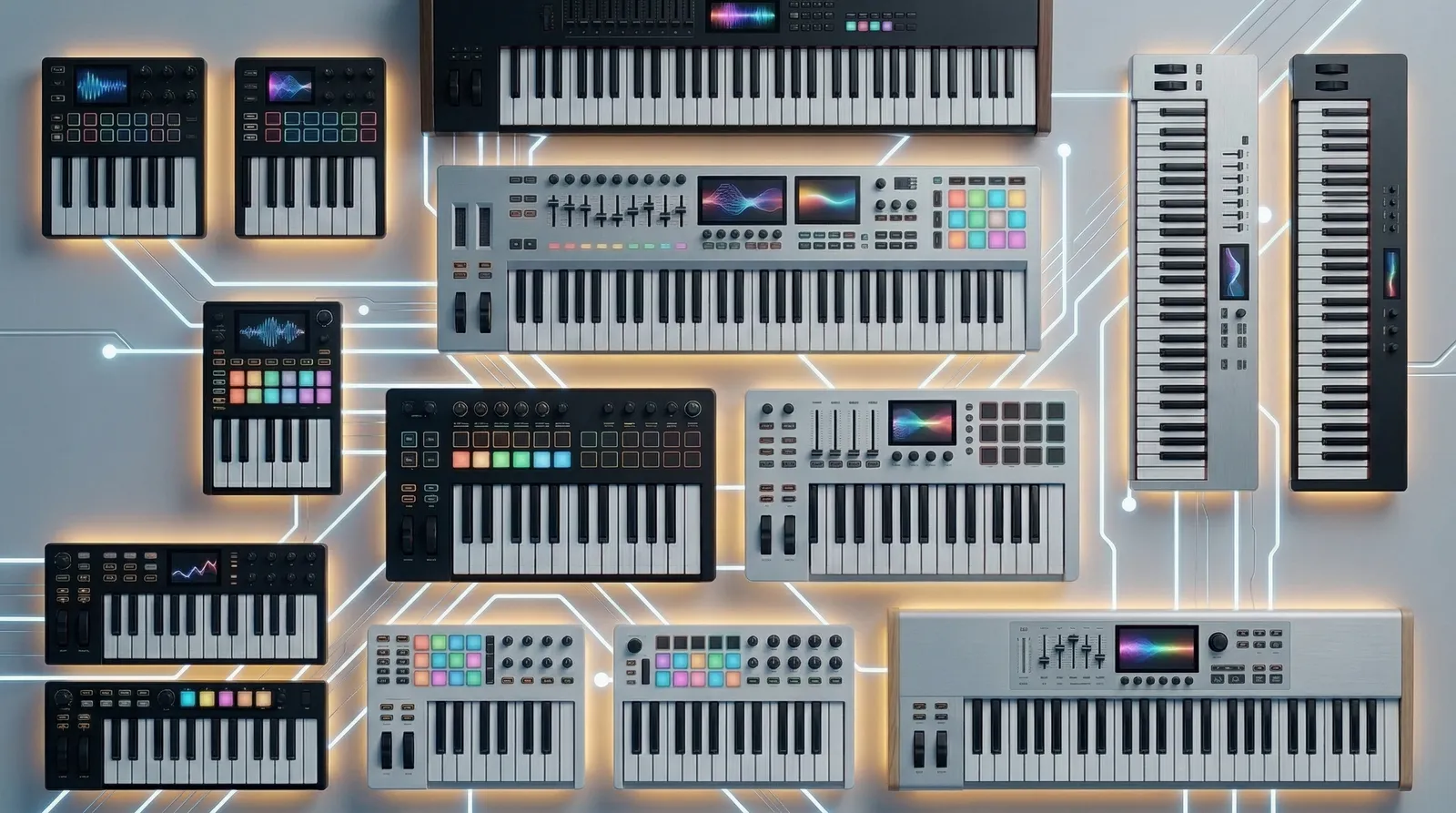
- All 20 Side by Side
- Frequently Asked Questions
- Buy the Simple One, Then Go Write Something
I consider at least one MIDI keyboard an essential part of any studio, basic or advanced. I also think most producers buy way more keyboard than they need (the gear companies are fine with this). So this list is organized around what you’re actually going to do with the thing, and the spec sheets come second.
For most producers, that means a 49 or 61 key controller with full-size keys, somewhere between $130 and $330. If you’re on Ableton, the Novation Launchkey 61 MK4 is the default pick for a reason. And if all you want is the most playable keys for the least money, the M-Audio Keystation 49 MK3 does that and almost nothing else (I mean that as praise).
My own history here is pretty boring. My first MIDI keyboard was an M-Audio Keystation 61, which is still on this list. These days I use a basic Alesis controller. I’ve tried the Native Instruments Komplete Kontrol boards, the ones with the screens and the light guide, and for the way I work they were overkill. I like a simple setup, and I’ve never once thought my music suffered for it.
Should You Buy a MIDI Keyboard?
Work with what you have until what you have pays for what you want.
I’m a firm believer that everyone should get a MIDI keyboard. But it’s worth asking the question honestly first, because gear you don’t use is just furniture. Two questions to ask yourself:
Are you familiar with chords and notes? Part of being a producer is playing an instrument, at least a little. You don’t need formal theory. But to get anything out of a keyboard you want a working feel for chord progressions and how notes sit next to each other. If you don’t have that yet, our basic music theory guide is a faster fix than you’d think.
Pro Tip: If you don’t know music theory, you can still take full advantage of a MIDI keyboard by transposing to the key of C and jamming away on the white notes. Madeon himself still does this, so there’s no reason why you can’t as well.
Are you comfortable in your DAW? There’s nothing worse than unboxing new gear and realizing you don’t know how to make it work with your software. Learn to write music without a keyboard first. Then buy one to speed up the part you already understand.
If you’re still building fundamentals, this video covers workflow habits that matter no matter what’s on your desk.
Once you’re comfortable in your DAW, the keyboard becomes the fun part.
What to Look For in a MIDI Keyboard
Number of keys. This is the decision that matters most, and it’s really a question about what you play. Two hands on chords and a melody at the same time wants 49 keys minimum, and 61 is where most people land. One hand sketching ideas is fine on 25 or 37. Think about it in terms of the five instruments in any track: if your job at the keyboard is chords and leads, give yourself the range. If you’re mostly programming drums and tapping in bass notes, don’t.
Key action. Synth-action keys are light and springy, and they’re what most controllers ship with. Semi-weighted adds resistance, so your fingers have something to push against and your velocity stops swinging wildly. Hammer-action, fully weighted keys feel like an actual piano and cost real money. Mini and slim keys are narrower than a piano key. That’s a portability tradeoff, and a lot of records have been made on them.
Pads, knobs and faders. Pads are for drums and, on Novation and Arturia boards, for launching clips and step-sequencing. Faders are for writing volume automation and riding levels with your hands. Knobs map to plugin parameters. None of it is required. Add enough of it, though, and your keyboard starts doing double duty as a mixing surface.
Aftertouch and MPE. Aftertouch reads how hard you keep pressing after the note sounds, which you can map to vibrato, filter movement, whatever you want. MPE goes further and tracks pressure and finger position per note. If you play, both are worth having. Neither one will fix a mix.
MIDI DIN, CV and gate. If you own hardware synths or a modular rig, look for 5-pin MIDI out and CV/Gate jacks. A controller with those can run gear that has never met a computer. If everything you own lives inside your DAW, you can ignore this entire paragraph.
Size and power. Most controllers run on USB bus power, so one cable does everything. Check the footprint against your studio desk before you buy. An 88-key board is close to four feet wide, and a tape measure is cheaper than a return shipping label.
Velocity sensitivity. Every keyboard on this list is velocity sensitive, meaning your DAW reads how hard you hit the key. Anything that isn’t velocity sensitive is a toy.
Quick Picks
If you want to skip the reading, start here. Each row links down to the full entry.
| Keyboard | Best for | Why |
|---|---|---|
| Novation Launchkey 61 MK4 | Most producers | Pads, faders and deep control in seven DAWs |
| M-Audio Keystation 49 MK3 | Spending the least | Four octaves of full-size keys, around $129 |
| Akai MPK Mini IV | Beat-makers | MPC pads, a screen and MIDI out, around $99 |
| Novation FLkey 49 MK2 | FL Studio | The only controller family built around FL |
| NI Kontrol S61 MK3 | Kontakt libraries | Light guide, poly aftertouch, NKS2 browsing |
| Arturia KeyStep 37 mk2 | Hardware synths | CV, gate, sync and a polyphonic sequencer |
| Nektar Impact LX88 mk3 | 88 on a budget | Semi-weighted keys with pads, around $340 |
| Arturia KeyLab 88 mk3 | Piano players | Hammer-action keys and a full control surface |
| Novation Launchkey Mini 37 MK4 | Travel | Three octaves and 16 pads, backpack sized |
How I Picked These
I’ll keep this short. Everything here is something you can buy new right now. That sounds obvious, but a lot of keyboards on other lists are discontinued. Each one also had to be worth it over a cheaper option (with MIDI keyboards the cheap one is usually fine). When it was close, I went with the controller you’ll still be happy with in five years.
The specs come from the maker’s page or the store listing. Prices are typical US street prices from the maker’s own store or the big US retailers, which is why every one says “around $X.” They move a lot (they’ve probably moved since you started reading), and on a few Arturia models the price on Arturia’s own site is $50 to $300 higher than what the big stores charge.
If you’re wondering where a few old favorites went: the Native Instruments Komplete Kontrol A-series, the Komplete Kontrol M32 and the Akai MPK261 are all discontinued, and the Keith McMillen QuNexus is out of stock everywhere.
The Best MIDI Keyboard for Your DAW
Almost every controller works with almost every DAW. A few are built around one specific piece of software, and that’s worth real money if you’re already living in it.
- Ableton Live. Novation’s Launchkey line, from the Mini 37 up to the 61. Clip launch and step sequencing from the pads, with the transport and mixer mapped out of the box.
- FL Studio. The FLkey line, and nothing else really competes. The pads step-sequence into the Channel Rack and drop straight into FPC and Slicex, and the screen shows your actual FL project info.
- Kontakt and Native Instruments libraries. The Kontrol S MK3 boards, which browse your NKS2 instruments from the hardware and light up the keys to show you a library’s playable ranges.
- Logic, Cubase, Studio One, Reaper, Bitwig. Nektar’s Impact LX mk3 range has proper integration for most major DAWs, and Arturia’s KeyLab boards ship DAW scripts covering Live, Logic and FL Studio.
Best Affordable MIDI Keyboards, Under $200
This is where most of you should be shopping. Ten options, from 25 mini keys up to four octaves of full-size ones.
1. Akai MPK Mini IV
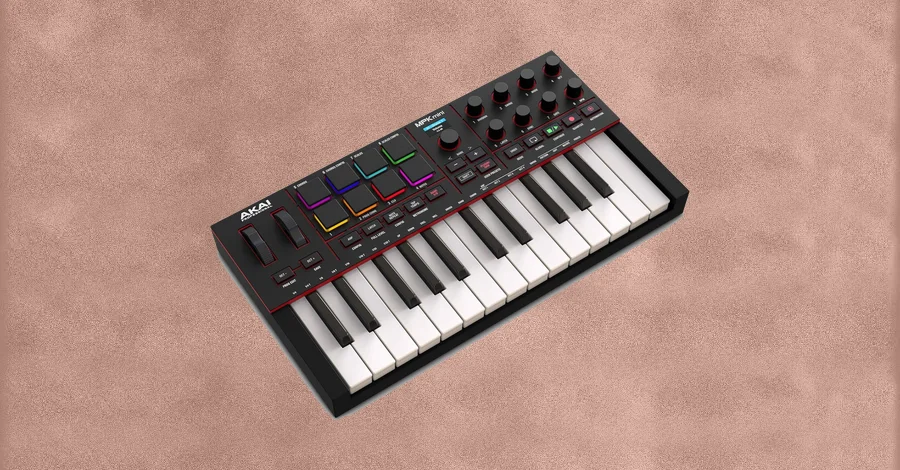
Now on its fourth version, the Akai MPK Mini IV is still one of the most popular compact controllers ever made. This round brought the changes people had been asking for.
Keys: 25 velocity-sensitive mini keys
Controls: 8 RGB MPC pads, 8 assignable 360-degree knobs, full-color screen with a push encoder, pitch and mod wheels
Price: around $99
The headline change: Akai finally swapped the old joystick for real pitch and mod wheels. There’s also a full-color screen with a push encoder, so you can read what a knob is mapped to. Previously you guessed.
The pads are still the draw. Eight RGB MPC pads from the company that has been making pads since the first MPC. There’s a 5-pin MIDI out on the back too, so it can drive a hardware synth with the laptop closed.
It comes with Ableton Live Lite 12 and over a thousand presets from Moog, Akai and AIR. That’s a real pile of sounds for someone starting out.
Best for: your first controller, especially if you make beats on a small desk.
Watch out: the keys are mini keys, fine for tapping in beats and cramped for two-handed chords.
2. Arturia MiniLab 3
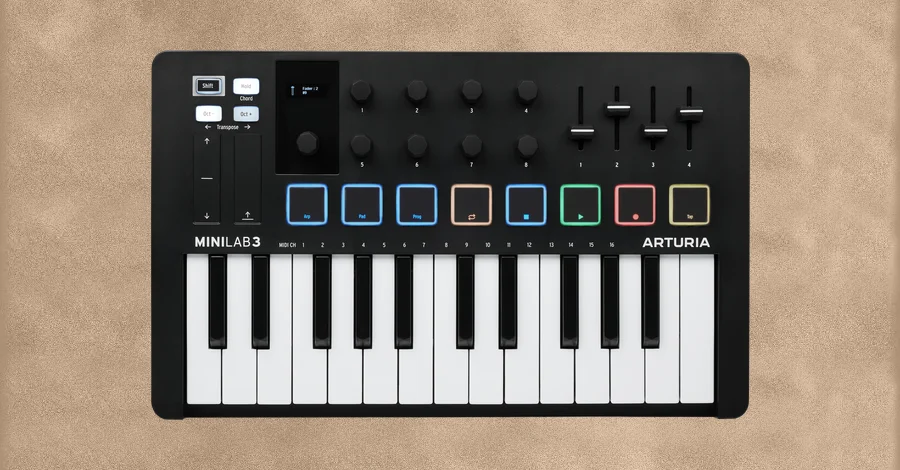
The Arturia MiniLab 3 packs about as much usable control into a 25-key footprint as anything at this price.
Keys: 25 slim velocity-sensitive keys
Controls: 8 RGB pads across 2 banks, 8 encoders, 4 faders, pitch and mod touch strips, OLED screen
Price: around $119
Four faders on a controller this small is the detail people miss. You can write volume automation and ride a mix with your hands on a board that fits in front of a laptop. Most 25-key controllers can’t do that.
Arturia writes custom DAW scripts for Ableton, Logic, FL Studio, Bitwig, Cubase and Reaper, so the transport and mixer map themselves. There’s an arpeggiator and a chord mode on board, and it ships with Analog Lab Intro and Ableton Live Lite. Arturia’s own store still tags it as their bestseller four years after release, and four years is a long time in this category.
Best for: producers who want the most hands-on control they can get on a 25-key desk controller.
Watch out: slim keys are narrower than piano keys. If you have big hands and you actually play, that will bother you.
3. Arturia KeyStep 37 mk2
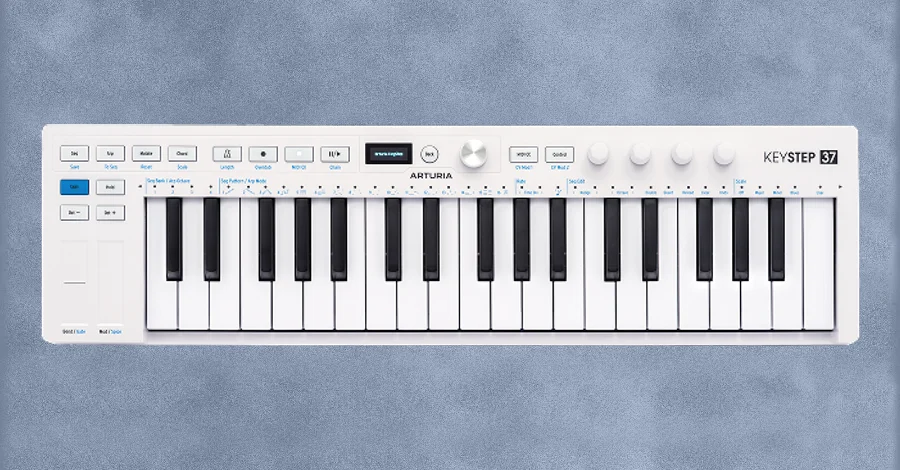
Released in February 2026, the Arturia KeyStep 37 mk2 is a little brain for your whole hardware setup.
Keys: 37 slim keys with velocity and aftertouch
Controls: 4 encoders, OLED screen, pitch and mod strips, chord and scale modes
Price: around $199
The sequencer is the point. It’s polyphonic, holds 64 sequences with up to eight notes per step, chains patterns and records unquantized, so you can play a part in loose and keep the feel. The arpeggiator has 16 modes including a Mutate function that reshuffles what you’re playing while you listen.
Around the back it has CV Pitch, Gate and two Mod outputs, MIDI DIN in and out, sync in and out, and USB-C. That’s the full kit for driving hardware synths or a modular rig, with or without a computer in the room. Analog Lab Intro and Ableton Live Lite are included.
Best for: producers running hardware, and anyone who writes best by starting from an arp or a sequence and following it somewhere.
Watch out: no pads and no faders, so it’s a poor choice as your only controller. There’s also a 32-key version for around $139.
4. Novation Launchkey Mini 37 MK4
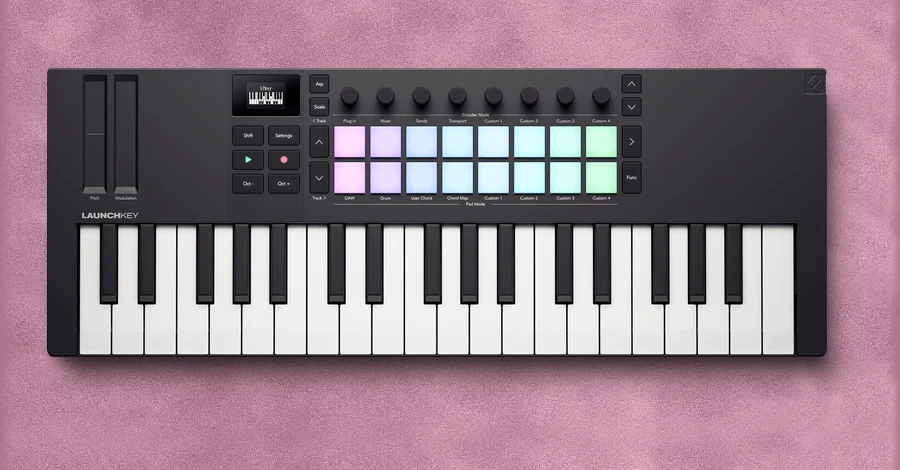
Take the small Ableton controller, bolt on an extra octave, and you get the Novation Launchkey Mini 37 MK4. Turns out that’s the version most people wanted.
Keys: 37 synth-action mini keys
Controls: 16 FSR pads with polyphonic aftertouch, 8 encoders, pitch and mod touch strips, scale, chord and arp modes
Price: around $160
Sixteen pads is what separates this from the MPK Mini. They handle drums, clip launch and step sequencing, and they read polyphonic aftertouch, so leaning into a held pad can move a parameter for that pad alone. At this size and price, that’s unusual.
Novation’s integration covers Ableton Live, Logic, Cubase, Reason, Reaper, FL Studio and Ardour, and there’s a standalone MIDI out for when the laptop stays home. Ableton Live Lite is in the box along with a plugin bundle.
Best for: Ableton users who want pads and three octaves in something that fits in a backpack.
Watch out: mini keys again. If you want full-size keys from the same family, the Launchkey 25 MK4 is around $190.
5. Akai MPK Mini Plus
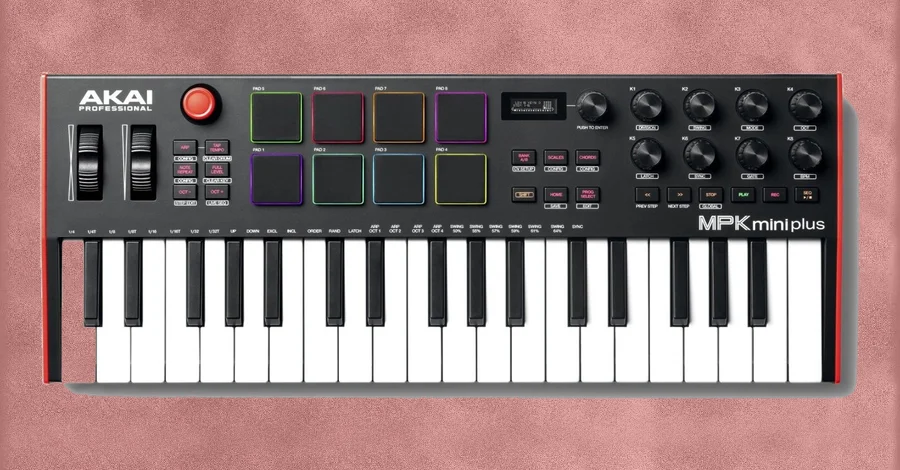
Think of the Akai MPK Mini Plus as the MPK Mini that grew up and learned to talk to hardware.
Keys: 37 mini keys
Controls: 8 MPC pads, 8 knobs, pitch and mod wheels, built-in step sequencer
Price: around $169
You get the familiar MPC pad workflow plus a step sequencer, and then the back panel does the interesting part: CV and gate outputs alongside MIDI in and out. For $169 that’s a controller that can sequence a hardware synth on its own. Boards that do that usually cost a lot more.
It’s NKS compatible, so Native Instruments and partner plugins map themselves, and it ships with MPC Beats and Ableton Live Lite.
Best for: bedroom producers who also own something with a CV input and want one box that drives both worlds.
Watch out: mini keys, and three octaves of them is still three octaves of mini keys.
6. Keith McMillen Instruments K-Board-C
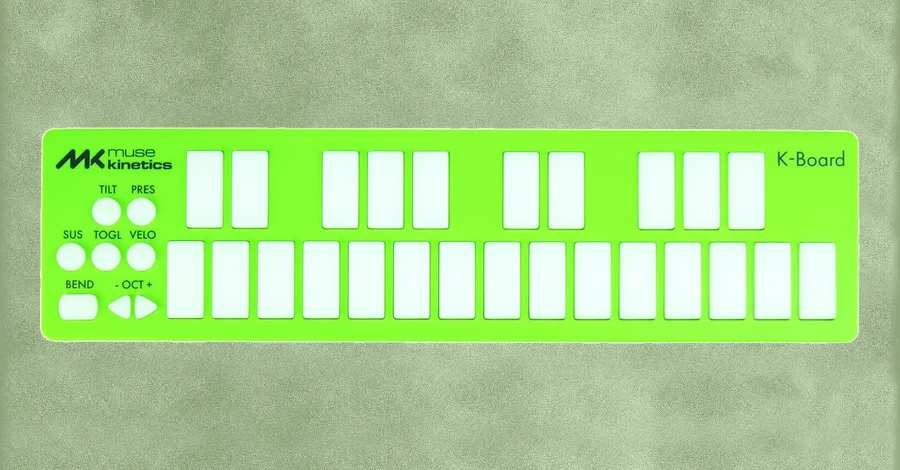
The K-Board-C is the weird one on this page. Stay with me.
Keys: 25 MPE keys sensing velocity, pressure and tilt
Controls: LED backlighting, editor software for Mac and Windows
Price: around $119
No knobs, no pads, no wheels, no screen. What it has is a flexible, nearly indestructible surface where every key reads how hard you press and which way you roll your finger. Map tilt to filter cutoff and you’re playing expression with the same finger that played the note.
It’s USB-C powered and weighs almost nothing. This is the keyboard you throw in a bag without a case and stop worrying about.
Best for: producers who write on the move, and anyone curious about MPE without spending four figures to find out.
Watch out: stock is thin. Keith McMillen Instruments is also becoming Muse Kinetics following the founder’s death in 2024, and the company has said the K-Board-C carries the KMI name only until current stock runs out. Availability may move.
7. M-Audio Oxygen Pro Mini
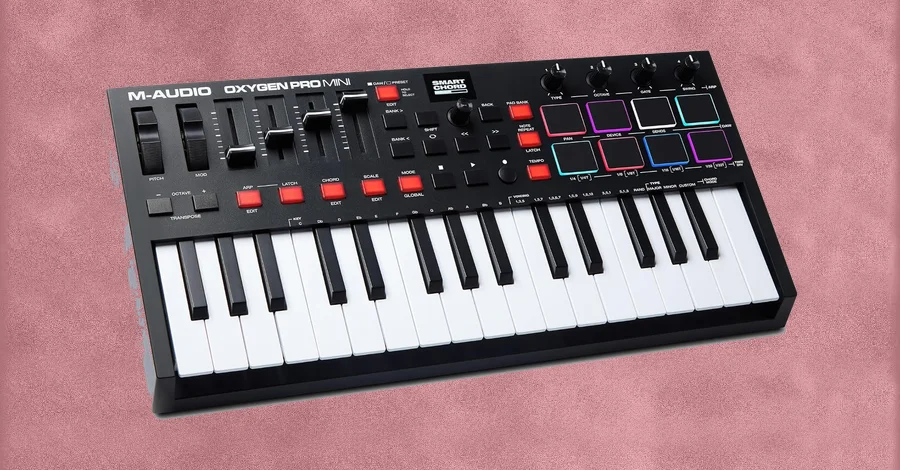
The M-Audio Oxygen Pro Mini gives you an extra half octave over the 25-key crowd for the same money.
Keys: 32 velocity-sensitive semi-weighted mini keys
Controls: 8 beat pads, 8 knobs, OLED screen, Smart Chord and Smart Scale, arpeggiator
Price: around $119
Semi-weighted mini keys sound like a contradiction and aren’t. The keys push back a little, and your velocity lands closer to what you intended than it does on the springier minis in this bracket.
It auto-maps to MPC Beats, Ableton Live, Cubase, Logic and others, and it’s NKS compatible. The Smart Chord and Scale modes are a real help if your theory is still coming along. MPC Beats and Ableton Live Lite are included.
Best for: budget buyers who want pads and a little more range than a 25-key board.
Watch out: still mini keys. If full-size is what you’re after at a similar price, M-Audio’s Oxygen 49 MKV is around $199.
8. M-Audio Keystation 49 MK3
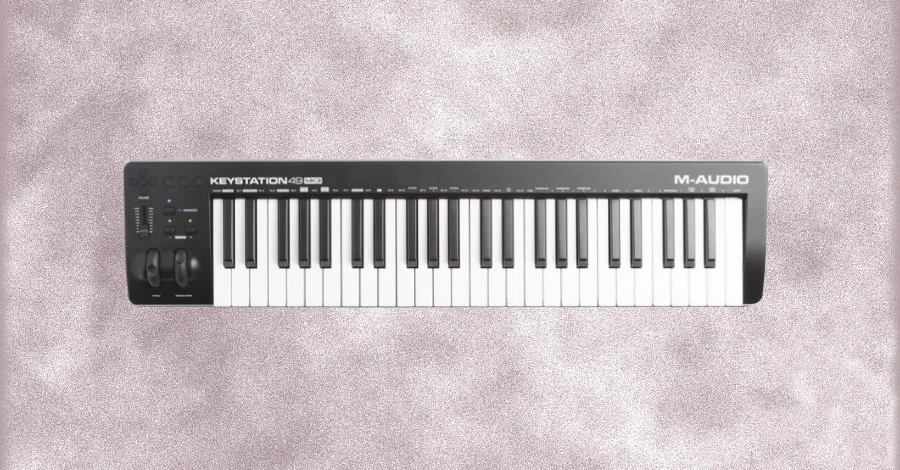
The M-Audio Keystation 49 MK3 is the cheapest way to get four octaves of full-size keys under your hands, and for a lot of producers it’s the correct answer.
Keys: 49 full-size velocity-sensitive synth-action keys
Controls: pitch and mod wheels, volume fader, transport and octave buttons, sustain pedal input
Price: around $129
No pads. No assignable knobs. Keys, two wheels, a fader, a few transport buttons and a sustain jack, powered over USB.
That’s the appeal. Nothing on it needs configuring and nothing on it can distract you. For $129 you get the thing a MIDI keyboard is actually for, which is playing parts in with two hands. MPC Beats and Ableton Live Lite come with it.
If you’ve been eyeing a $400 controller because it looked serious, sit with this one for a minute first.
Best for: anyone who wants real keys and no interface to learn.
Watch out: no pads and no knobs, and there’s no aftertouch either. If you want to ride faders and launch clips, keep reading.
9. Arturia MiniLab 37
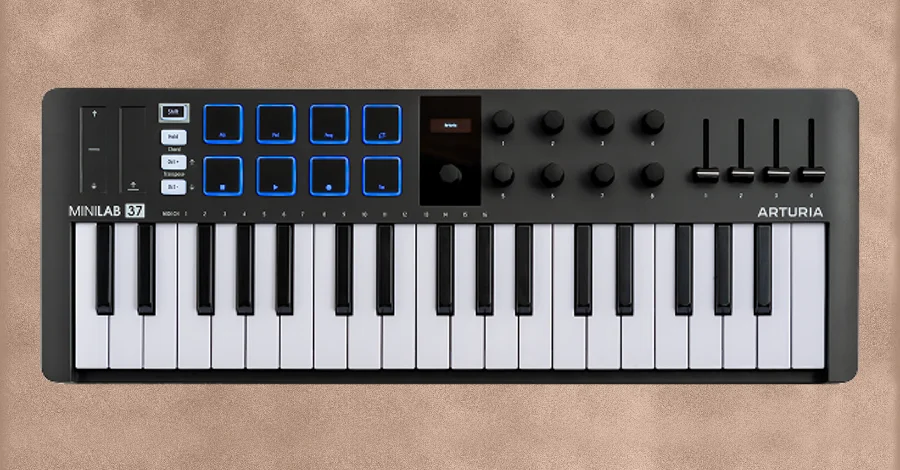
Announced in June 2026, the Arturia MiniLab 37 takes the MiniLab 3 and adds an octave. That’s the octave where both hands fit.
Keys: 37 slim velocity-sensitive keys, C2 to C5 by default
Controls: 8 RGB pads, 8 encoders, 4 faders, pitch and mod touch strips, display, arpeggiator and chord mode
Price: around $149
The jump from 25 to 37 keys is the one that changes how you write. Your left hand holds a chord while your right plays the melody, and you stop reaching for the octave buttons mid-phrase. Everything else carries over from the MiniLab 3, including the four faders and the Arturia DAW scripts, and there’s a MIDI out on the back.
The software bundle is the most generous on this list: Analog Lab Intro, Ableton Live Lite, Komplete Select from Native Instruments, plus Loopcloud and Melodics content.
Best for: MiniLab fans who want to play with both hands and keep the same desk footprint.
Watch out: slim keys, and it’s new enough that there isn’t much long-term owner feedback yet.
10. Novation FLkey Mini 25 MK2
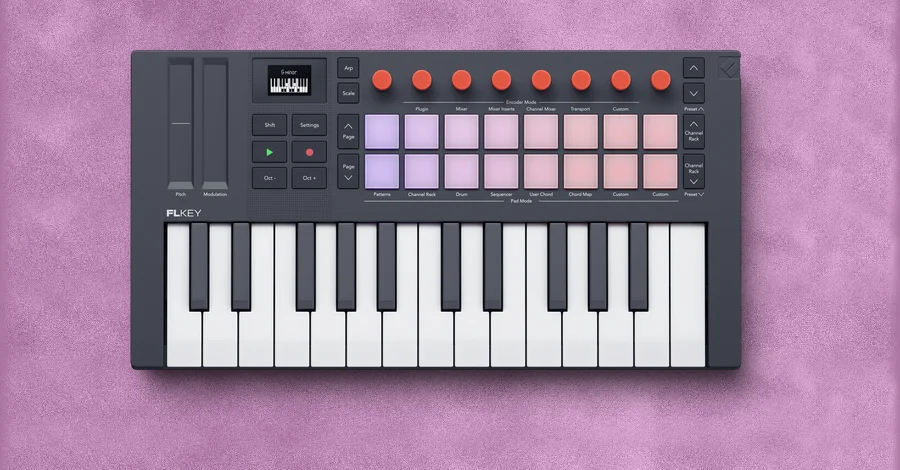
If you produce in FL Studio, the FLkey Mini 25 MK2 was built for you specifically.
Keys: 25 synth-action mini keys
Controls: 16 velocity-sensitive pads, 8 endless encoders, pitch and mod touch strips, OLED screen
Price: around $130
The pads step-sequence directly into the Channel Rack and drop into FPC and Slicex with no setup. The screen shows your actual FL project information where other boards show you CC numbers. Small things, until you count how often the alternative pulls you out of a session.
The FLkey 2 range arrived in May 2026, and this one ships with six months of FL Studio Producer Edition plus plugins from Native Instruments, GForce, Orchestral Tools and Klevgrand, and a run of Melodics lessons.
Best for: FL Studio producers who want a small board that already knows where everything is.
Watch out: the deep integration is FL-first. It works as a normal controller elsewhere, but you’d be paying for something you’re not using. Also, some listings call it “FLkey 2 Mini 25” while Novation calls it the FLkey Mini 25 MK2. Same keyboard.
Best Mid-Range MIDI Keyboards, $200 to $350
Now the keys get full-size across the board and the control surfaces get serious. This is the range where a controller starts doing mixing work as well as writing work.
11. Arturia KeyLab Essential 61 mk3
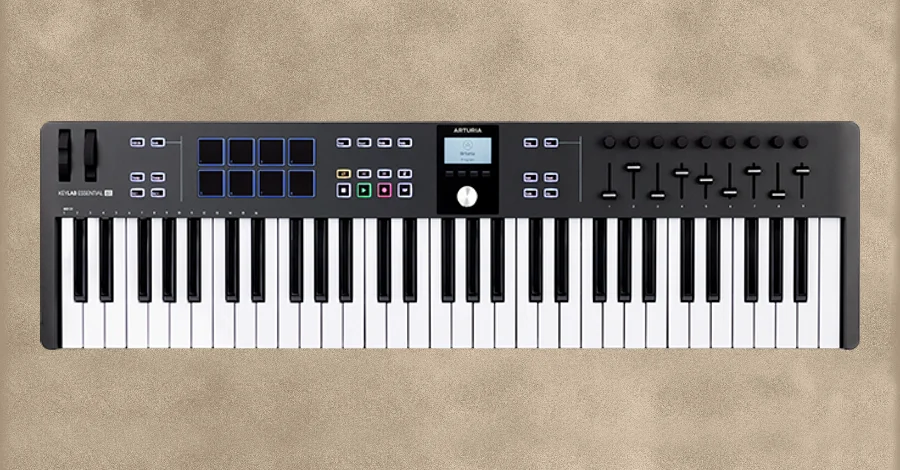
If one board in this tier has to do everything, it’s the KeyLab Essential 61 mk3, and the nine faders are why.
Keys: 61 velocity-sensitive synth-action keys
Controls: 8 pads, 9 encoders, 9 faders, display, scale mode, chord mode, arpeggiator
Price: around $299
Nine faders and nine encoders mean you can mix with your hands. That changes the job more than people expect. Volume rides you’d never bother drawing in with a mouse start happening because your fingers are already there.
Arturia’s custom DAW scripts cover Ableton Live, Logic Pro, FL Studio and more, so it maps itself and you never open a MIDI-mapping page. Analog Lab comes with 2,000 presets, and Ableton Live Lite is included.
Best for: producers who want one board that handles writing and mixing without locking into any single DAW.
Watch out: Arturia’s own store lists this at $349 while major retailers sit around $299, so check both. The 49-key is around $249 and the 88-key around $399.
12. Novation Launchkey 49 MK4
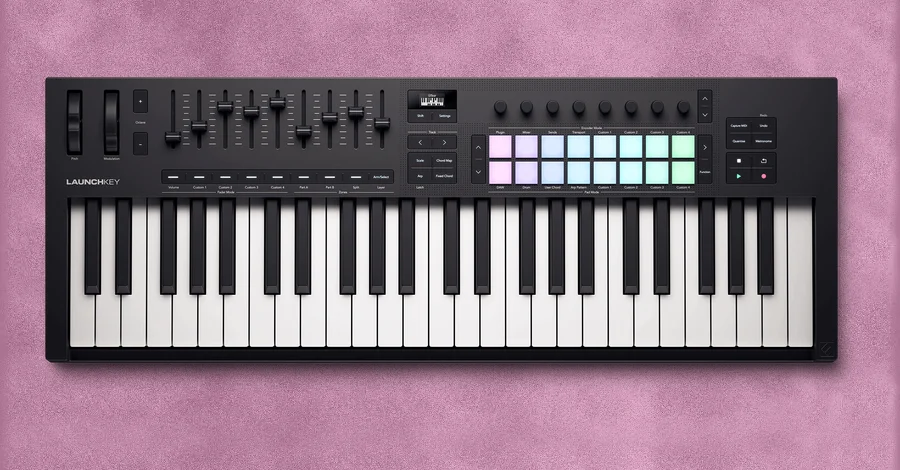
The Launchkey 49 MK4 is the mid-size Launchkey, for when the 61 won’t fit on your desk.
Keys: 49 semi-weighted keys
Controls: 16 FSR pads with polyphonic aftertouch, 8 encoders, 9 faders, screen, scale, chord and arp modes
Price: around $280
Semi-weighted keys and sixteen aftertouch pads in the same box is what makes this work as your only controller. You can play parts properly and program drums on the pads, and the nine faders keep the mix under your hands.
Integration covers Ableton Live, Logic, Cubase, Reason, Reaper, FL Studio and Ardour. There’s a standalone MIDI out for hardware, plus Ableton Live Lite and a plugin bundle in the box.
Best for: Ableton producers who want a four-octave board that does everything.
Watch out: the 61-key version is only about $50 more, and that extra octave is the thing people wish they’d bought.
13. Novation Launchkey 61 MK4
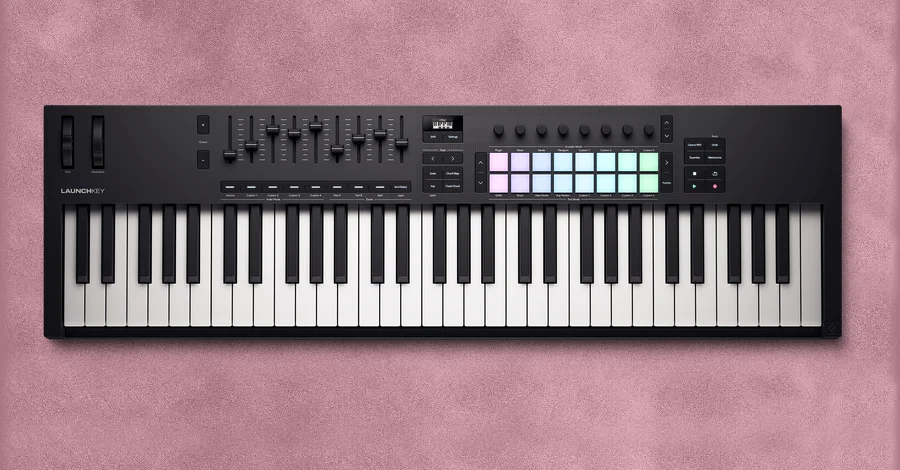
The Launchkey 61 MK4 is the one to buy if you want to stop thinking about controllers.
Keys: 61 semi-weighted keys
Controls: 16 FSR pads with polyphonic aftertouch, 8 encoders, 9 faders, screen, scale, chord and arp modes
Price: around $330
Same feature set as the 49, with the octave that makes two-handed playing comfortable. Five octaves is enough range that you stop transposing to reach a bass note, and 61 keys is still narrow enough to sit on a normal desk.
Sixteen pads with polyphonic aftertouch and nine faders on top of semi-weighted keys is a lot of controller for $330.
Best for: the producer who wants one controller for the next five years and doesn’t want to overthink it.
Watch out: the Launchkey 88 MK4 arrived in July 2026 at $449.99 from Novation, and plenty of “Launchkey 88” listings are still the older MK3. Don’t get caught by that one.
14. Novation FLkey 49 MK2
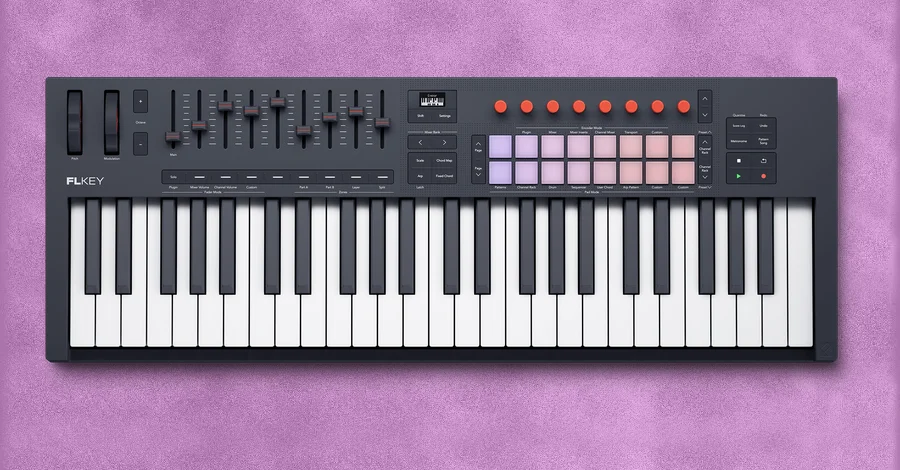
New for the FLkey 2 range in May 2026: the FLkey 49 MK2 finally puts semi-weighted full-size keys on an FL-specific controller.
Keys: 49 semi-weighted keys
Controls: 16 velocity-sensitive pads, 8 endless encoders, faders, pitch and mod wheels, OLED screen
Price: around $280
Previous FLkey boards topped out at synth-action keys, so if you wanted proper key feel you had to give up the FL integration. That tradeoff is gone. You still get the Channel Rack sequencing from the pads and the jump into FPC and Slicex, now on keys you’d actually want to play. It feels like part of FL. Mapped controllers never quite do.
Six months of FL Studio Producer Edition and a plugin bundle are included, which softens the price if you’re not already on a perpetual license.
Best for: FL Studio producers who play, and who were waiting for keys worth playing.
Watch out: the 61-key is around $330 and the 37-key around $230 if this one is out of stock.
15. M-Audio Keystation 61 MK3
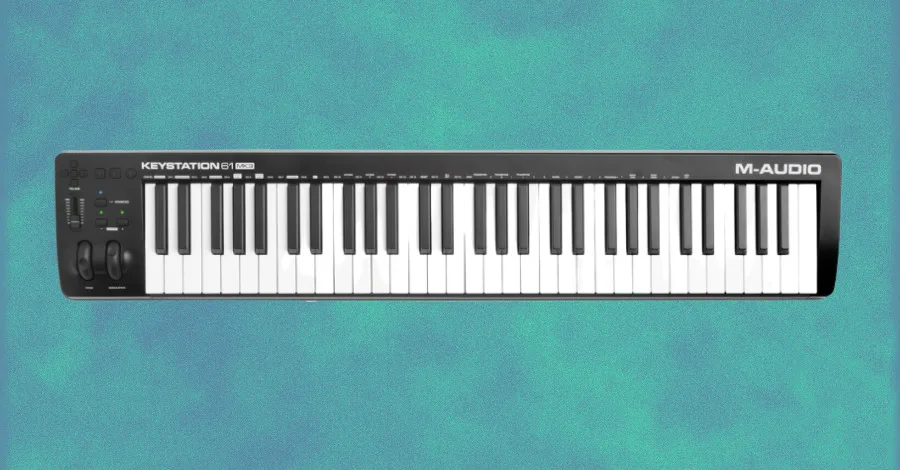
An earlier Keystation 61 was my first MIDI keyboard, and the M-Audio Keystation 61 MK3 is still the shape of what I’d tell most producers to buy.
Keys: 61 full-size velocity-sensitive keys
Controls: pitch and mod wheels, volume fader, transport and octave buttons, sustain pedal input
Price: around $229
Five octaves, two wheels, a fader, a sustain jack, USB power. That’s the entire product, and it’s on this list for the same reason its 49-key sibling is: what you want from a MIDI keyboard is keys. Everything else is a nice-to-have.
My setup hasn’t gotten much fancier since. I’m on a basic Alesis controller these days, which is more or less the argument for this whole end of the list. The Keystation felt heavier under my fingers than the Alesis does, and that resistance is the part I actually miss.
Best for: anyone who wants five octaves and refuses to pay for features they won’t touch.
Watch out: no pads and no knobs. M-Audio’s own listing also can’t decide whether the keys are synth-action or semi-weighted (the retail title says one, the first bullet says the other), so don’t buy it for the key feel. Whatever shows up, shows up. It has no aftertouch either, despite what some older articles claim.
Best Advanced MIDI Keyboards, $350 and Up
Quick reality check before you read this section. Most producers never need anything on this list. Buy from this tier if you’re a real player who needs the full 88, or if one company’s plugin library is where you spend every session. Otherwise the $129 option above is not a compromise.
One note on price: the Nektar comes in just under $350. It belongs with these boards because of what it does, so it’s here anyway.
16. Nektar Impact LX88 mk3
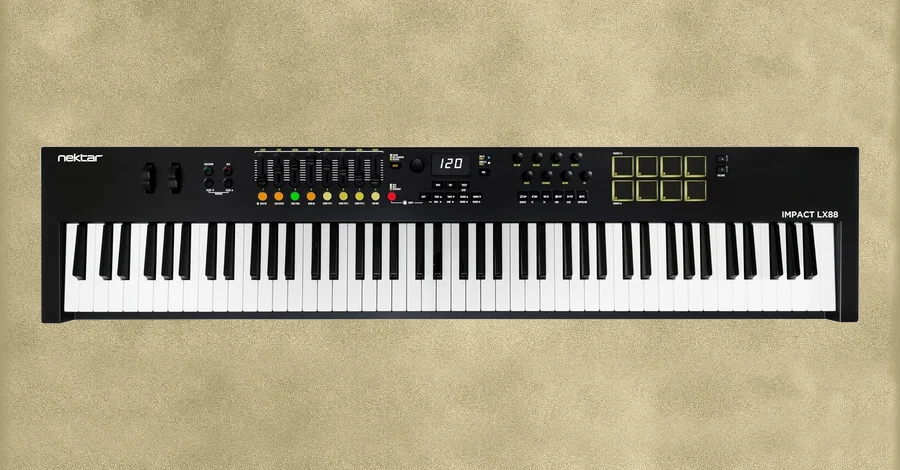
Shipping since August 2025, the Nektar Impact LX88 mk3 is the cheapest way to get 88 semi-weighted keys with a real control surface attached.
Keys: 88 semi-weighted velocity-sensitive keys, based on the Nektar GXP88 keybed
Controls: 8 dynamic pads with a DAW looper button, a global encoder plus 8 full-resolution encoders, 8 faders, 8 LED buttons, scale, chord and hold modes
Price: around $340
The nearest competitor on price is Arturia’s KeyLab Essential 88 mk3 at around $399, and past that the 88-key options head toward four figures. Nektar’s DAW integration doesn’t get enough credit. It covers most major DAWs properly, and NKS support means Native Instruments plugins map themselves whatever you’re running.
The full-resolution encoders matter if you automate a lot. They send finer values than standard 7-bit MIDI, so filter sweeps and volume moves don’t step.
Best for: players who need the full range and can’t spend four figures to get it.
Watch out: these are semi-weighted keys. If you want true piano feel, keep reading. Some listings are titled just “Impact LX mk3,” so check the size selector says 88. The 49-key mk3 is around $199.
17. Native Instruments Kontrol S61 MK3
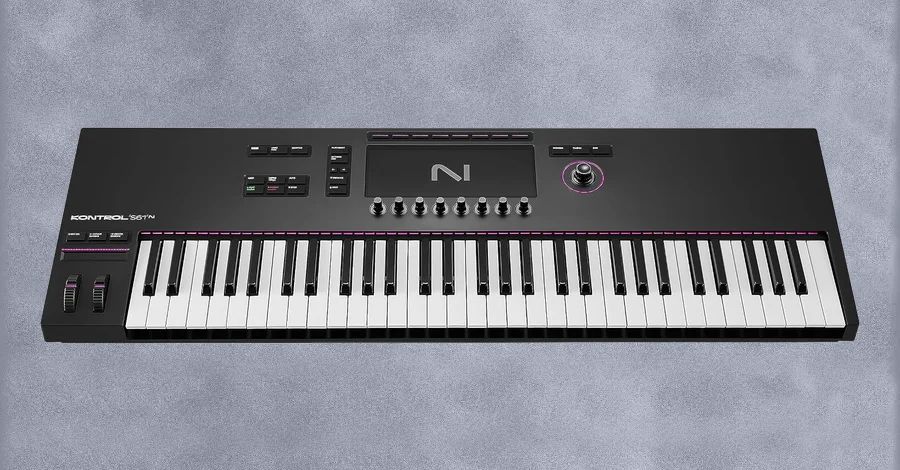
The Kontrol S61 MK3 is the most capable controller here and the easiest one to overbuy.
Keys: 61 semi-weighted Fatar keys with polyphonic aftertouch
Controls: high-resolution color screen, light guide over the keys, NKS2 integration, metal and glass build
Price: around $849
If you work in Kontakt and NI libraries all day, this is a different experience from a generic controller. You browse and load instruments from the hardware, and the light guide lights up a library’s playable ranges and key switches directly above the keys while the screen tells you what you’re editing. Fatar builds the keybed, and it reads polyphonic aftertouch on the keys themselves. Almost nothing else at this size does.
I’ve spent time on these, and they were overkill for how I work. All that integration only pays off if Kontakt and Komplete are most of what you open. If they are, nothing else comes close. If they aren’t, you’re buying a very nice screen.
Best for: composers and producers whose sessions are mostly Kontakt and NI instruments.
Watch out: stock on the S61 is thin. The S49 is around $749, and the S88 MK3 is around $1,299.
18. Novation 61SL MkIII
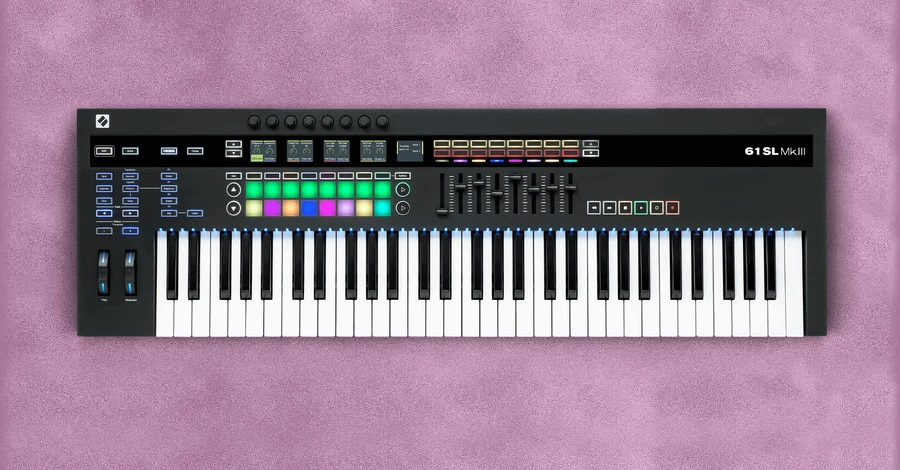
If your studio has more than a computer in it, the 61SL MkIII is aimed squarely at you.
Keys: 61 semi-weighted synth-action keys with aftertouch
Controls: 16 RGB pads, 8 knobs, 8 faders, color screens, 8-track polyphonic pattern sequencer
Price: around $820
You buy this for the sequencer. Eight tracks of polyphonic patterns, CV and gate outputs, clock out, and MIDI in, out and thru. Enough to sit in the middle of a room full of synths and run all of them, with the DAW as one device among several instead of the boss.
If you’ve built a hybrid setup and you’re tired of the computer being the only thing that can start a sequence, this is the piece that fixes it.
Best for: hybrid studios where hardware and a DAW have to stay in sync.
Watch out: it’s a 2018 design being sold at list-level pricing, so it’s the worst value on this page if you don’t need the sequencer and the CV. The 49-key version is around $700.
19. Arturia KeyLab 61 mk3
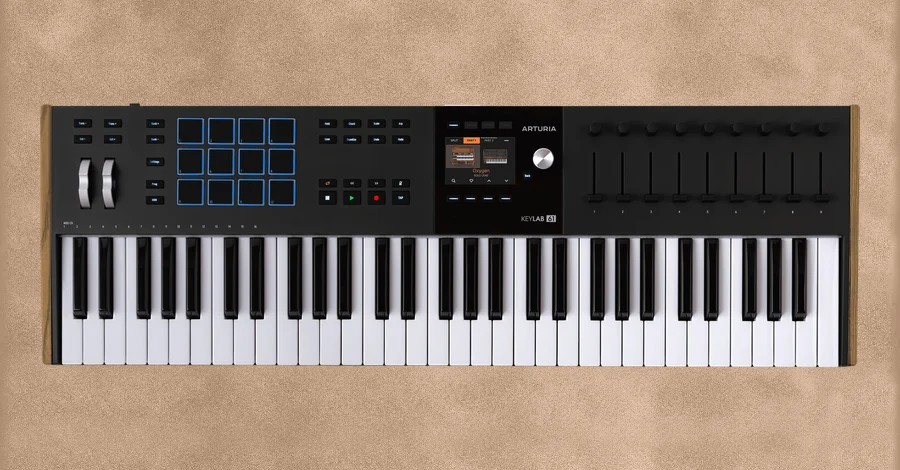
The KeyLab 61 mk3 is the pro-grade option that doesn’t ask you to pick a side.
Keys: 61 keys with aftertouch
Controls: 12 pressure-sensitive pads, 9 encoders, 9 faders, color screen, sustain and aux pedal inputs
Price: around $599
This is the KeyLab Essential’s better-built older sibling: aftertouch on the keys, pressure-sensitive pads, a color screen, two pedal inputs and USB-C power. Chord, scale and arp modes are on board, and it ships with Ableton Live Lite, Melodics, some Native Instruments content and Analog Lab.
The reason I’d lean toward this over the Kontrol boards is that it doesn’t care which DAW you opened. Nothing about it gets worse because you work in Logic and never touch Kontakt.
Best for: producers who want a serious control surface and no allegiance to one software company.
Watch out: Arturia lists it at $649 while major retailers sit around $599. The 49-key is around $479.
20. Arturia KeyLab 88 mk3
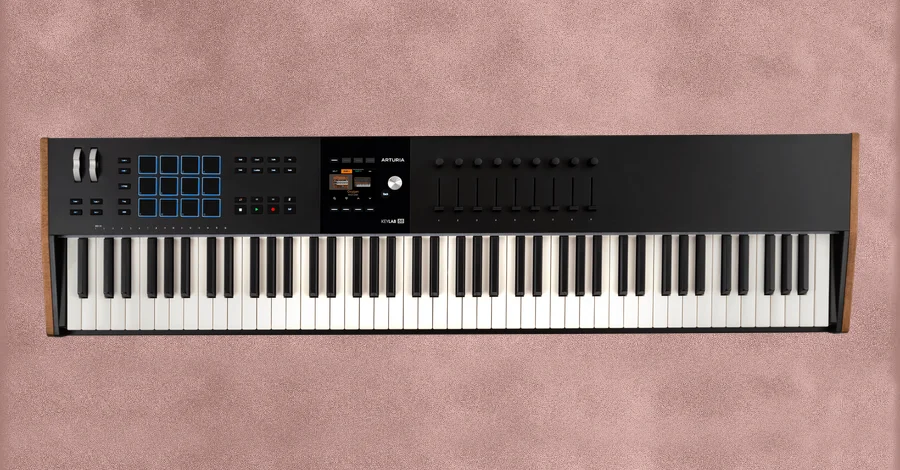
If you actually play piano, the KeyLab 88 mk3 is the one.
Keys: 88 fully weighted hammer-action keys
Controls: 12 pressure-sensitive pads, sustain and aux pedal inputs, sheet music stand, plus the KeyLab mk3 encoder and fader section
Price: around $999
Hammer action is a different instrument. Each key has a weighted mechanism behind it, so your dynamics come from your arms and wrists the way they do on a real piano, and performances you play in need far less velocity editing afterward.
That feel is what you’re paying for, and there’s a sheet music stand on top because Arturia knows exactly who’s buying this. The rest of the KeyLab mk3 control surface is all there too, so it still does the DAW work.
Best for: pianists and composers who want real key feel without giving up hands-on DAW control.
Watch out: Arturia lists it at $1,299 while major retailers sit around $999, so check the price before you commit. It’s also close to four feet of desk, and it isn’t going anywhere once it’s there.
All 20 Side by Side
| Keyboard | Keys | Key feel | Pads | Faders | DAW integration |
|---|---|---|---|---|---|
| Akai MPK Mini IV | 25 | Mini, velocity | 8 | None | Works with any DAW |
| Arturia MiniLab 3 | 25 | Slim, velocity | 8 | 4 | Scripts for Live, Logic, FL, Bitwig, Cubase, Reaper |
| Arturia KeyStep 37 mk2 | 37 | Slim, velocity and aftertouch | None | None | Hardware first: CV, gate, sync, MIDI DIN |
| Novation Launchkey Mini 37 MK4 | 37 | Mini, synth action | 16, poly aftertouch | None | Live, Logic, Cubase, Reason, Reaper, FL, Ardour |
| Akai MPK Mini Plus | 37 | Mini | 8 | None | NKS, plus CV and MIDI for hardware |
| KMI K-Board-C | 25 | MPE, pressure and tilt | None | None | None, editor software only |
| M-Audio Oxygen Pro Mini | 32 | Mini, semi-weighted | 8 | None | Auto-maps to MPC Beats, Live, Cubase, Logic; NKS |
| M-Audio Keystation 49 MK3 | 49 | Full-size, synth action | None | 1 volume | Works with any DAW |
| Arturia MiniLab 37 | 37 | Slim, velocity | 8 | 4 | Arturia DAW scripts |
| Novation FLkey Mini 25 MK2 | 25 | Mini, synth action | 16 | None | FL Studio, deep |
| Arturia KeyLab Essential 61 mk3 | 61 | Full-size, synth action | 8 | 9 | Scripts for Live, Logic, FL and more |
| Novation Launchkey 49 MK4 | 49 | Semi-weighted | 16, poly aftertouch | 9 | Live, Logic, Cubase, Reason, Reaper, FL, Ardour |
| Novation Launchkey 61 MK4 | 61 | Semi-weighted | 16, poly aftertouch | 9 | Live, Logic, Cubase, Reason, Reaper, FL, Ardour |
| Novation FLkey 49 MK2 | 49 | Semi-weighted | 16 | Yes | FL Studio, deep |
| M-Audio Keystation 61 MK3 | 61 | Full-size, listing unclear | None | 1 volume | Works with any DAW |
| Nektar Impact LX88 mk3 | 88 | Semi-weighted | 8 | 8 | Nektar integration for most major DAWs; NKS |
| NI Kontrol S61 MK3 | 61 | Semi-weighted Fatar, poly aftertouch | None | None | NKS2 with Kontakt and partner plugins |
| Novation 61SL MkIII | 61 | Semi-weighted, aftertouch | 16 | 8 | Any DAW, plus its own sequencer |
| Arturia KeyLab 61 mk3 | 61 | Full-size, aftertouch | 12, pressure sensitive | 9 | Works across major DAWs |
| Arturia KeyLab 88 mk3 | 88 | Hammer action, fully weighted | 12, pressure sensitive | Yes | Works across major DAWs |
Frequently Asked Questions
How many keys do I actually need?
Go by what you actually play. How serious a keyboard looks isn’t a spec. If you play chords with your left hand and a melody with your right at the same time, 49 keys is the floor and 61 is comfortable. If you’re sketching one line at a time and programming drums, 25 or 37 keys is plenty and you’ll use the octave buttons without thinking about it. 88 keys only makes sense if you’re a trained piano player or you’re writing piano parts that move across the whole instrument.
Weighted, semi-weighted or synth-action?
Synth-action keys are light and springy, and they’re what most controllers under $300 use. Semi-weighted keys push back a little, which makes it easier to control velocity and play something that sounds human. Fully weighted hammer-action keys have a real weighted mechanism per key and feel like a piano, which is why they start around $999 and weigh a lot. For most producers, semi-weighted is the sweet spot, and plenty of great records got written on synth-action keys.
Are mini keys a mistake?
No, they’re a tradeoff. Mini and slim keys are narrower than a piano key, so fast two-handed playing gets awkward and you’ll misfire more often. What you get back is a board that fits in front of a laptop or in a backpack. If the keyboard is going to live on a desk permanently, buy full-size. If it’s going to travel, or if you mostly tap in bass notes and drums, mini keys are fine and you’ll save $100.
Will it work with my DAW?
Almost certainly. Every keyboard on this page speaks standard USB MIDI, which every DAW understands with no setup. What varies is how much of the mapping is done for you. Novation’s Launchkey line maps itself to Ableton Live, the FLkey line does the same for FL Studio, the Native Instruments Kontrol boards browse NKS libraries from the hardware, and Nektar and Arturia both ship scripts covering most major DAWs. If you use something less common, look for the word “integration” on the manufacturer’s page rather than assuming.
Is it worth spending more than $300?
Only for a specific reason. The ones that hold up: you need 88 keys, you play piano well enough that key feel changes how your performances come out, or one company’s plugin library is where nearly all your sounds come from. Wanting to feel more professional is not one of those reasons. I’ve used the expensive boards and gone back to something basic, and nobody has ever listened to a track and heard the controller.
Buy the Simple One, Then Go Write Something
The keyboard is the fastest way to get an idea out of your head and into your DAW. That’s the job. Everything past that is preference.
If you just want me to pick:
- Small desk, mostly beats. Akai MPK Mini IV, around $99.
- You want to play with two hands and spend as little as possible. M-Audio Keystation 49 MK3, around $129.
- You want one controller to handle writing and mixing for years. Novation Launchkey 61 MK4, around $330.
- You play piano, or you need 88 keys. Nektar Impact LX88 mk3 at around $340 for semi-weighted, or Arturia KeyLab 88 mk3 at around $999 for hammer action.
Pick one and learn where everything is. Then stop thinking about it.
And if the gap between your tracks and the records you love has nothing to do with hardware, that’s what the Masterclass is for. It’s the program I wish had existed when I was playing everything in on that Keystation 61.
Heads up: some of the links below are affiliate links. If you buy through one, we earn a small cut (costs you nothing extra). But we'd point you at this exact gear whether we made a dime or not. As an Amazon Associate, we earn from qualifying purchases.