Jump to a section12
- Quick Picks
- How to Choose Studio Monitors
- Where to Put Them
- Best Entry Level Studio Monitors, Under $400 a Pair
- Best Advanced Studio Monitors, $400 to $1,000 a Pair
- Best Professional Studio Monitors, $1,000 to $5,000 a Pair
- Best Top-of-the-Line Studio Monitors, Over $5,000 a Pair
- Room Correction: Built-In DSP vs Software
- Do You Need a Subwoofer?
- All 20 Side by Side
- Frequently Asked Questions
- Monitors and a Little Treatment, Together
Every mixing decision you make goes through your monitors. Every EQ move, every “is the vocal loud enough?” You can swap a plugin in a second. A pair of speakers, you live with for years.
My first pair was KRK Rokit 5s. I had JBLs for a while too, and I never loved them, even though nothing was wrong with them. These days I mix on Yamaha HS8s in the Hyperbits studio, with a Yamaha sub I keep turned way down.
Most producers buying their first real pair (probably you) should spend around $400 and get the Yamaha HS5 or the KRK Rokit 5 G5. If $400 is a stretch, the JBL 305P MkII goes on sale constantly, often for around $200 a pair. And when you’re ready for real low end, the HS8 is about $800 a pair.
Quick Picks
Click any pick to jump to it.
| Monitor | Best for | Why |
|---|---|---|
| JBL 305P MkII | Tightest budget | Still sounds right when you move around, often about $200 on sale |
| Yamaha HS5 | First real pair | Doesn’t flatter your mix, about $400 |
| KRK Rokit 5 G5 | Electronic producers | Three sound modes and a free room app |
| IK iLoud Micro Monitor | Tiny desks | 3” speakers that still sound like monitors |
| Kali LP-6 V2 | Untreated rooms | Switches that fix awkward placement |
| Yamaha HS8 | Home studio low end | What I mix on, about $800 |
| Focal Shape 65 | Close to a wall | No port blowing bass at the wall |
| ADAM Audio A7V | Built-in correction | Corrects your room inside the speaker |
| Genelec 8341A | Pinpoint stereo | Tunes itself to your room |
How I Picked These
I picked these based on a mix of what I’ve used myself, what my producer friends swear by, a pile of public reviews, and a whole hell of a lot of research. Every pair is still being made, so you can actually buy it new.
Quick note on prices: they’re for a pair. Most monitors are sold one speaker at a time, so if a listing looks suspiciously cheap, that’s probably why.
Pick Monitors Based on the Room You’re In
Honestly, your room matters more than your budget. Find the setup that sounds like yours and start with those picks.
- Small room, desk against a wall. Go small, 3” to 5”, and pick something that works near a wall. iLoud Micro Monitor, Genelec 8010A, Dynaudio LYD 5 or the Focal Shape 65.
- Bedroom studio, no treatment yet. 5” to 6.5”, ideally with switches to adjust for the wall. JBL 305P MkII, Yamaha HS5, Kali LP-6 V2 or the Rokit 5 G5.
- Some bass traps up, and you make bass-heavy music. 7” to 8”. This is where you start really hearing the low end. Rokit 7 G5, Yamaha HS8 or the ADAM A7V.
- A properly treated room. This is where the expensive stuff makes sense. HEDD Type 20 MK2, Neumann KH 310 II, Focal Trio6 or the Barefoot MicroMain27.
- You want the speakers to fix the room for you. ADAM A7V, Neumann KH 120 II or the Genelec 8341A.
How to Choose Studio Monitors
Four questions, roughly in order of how much they matter.
What’s my budget? Going from $100 computer speakers to a $400 pair of HS5s is a huge jump. Going from $3,000 to $7,000 is a real jump too, but you’ll only hear it in a really good room.
How big is my room? Small room, small speakers. Put 8” monitors in a 10-by-10 bedroom and the bass builds up in the corners and booms. So you turn the bass down in your mix, and then it sounds thin everywhere else. Rough guide: 3” to 5” for a small room, 5” to 6.5” for a normal bedroom, 7” to 8” for a bigger room or one with bass traps. (Most of these are sold as “near-field” monitors, which just means they’re built to sit a few feet from your head.)
What’s my room doing to the sound? Monitors and a little room treatment go hand in hand. I wouldn’t do one without the other for long. A couple of heavy bass traps in the corners and a few panels on the side walls will change what you hear more than another $1,000 of speakers. And skip the thin foam squares. They do almost nothing for bass, and bass is the problem in most small rooms.
What kind of music do I make? It matters less than you’d think, except for the low end. In electronic music a lot happens below 50Hz, and most 5” monitors barely get down there. You’ll want bigger speakers or a sub, or at the very least good headphones to check it.
Here’s a quick video on getting the most out of whatever pair you buy.
Where to Put Them
Placement is free, and it’s the first thing most people get wrong.
Make a triangle. Your head and the two speakers should form a triangle with equal sides, so the speakers are as far apart as each one is from you. Angle them in so they point at your ears.
Tweeters at ear height. The tweeter is the small speaker on top, and highs are very directional. If it’s pointing at your chest, you’ll hear less top end than there really is, and your mixes will come out too bright. Stands or angled foam pads fix this.
Watch the wall behind them. The closer a speaker is to a wall, the more bass you get, and corners are even worse. It’s a bigger problem with speakers that have a port (the hole) on the back, because it’s blowing straight at the wall. If your desk has to be against a wall, use the speaker’s wall or room switch, or get one without a rear port, like the Focal Shape 65.
Don’t sit in the middle of the room. Bass is at its most uneven right at the halfway point, with some notes booming and others almost disappearing. The “38% rule” says to sit about 38% of the way into the room from the wall in front of you. In a 12-foot room, that’s about four and a half feet. Start there, then move a foot either way and listen to how the bass changes.
Keep it even. Set up in the middle of the wall so both speakers have the same space around them. If one is jammed in a corner, it’ll sound different from the other one.
Best Entry Level Studio Monitors, Under $400 a Pair
This is where most of you should be shopping. Every pair here is good enough to make real records on.
1. JBL 305P MkII
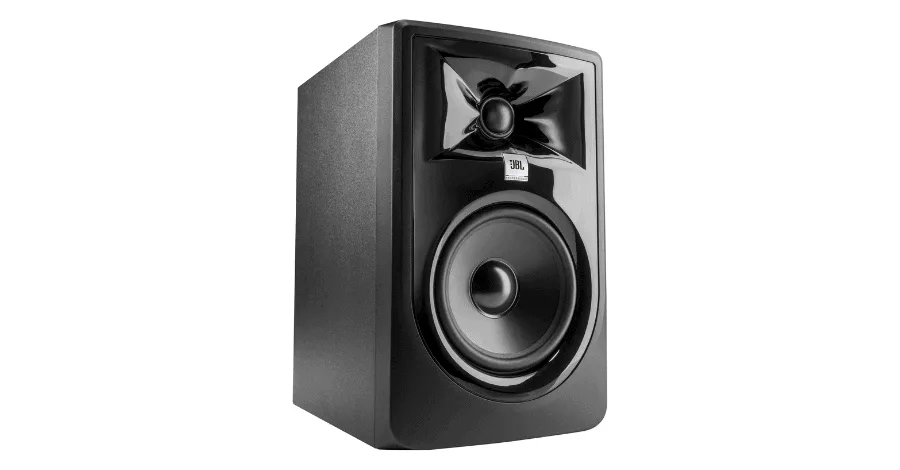
If every dollar counts, start with the JBL 305P MkII. It’s sold one speaker at a time, so you’ll need two.
Drivers: 5” woofer, 1” soft dome tweeter, 2-way
Low end: down to 43Hz
Room tools: Boundary EQ and HF Trim switches, balanced XLR and TRS inputs
Price: about $400 a pair at full price, but it goes on sale constantly, often for around $200 a pair
The big thing here is how wide the sound spreads. Lean back or roll your chair over and the stereo picture still holds together. That matters when your first setup isn’t perfect (and it won’t be).
Turn them up and they stay clean, too.
Best for: a first pair on a tight budget.
Watch out: there’s a 2-pack listing that often costs more than two singles, so compare before you buy.
2. PreSonus Eris Studio 5
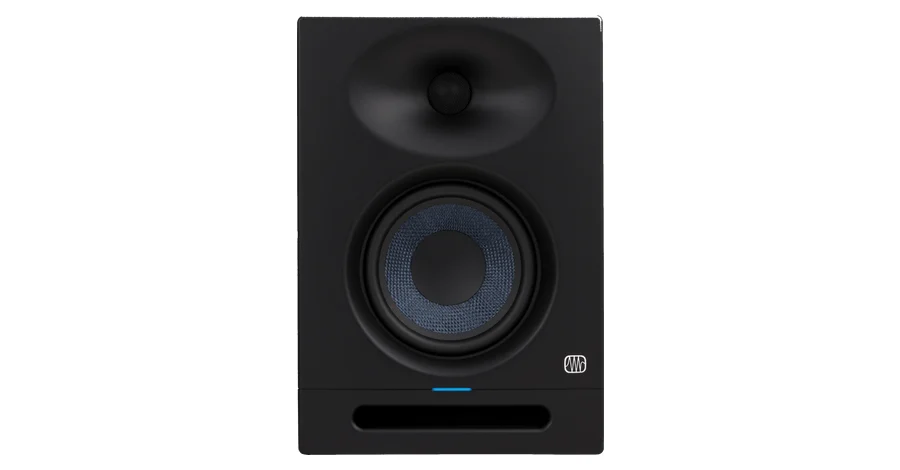
The PreSonus Eris Studio 5 costs about $30 more than the JBL and sounds a little smoother up top.
Drivers: 5.25” woven composite woofer, 1” silk dome tweeter, 2-way
Low end: down to 48Hz
Room tools: Acoustic Space, HF, Mid and Low Cut controls, XLR, TRS and RCA inputs
Price: about $300 a pair
Like the JBL, it spreads the sound wide, so you don’t have to sit perfectly still. And the highs stay easy on your ears at the end of a long night.
The Low Cut switch is the sleeper feature. If you add a subwoofer later, flip it and the sub takes over the bass. You don’t have to replace the speakers.
Best for: a smooth-sounding pair around $300 that you can add a sub to later.
Watch out: the bass runs out a little sooner than on the JBL. Also, the older Eris E5 is still sold, so make sure the listing says “Studio 5.”
3. IK Multimedia iLoud Micro Monitor
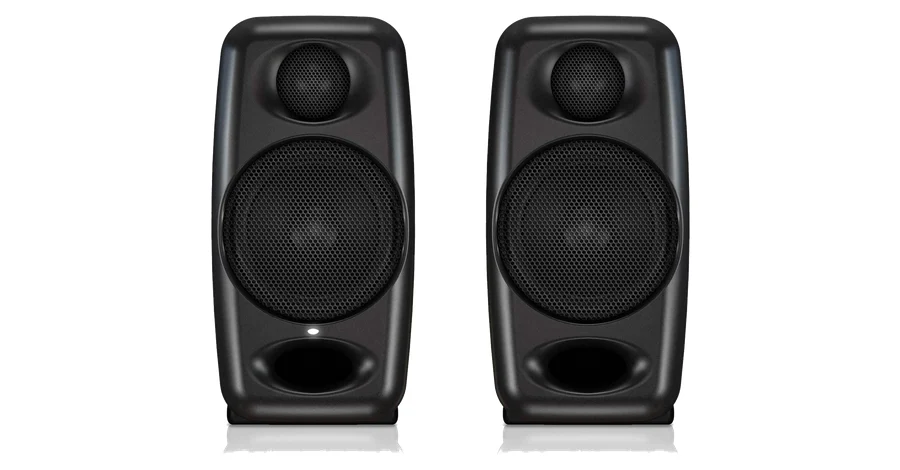
If your whole studio is a laptop on a small desk, look at the iLoud Micro Monitor. It’s sold as a pair.
Drivers: 3” woofer, 3/4” tweeter per side, 2-way
Low end: down to 55Hz
Room tools: onboard DSP with positioning EQ switches, RCA and 1/8” inputs, Bluetooth
Price: about $300 a pair
Most tiny speakers are computer speakers with the bass cranked to fool you. These are tuned like real monitors, and they sound surprisingly even for their size. The stand tilts them up at your ears too.
In a dorm or a corner of the living room, speakers that fit on your desk beat better ones that end up on the floor.
Best for: small desks and laptop setups where 5” monitors would be too much.
Watch out: keep the cable from your interface short, since there are no XLR or TRS inputs. Check your bass on headphones. If you want room correction, the newer iLoud Micro Monitor Pro has it.
4. KRK Rokit 5 G5
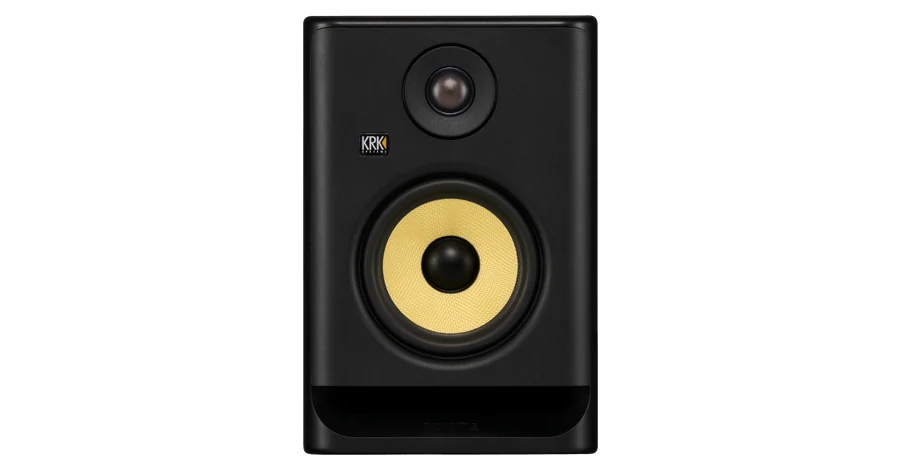
You’ve seen the yellow KRK Rokit 5 G5 in half the studio photos online. An older version was my first pair of monitors.
Drivers: 5” Kevlar woofer, 1” silk dome tweeter, 2-way
Low end: down to 43Hz
Room tools: three voicing modes, 25 boundary and tuning EQ combinations, room analyzer in the KRK app
Price: about $398 a pair
This version has three sound modes. “Create” is for writing, “Mix” is for mixing, and “Focus” zooms in on the mids. Flipping between them is a quick way to hear your mix a few different ways.
KRK’s free app uses your phone to listen to your room and tells you which EQ setting to use. It won’t replace treatment, but it beats guessing.
Best for: electronic producers who want the classic look.
Watch out: switch back to Mix before you make final calls. Older G4 units are still floating around cheap, so check which version you’re buying.
5. Yamaha HS5
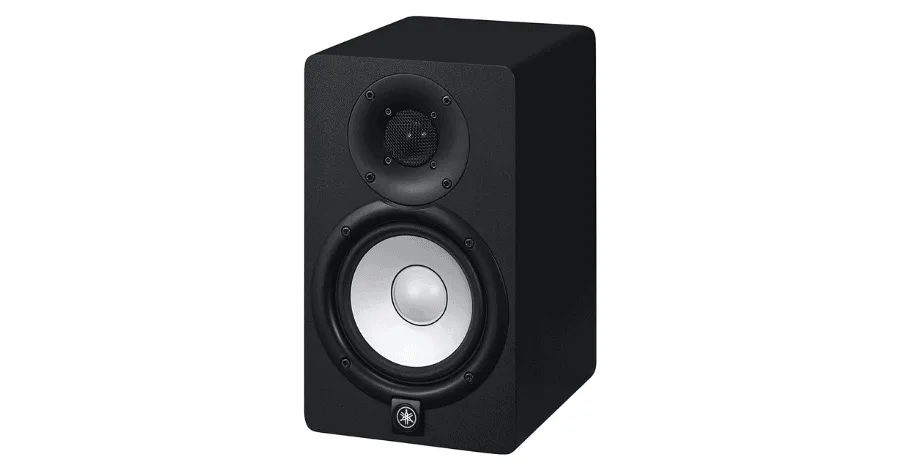
Mixes made on the Yamaha HS5 tend to sound good everywhere else.
Drivers: 5” woofer, 1” dome tweeter, 2-way
Low end: down to 54Hz (-10dB)
Room tools: Room Control and High Trim switches, XLR and TRS inputs
Price: about $400 a pair
Yamaha’s monitors have always been a little unflattering. That sounds like a bad thing, but it means you hear the problems at your desk instead of in the car.
If your room is small and you work mostly in the box, start here.
Best for: a first real pair in a small room.
Watch out: they can get tiring at high volume, so keep it reasonable. Not much happens below about 54Hz, so check your bass on headphones.
Best Advanced Studio Monitors, $400 to $1,000 a Pair
Bigger woofers start here, and so do the first pairs that can handle a bass-heavy record on their own.
6. Kali Audio LP-6 V2
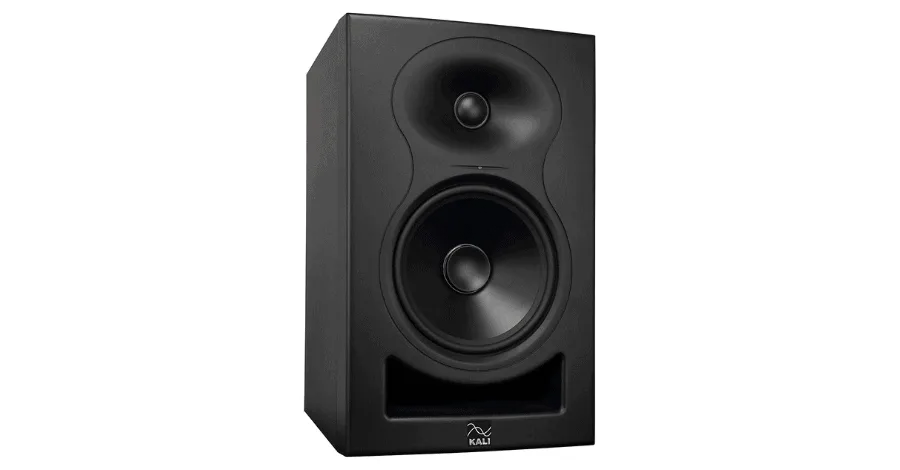
The Kali Audio LP-6 V2 is made for the room most of us have: small and untreated, with the desk too close to the wall.
Drivers: 6.5” woofer, 1” soft dome tweeter, 2-way
Low end: down to 39Hz
Room tools: Boundary EQ DIP switches for different placements, LF and HF trims, XLR, TRS and RCA inputs
Price: about $498 a pair
The switches on the back are the reason to buy it. You set them based on where the speaker sits, like up against a wall or tucked in a corner. There’s even a setting for stands sitting on top of a desk, which is a really common setup (maybe yours).
And with a 6.5” woofer, you get real bass, down to 39Hz.
Best for: untreated or awkward rooms, especially if you’re stepping up from a 5” pair.
Watch out: the port is on the back, so give them a little space from the wall.
7. KRK Rokit 7 G5
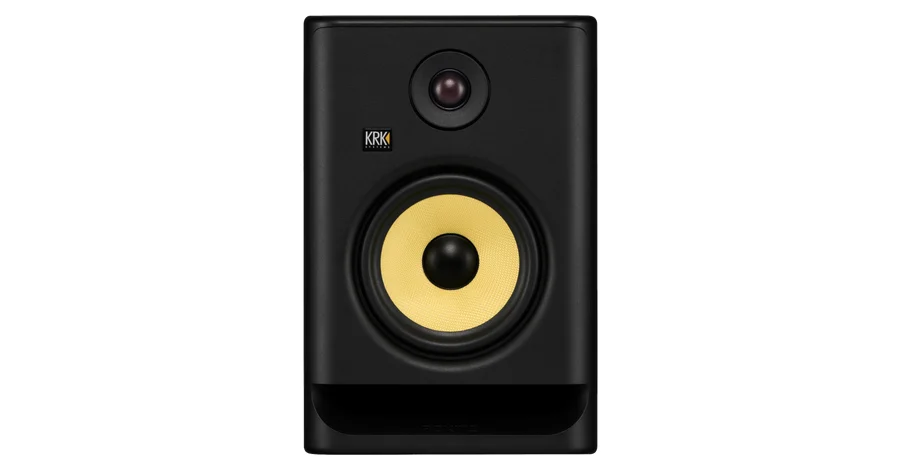
Take the Rokit 5, fill in the bottom octave, and you have the KRK Rokit 7 G5.
Drivers: 7” Kevlar woofer, 1” silk dome tweeter, 2-way
Low end: down to 36Hz
Room tools: the same three voicing modes and 25 EQ combinations as the Rokit 5 G5, KRK app
Price: about $538 a pair
What you’re paying for over the Rokit 5 is the bigger woofer and more than twice the power, so the kick still hits clean when you turn it up.
Best for: electronic producers who want to feel their sub-bass in the room.
Watch out: in a small, untreated room a 7” woofer gets boomy fast. If your room is tiny, get the Rokit 5.
8. Yamaha HS8
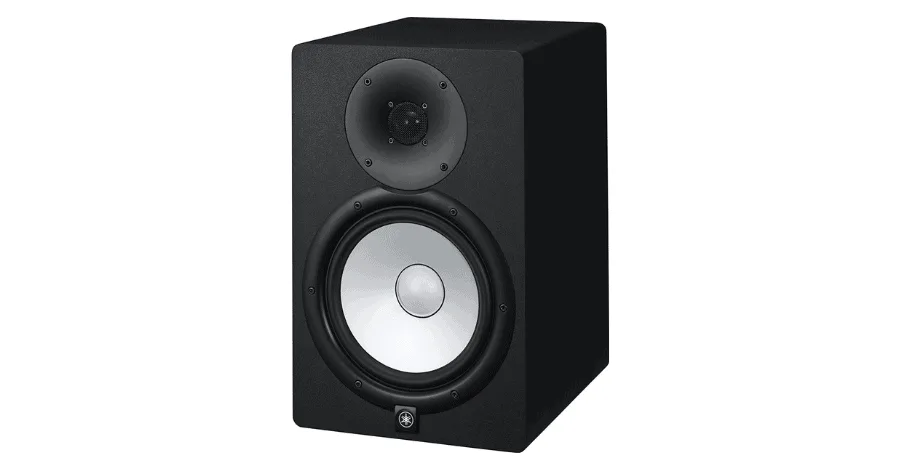
I mix on the Yamaha HS8 in the Hyperbits studio.
Drivers: 8” woofer, 1” dome tweeter, 2-way
Low end: down to 38Hz (-10dB)
Room tools: Room Control and High Trim switches, XLR and TRS inputs
Price: about $800 a pair
It’s the HS5 with a bigger 8” woofer, so you can actually hear what your kick and bass are doing. If you’ve ever struggled to get them to sit together, this helps a lot (and so does our kick and bass guide).
I run mine with a Yamaha subwoofer, set really low (more on that below).
Best for: a home studio that’s ready for real low end.
Watch out: 8” woofers need some space and a couple of bass traps. In a tiny untreated room, get the HS5 instead.
9. Genelec 8010A
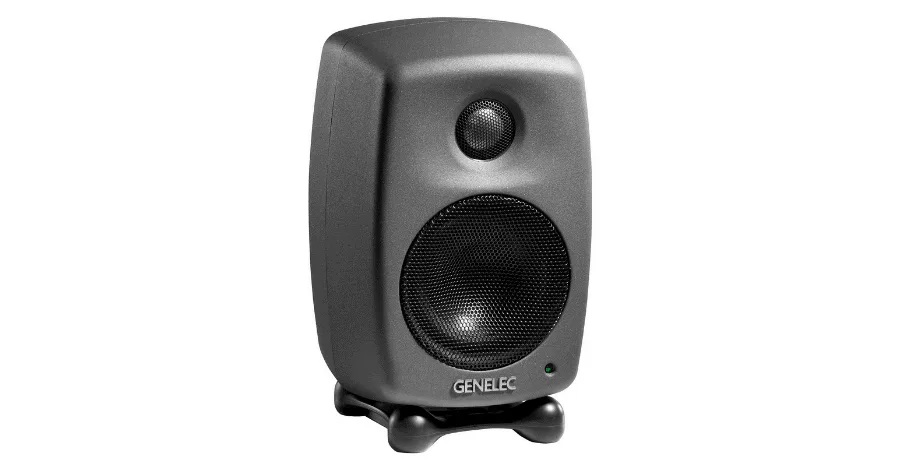
The Genelec 8010A is about the size of a hardback book.
Drivers: 3” woofer, 3/4” metal dome tweeter, 2-way
Low end: down to 67Hz
Room tools: bass roll-off, bass tilt and treble tilt switches, single XLR input
Price: about $900 a pair
It fits on any desk, and it’s built from solid aluminum, so it doesn’t rattle or color the sound like cheap plastic speakers. The stereo picture is really precise for something this small.
Plenty of engineers keep a pair next to their main monitors just to hear how a mix holds up on small speakers.
Best for: very small rooms, or a second pair to check mixes on.
Watch out: there’s not much bass, so plan on a sub or headphones. They only take XLR cables, so check your interface’s outputs.
10. Dynaudio LYD 5
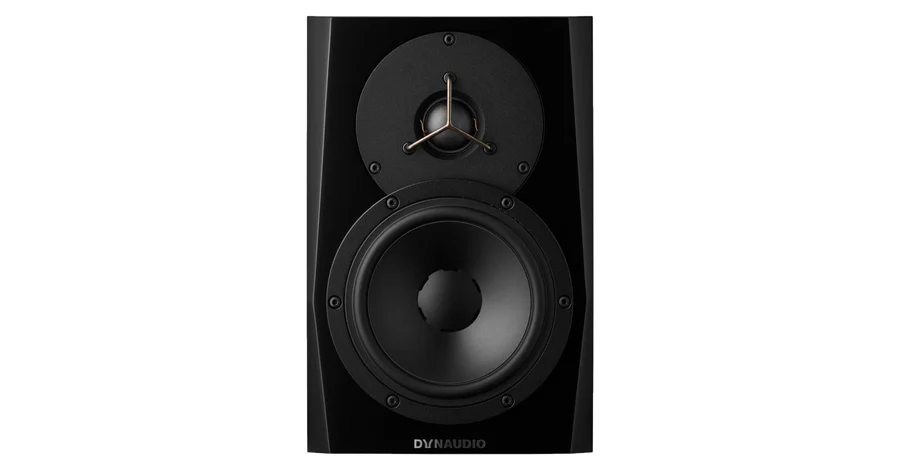
Dynaudio has made speakers in Denmark for decades, and the Dynaudio LYD 5 is their home studio pair.
Drivers: 5” MSP woofer, 1.1” soft dome tweeter, 2-way
Low end: down to 60Hz
Room tools: Bass Extension, Sound Balance tilt, a near-wall setting for placements under 50cm, XLR and RCA inputs
Price: about $1,000 a pair
The mids stay clean even loud. The switch that matters most is the near-wall setting: if your desk is against a wall, it stops the bass from building up and fooling you.
Another switch trades a little volume for deeper bass, depending on how loud you mix.
Best for: small rooms where the speakers have to sit near a wall.
Watch out: the low end stops around 60Hz. The bigger LYD 7 goes deeper, if your room can handle it.
Best Professional Studio Monitors, $1,000 to $5,000 a Pair
At this price, the speakers usually aren’t the weakest part of your studio anymore, and the room starts to matter as much as the pair. If yours isn’t treated yet, split the budget and put some of it on the walls.
11. Focal Shape 65
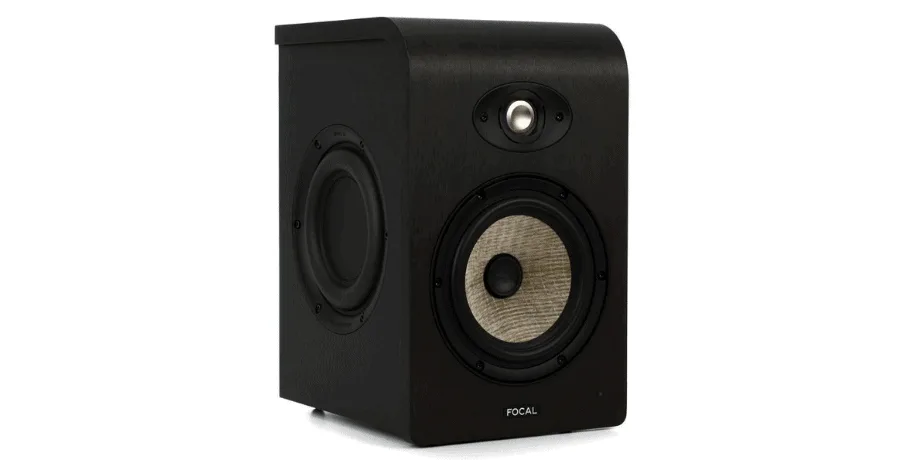
The Focal Shape 65 is the pick if your desk is pushed against a wall.
Drivers: 6.5” flax sandwich woofer, 1” aluminum-magnesium inverted dome tweeter, two side-mounted passive radiators, 2-way
Low end: down to 40Hz
Room tools: high-pass filter at 45, 60 or 90Hz, LF shelf, low-mid and HF controls, XLR and RCA inputs
Price: about $1,798 a pair
Instead of a port on the back blowing bass into the wall, it has two radiators on the sides. So you mostly avoid the boom you’d get from other speakers in the same spot.
It sounds clear and even top to bottom, and the bass stays tight.
Best for: small home studios where the speakers can’t come off the wall.
Watch out: don’t box in the sides with other gear. Those radiators need room.
12. ADAM Audio A7V
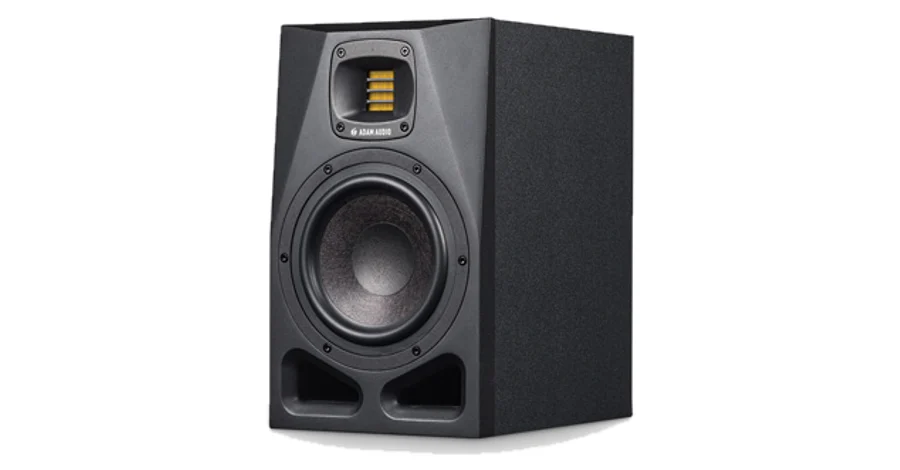
The ADAM Audio A7V can correct your room from inside the speaker.
Drivers: 7” woofer, X-ART folded ribbon tweeter with a rotatable waveguide, 2-way
Low end: down to 44Hz
Room tools: 6-band room EQ plus level and delay in ADAM’s A Control software, imports Sonarworks SoundID profiles to run on the speaker
Price: about $1,880 a pair at list, often on sale for less
Americans have a strange fascination with German engineering. Maybe it’s the years of BMW ads I’ve absorbed during golf tournaments. Either way, ADAM makes the BMWs of studio monitors, and the folded ribbon tweeter is the signature: crisp and detailed up top without the harshness you’d expect from something that revealing.
The bigger deal is the room correction. You measure your room with Sonarworks and load the fix right onto the speakers, so it works with anything you plug in. No plugin to forget on your master.
Best for: small to medium rooms where you want the speakers to handle room correction.
Watch out: the correction is only as good as your measurement, so take your time with it.
13. Neumann KH 120 II
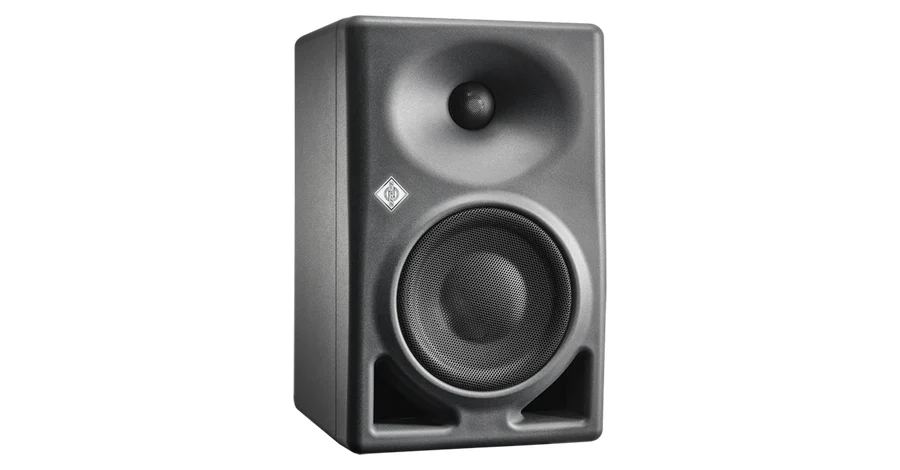
The Neumann KH 120 II is the Neumann you’ll see on the most desks, and this version can measure your room.
Drivers: 5.25” woofer, 1” tweeter, 2-way
Low end: down to 44Hz
Room tools: 32-bit DSP, compatible with Neumann’s MA 1 automatic room alignment, analog XLR and S/PDIF inputs
Price: about $1,898 a pair
The original was in mix rooms everywhere for years. This version is the same size with more power, and with Neumann’s MA 1 mic it measures where you sit and corrects itself. It takes a few minutes and makes a real difference in an imperfect room.
For a speaker this small, it gets surprisingly loud.
Best for: a pro pair for a small room, with room correction when you want it.
Watch out: the MA 1 mic is sold separately (though it’s often bundled). Without it, you’re missing the best part.
14. Focal Solo6 (ST6)
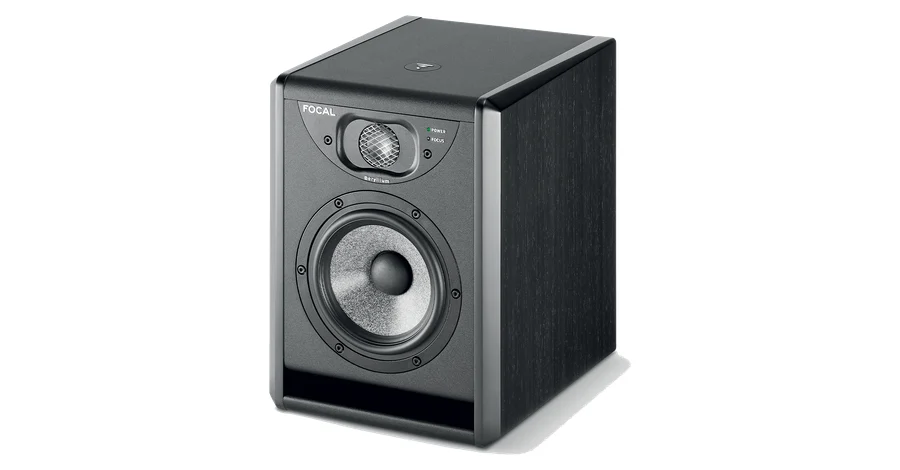
If you work on a lot of vocals, get the Focal Solo6.
Drivers: 6.5” sandwich woofer, 1” beryllium inverted dome tweeter, 2-way
Low end: down to 40Hz
Room tools: high-pass filter at 45, 60 or 90Hz, switchable Focus Mode, XLR input
Price: about $2,998 a pair
The tweeter is made of beryllium, and the highs are really clear. That makes it way easier to hear what your de-esser is doing, or how long a reverb tail really hangs. (Older versions were called the Solo6 Be. This one dropped the “Be” but kept the tweeter.)
Then there’s Focus Mode, which makes it sound like a small, cheap speaker, so you can check your mix without buying a second pair.
Best for: vocal-heavy music, any genre.
Watch out: it shows you everything, including harsh recordings. Used Solo6 Be units are an older version.
Best Top-of-the-Line Studio Monitors, Over $5,000 a Pair
Quick reality check. These are built for rooms that were designed around them. Put a pair in a bare bedroom and you won’t hear most of what you paid for.
15. HEDD Audio Type 20 MK2
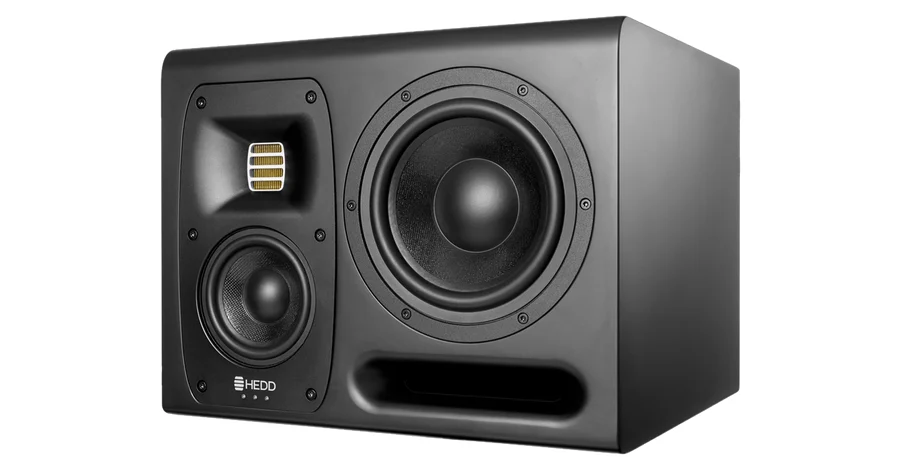
HEDD was started by the guy who used to run R&D at ADAM, and the HEDD Type 20 MK2 is the first 3-way speaker on this list.
Drivers: 7” and 4” woofers, Air Motion Transformer tweeter, 3-way
Low end: down to 32Hz
Room tools: Lineariser phase correction, switchable closed or ported bass, desk and shelf filters, analog XLR and AES digital inputs
Price: about $5,198 a pair
3-way means the mids get their own speaker, so your vocals and synths aren’t sharing a woofer with the kick. HEDD also lines up the timing between the drivers, so hits sound tighter. And a switch lets you hear the bass two different ways.
They’re built in Berlin, and they’ll go louder than you should ever mix.
Best for: the cheapest way into a top-tier 3-way pair.
Watch out: only worth it in a treated room. They’re picky about placement, so plan on spending some time moving them around.
16. Neumann KH 310 II
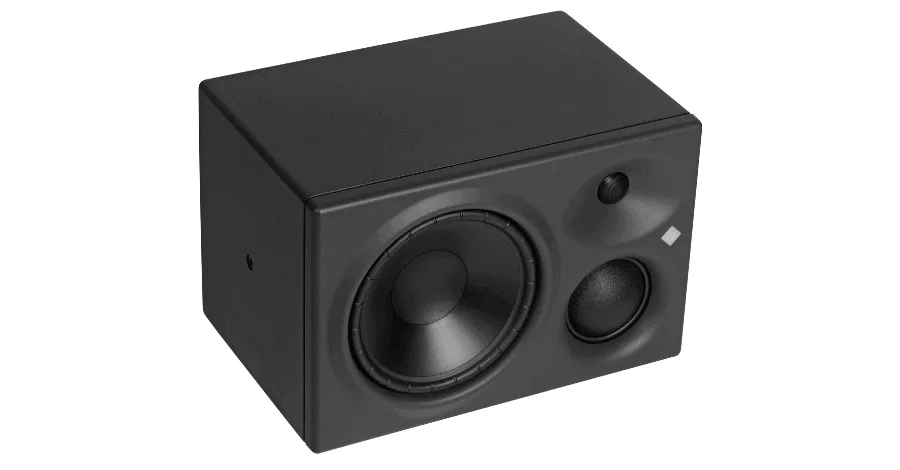
The Neumann KH 310 II gives the mids their own speaker, and this version can correct itself to your room.
Drivers: 8.25” woofer, 3” soft dome midrange, 1” tweeter, 3-way sealed
Low end: down to 33Hz
Room tools: DSP with MA 1 automatic alignment, analog XLR and AES3 digital inputs
Price: about $5,998 a pair
Vocals, synths, guitars and the body of your snare all live in the mids, so you hear a lot more detail there than on a 2-way speaker. The II has more power than the original, too.
Best for: serious mix rooms that want detailed mids and real bass.
Watch out: the original KH 310 is still for sale in places, so make sure it says II. If you want even more bass, look at the KH 350.
17. PMC6
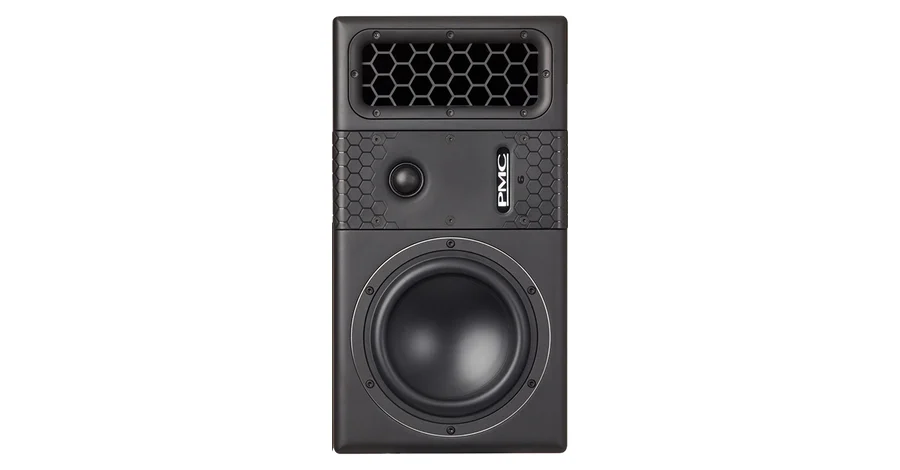
Most top-tier pairs assume a big room or a subwoofer. The PMC6 needs neither.
Drivers: 6” woofer, 1” soft dome tweeter, 2-way with PMC’s ATL bass loading
Low end: down to 39Hz
Room tools: DSP that adjusts for upright or sideways mounting, SoundAlign software, analog and AES3 digital inputs
Price: about $6,930 a pair
There’s a long tunnel folded up inside the cabinet that gives you way more bass than you’d expect from a 6” speaker, without the boom.
You can stand them up or lay them on their side, and they adjust automatically.
Best for: small to medium rooms with no space for a sub.
Watch out: if you ever want more bass, PMC makes a matching sub.
18. Focal Trio6 (ST6)
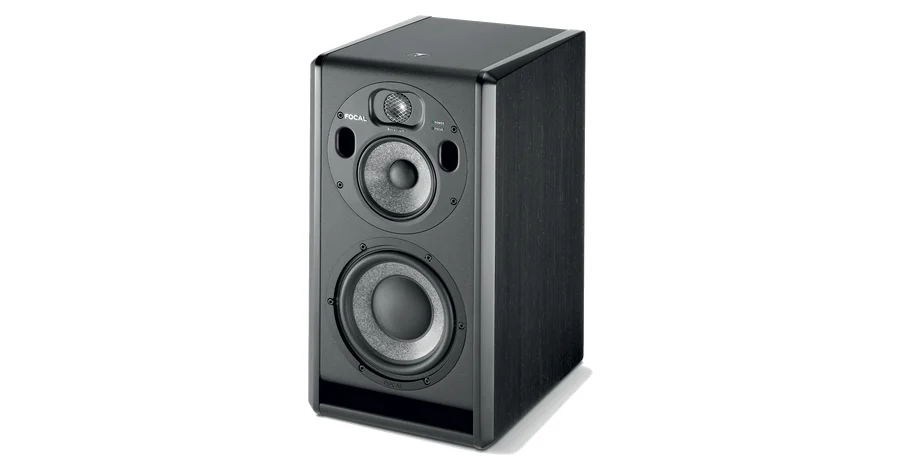
The Focal Trio6 is basically three pairs of monitors in one.
Drivers: 8” woofer, 5” midrange, 1” beryllium inverted dome tweeter, 3-way
Low end: down to 35Hz
Room tools: dual Focus Mode (2-way and 1-way voicings), XLR input
Price: about $6,998 a pair
It’s the bigger version of the Solo6, same tweeter, with an 8” woofer. A lot of engineers switch between different monitors to check their mix. The Trio6 has three modes built in: the full speaker, a smaller sound without the woofer, and just the mids.
Flip to just the mids, then back. If the balance is off, you can hear it immediately.
Best for: checking your mix on different speakers without buying them.
Watch out: it’s big and heavy and needs proper stands. On a desk, get the Solo6.
19. Genelec 8341A (The Ones)
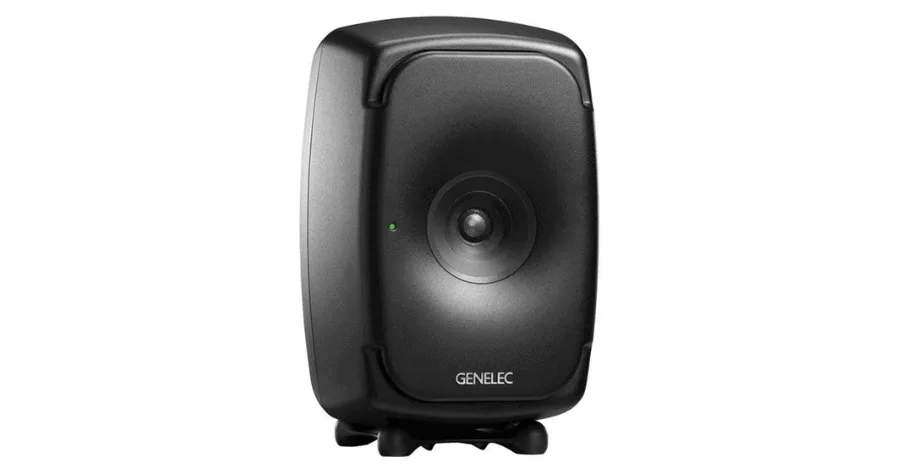
Genelec named its statement speaker exactly what it is: the 8341A, The Ones.
Drivers: two 6.7” x 3.5” racetrack woofers, 3.5” coaxial midrange with a 3/4” tweeter in the center, 3-way
Low end: down to 38Hz
Room tools: GLM software with automatic SAM room calibration, analog XLR and AES/EBU inputs
Price: about $7,350 a pair
The mids and highs come out of the same spot, so the stereo picture is pinpoint, and it holds whether you sit close or further back.
Genelec’s GLM software measures your room and tunes the speakers to it. They just might be The Ones for you (see what I did there?).
Best for: small to medium rooms where you want pinpoint stereo and room correction.
Watch out: the measurement kit costs extra, and you’ll want it.
20. Barefoot MicroMain27
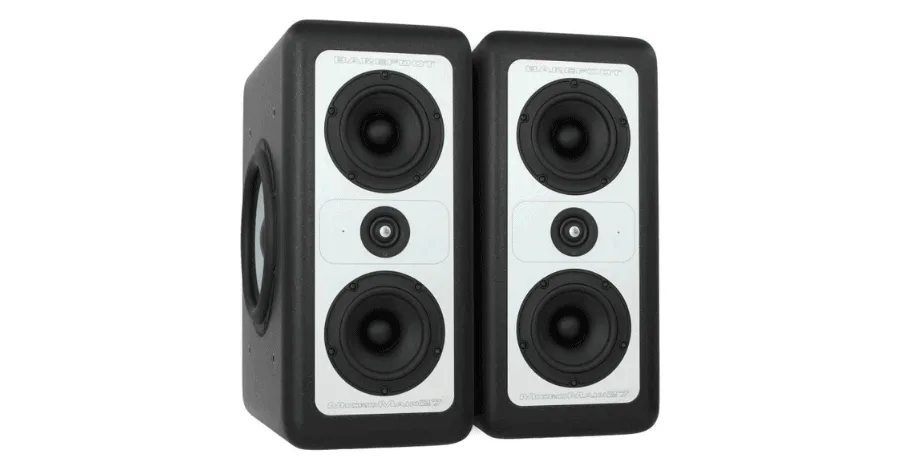
The Barefoot MicroMain27 is the monitor behind a lot of the electronic records you love. Skrillex, Flume, Joris Voorn and Tchami have all worked on them.
Drivers: two opposing 10” subwoofers, two 5.25” midrange drivers, 1” ring radiator tweeter, 3.5-way sealed
Low end: down to 30Hz
Room tools: MEME voicing modes that emulate other reference speakers, analog and AES3 inputs
Price: about $10,995 a pair
Each speaker has two 10” subwoofers firing out opposite sides, so they cancel each other’s shaking and the cabinet stays still. They get down to 30Hz without booming, so you hear exactly what your sub is doing. No wonder so many electronic producers end up on them.
Flip through the MEME modes and they imitate other classic studio speakers, which is a handy second opinion on a mix.
Best for: electronic producers with a treated room who need to hear every bit of low end.
Watch out: they’re big and heavy, and only worth it in a room built for them.
Room Correction: Built-In DSP vs Software
Room correction listens to how your room changes the sound where you sit, then EQs out the worst of it. It helps a lot with bass in small rooms, up to a point. It can turn down a bass boom. It can’t fix dead spots or echoes, which is what treatment is for.
There are two ways to do it:
Software on your computer. Sonarworks SoundID Reference measures your room with a mic and corrects your speakers and headphones. It works with any monitors here, and it’s one of the cheapest big upgrades you can make. The catch: you have to remember to turn it off when you bounce.
Built into the speakers. The ADAM A7V, both Neumanns, the PMC6 and the Genelec 8341A do the correction themselves. Nothing to forget, and it works with anything you plug in. The KRK app gets you partway there, and the switches on the Kali, Yamaha, JBL and Dynaudio are a rougher version of the same idea.
I don’t use any correction myself. I check my mixes in the car instead, and on my phone and the TV. That won’t work for everyone, though, and in a small untreated room, correction can save you a lot of guessing.
Do You Need a Subwoofer?
Probably not at first. A sub fills in the deep bass that 5” monitors can’t reach, but in a small untreated room it mostly adds more boom. Sort out where your speakers sit and get a couple of bass traps up first.
It’s different if you make electronic music on 5” monitors. A lot of your kick and sub-bass lives below 50Hz, and you can’t mix what you can’t hear. A sub or a good pair of headphones fixes that.
If you get one, keep it low. Mine sits way below where most people set theirs. You want to feel the bottom of the track. If you can hear the sub as its own thing in the room, it’s too loud. Most brands here make a matching sub.
All 20 Side by Side
| Monitor | Woofer | Design | Low end | Room tools | Pair price |
|---|---|---|---|---|---|
| JBL 305P MkII | 5” | 2-way | 43Hz | Switches | $200 to $400 |
| PreSonus Eris Studio 5 | 5.25” | 2-way | 48Hz | Switches | about $300 |
| IK iLoud Micro Monitor | 3” | 2-way | 55Hz | EQ switches | about $300 |
| KRK Rokit 5 G5 | 5” | 2-way | 43Hz | App + EQ settings | about $398 |
| Yamaha HS5 | 5” | 2-way | 54Hz (-10dB) | Switches | about $400 |
| Kali LP-6 V2 | 6.5” | 2-way | 39Hz | Wall switches | about $498 |
| KRK Rokit 7 G5 | 7” | 2-way | 36Hz | App + EQ settings | about $538 |
| Yamaha HS8 | 8” | 2-way | 38Hz (-10dB) | Switches | about $800 |
| Genelec 8010A | 3” | 2-way | 67Hz | Switches | about $900 |
| Dynaudio LYD 5 | 5” | 2-way | 60Hz | Switches | about $1,000 |
| Focal Shape 65 | 6.5” | 2-way | 40Hz | Switches | about $1,798 |
| ADAM Audio A7V | 7” | 2-way | 44Hz | Built-in correction | about $1,880 |
| Neumann KH 120 II | 5.25” | 2-way | 44Hz | Built-in (MA 1 mic) | about $1,898 |
| Focal Solo6 | 6.5” | 2-way | 40Hz | Switches | about $2,998 |
| HEDD Type 20 MK2 | 7” + 4” | 3-way | 32Hz | Room filters | about $5,198 |
| Neumann KH 310 II | 8.25” | 3-way | 33Hz | Built-in (MA 1 mic) | about $5,998 |
| PMC6 | 6” | 2-way | 39Hz | Built-in correction | about $6,930 |
| Focal Trio6 | 8” | 3-way | 35Hz | Switches | about $6,998 |
| Genelec 8341A | 2 x 6.7” | 3-way coaxial | 38Hz | Built-in (GLM kit) | about $7,350 |
| Barefoot MicroMain27 | 2 x 10” | 3.5-way | 30Hz | Sound modes | about $10,995 |
The bass numbers come from each maker, and they all measure a little differently, so use them as a rough guide.
Frequently Asked Questions
What is the 38% rule for studio monitors?
It’s a starting point for where to sit: about 38% of the way into the room from the wall behind your speakers. In a 12-foot room, that’s about four and a half feet from that wall. It keeps you out of the middle of the room, where the bass is most uneven. Start there, then move a little forward or back and listen to how the bass changes.
What size studio monitors should I get?
Match the speaker to the room. Small room, 3” to 5”. Normal bedroom studio, 5” to 6.5”. Bigger room or one with bass traps, 7” to 8”. Big speakers in a small untreated room make the bass harder to judge, because the room exaggerates it.
Do I need one studio monitor or two?
Two. You can’t judge panning or stereo width on one speaker. Most monitors are sold one at a time, so the price on a listing is usually for one. Every price on this page is for a pair.
Should studio monitors be against a wall?
Ideally not. A wall right behind a speaker adds bass, and a corner adds even more, so you end up mixing your bass too quiet. A foot or two of space helps a lot. If they have to be against a wall, use the speaker’s wall switch, or get one without a rear port, like the Focal Shape 65.
Do I need acoustic treatment before buying monitors?
I’d do them together. Good monitors in a bare room will still lie to you about the bass, and a treated room doesn’t help much if you’re listening on laptop speakers. Heavy bass traps in the corners and a few panels on the side walls are enough to start.
Are cheap studio monitors good enough to mix on?
Yes, if you learn them. Plenty of records have been mixed on monitors under $400. What matters most is knowing how your speakers sound, and that comes from listening to music you love on them all the time. Then check your mixes on other speakers, because that’s where people will actually hear them.
Do studio monitors need an amplifier?
Not the ones on this list. They all have the amp built in, so you plug them straight into your audio interface. Passive monitors need a separate amp, which is extra money and hassle for no real benefit in a home studio.
Monitors and a Little Treatment, Together
The best monitors are the ones you know like the back of your hand. That matters way more than what they cost.
If you just want me to pick:
- Tightest budget. JBL 305P MkII, about $400 a pair, often around $200 on sale.
- First real pair, small room. Yamaha HS5 or KRK Rokit 5 G5, about $400.
- Untreated room, desk near a wall. Kali LP-6 V2, about $498, or the Focal Shape 65 if the budget stretches.
- Ready for real low end. Yamaha HS8, about $800. It’s what I use.
- You want the speakers to fix the room. ADAM A7V or Neumann KH 120 II.
Whatever you buy, put a little money into the room at the same time. A couple of bass traps and a good spot to sit will do more for your mixes than the next price tier up. Then listen to your favorite records on them until you know exactly how they sound, and check everything in the car (trust me on this one).
Monitors only show you what’s there, though. The gap between your tracks and the records you love comes down to hundreds of tiny decisions in the arrangement and the mix. That’s what the Masterclass is built to close.
Have a question about monitors, or think something belongs on this list? Send us a message and we’ll take a look.
Heads up: some of the links below are affiliate links. If you buy through one, we earn a small cut (costs you nothing extra). But we'd point you at this exact gear whether we made a dime or not. As an Amazon Associate, we earn from qualifying purchases.