
Jump to a section8
Making a living is a necessity. In the documentary Daft Punk Unchained, the duo talks about how they were able to “play the long game”. They were never hungry, homeless artists. Instead, they had a foundation for their income which allowed their mental capacity to focus on being creative.
Making Money in Music Isn’t That Hard
With some persistence, patience, drive, and a little talent, you can pay the bills making music. But it takes hard work and, more often than not, multiple income streams. The average millionaire has at least 7 income streams. Here are strategies that have helped my business succeed in music. Not every person will make all of these work, but casting a wide net means your skills in a few categories can generate real income.
1. Becoming a Touring Artist

Becoming a touring artist is perhaps the most sought-after gig in the music industry.
This is due to its prevalent visibility, high social status and extra large paychecks.
What Makes This Difficult?
For many, becoming a touring artist is a dream come true. But the reality of touring is not what it looks like on Instagram. On one particular West Coast tour I was on a while back, I remember the stark contrast between Tiesto’s Instagram and mine.
Tiesto had a private jet. I flew coach (with a middle seat, no less). He had professional drivers and tour managers. I had to rent an economy car (a Nissan candy-apple red Cube, no less) and drive myself.
But the best contrast? Tiesto woke up in a plush, ocean-front LA mansion while I woke up on a beat up couch of a friend-of-friend’s apartment, surrounded by cats. And yes, I’m allergic, and yes, I had back pain for days.
But beyond the difficulties and stresses of touring on a budget, one of the most misleading aspects of touring is this: making real money on a tour is only possible if you have a fan base that buys tickets.
Of course, if you’ve built a massive fan-base, consistently release hit singles and garner millions (perhaps billions) of streams, touring becomes a lot easier and more manageable, likely because you’ll have secured a booking agent.
Securing a booking agent is usually the biggest hurdle. But even a booking agent doesn’t guarantee you’ll make a living off your tours.
What You Need to Know
Have you heard of the ‘1000 True Fans’ theory by Kevin Kelly? Basically, the gist is this: if you can create 1,000 super fans, you can make a living as an artist.
Fundamentally, this makes sense. If your fans spend $100 every year, you only need 1,000 fans to generate $100,000 in revenue. Of course, getting these superfans is easier said than done. Even large shows can cost artists money. It’s nearly impossible to make money off a Madison Square Garden show unless you sell it out multiple nights.
Pro Tip: Understand the difference between ‘soft’ and ‘hard’ tickets. Soft ticket venues (bars, clubs, fairs) have crowds regardless of the act, offering guaranteed money. Hard ticket venues (stadiums, arenas) require you to draw fans directly. Start in soft venues, work toward hard tickets, but realize this takes time.
2. Producing Music for Other Artists

Most producers can’t make a full living off streaming alone. That’s where producing for other artists comes in.
Producing music for other artists requires virtually no marketing effort. You can charge upfront production fees AND collect backend payouts from royalties.
What Makes This Difficult?
To get people to work with you, try online track catalogs or build your own website. YoungKio sold his beat for “Old Town Road” off his personal website, and it became one of the most streamed songs of the decade.
What You Need to Know
At the end of the day, producing music for other artists is all about building relationships.
Once you start down this road, every successful collaboration will lead to more work. Eventually, with enough work you’ll be able to sign publishing deals which can create some serious revenue.
If you can’t get work initially, it’s ok to start by working for free as you can always offer to split royalties. Once you have a few semi successful songs, artists will be vying for your abilities and will offer substantial rates.
3. Syncing Your Music

Syncing your music is a fancy way of saying that you will get paid when your music is placed in another work or project. This usually refers to the world of ads, television, and film, but can be expanded to anywhere your music is being played and royalties are being collected.
Getting into the sync space has a lot to do with publishing. I don’t want to spend too much time talking about this because frankly, it’s boring and difficult to talk about. However, some basic knowledge can go a long way for understanding the rest of this section, so to quote Tunecore,
“Music publishing is really all about songwriters and copyrights. When music is used commercially (whether sold, licensed, or publicly performed), the songwriter and copyright owner is owed royalties. A music publishing company can offer multiple services for songwriters. As a ‘publishing administrator’, they administer the copyright, protecting the use of songs as well as collecting royalties owed from use. On the creative side, some music publishers focus on the use and exploitation of the copyrights they administer by securing opportunities in the form of ‘sync licenses’ for film, TV, ads, video games, etc.”
Remember how I mentioned getting a publishing deals earlier? This is exactly that.
Once you’ve garnered enough attention for making music (for yourself and others), you can work with publishing companies to help create sync opportunities for you. They can help establish relationships with artists and even give you large advances.
What Makes This Difficult?
You’ll need to make a lot of music. The sync and publishing world relies on quantity over quality. This doesn’t mean your music can be bad, it just means you need to be efficient.
If finishing tracks quickly is something you struggle with, this walkthrough breaks down the exact approach that changed everything for me.
Most selections are actually based on mood and whether or not the track ‘works’ for the placement. They don’t care so much about mix quality or fullness in the drops. Half the time the song is played behind people talking anyway…
What You Need to Know
If you’re just starting out, securing a publishing deal is most likely a bit far away for many of you reading this. That said, there is plenty you can do in the meantime to work towards this goal.
Services like Musicbed allow you to submit music to their library for sync opportunities to get you paid. There are lots of services like this online, so doing a little research into online sync music libraries (or track catalogs) goes a long way.
Just a side note here, remember how we mentioned ‘backend’ earlier? Well whenever you make music that is released in some way commercially you’ll be able to collect royalties from the publishing for that song.
Because royalty payments are not instant, there are also “sync fees” which are bulk payments sent out in advance from whoever is using the music to the artist involved. For larger syncs, these payments can sometimes be worth hundreds of thousands of dollars.
Pretty cool, right?
Pro Tip: Before signing with any sync library, read the exclusivity terms carefully. Non-exclusive deals let you submit the same tracks to multiple libraries, which multiplies your chances of placement without locking up your catalog.
4. Music Education
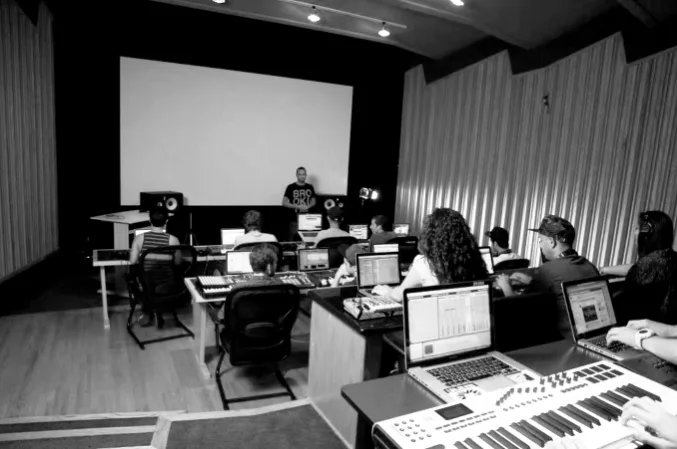
Music education has exploded online. Websites, blogs, YouTube, and social media are full of classes and tutorials. However, much of it isn’t up to par, which is why we’ve curated the best free tutorials inside the Hyperbits Masterclass.
What Makes This Difficult?
The threshold is low, so you’ll have competition. Make sure your skills are strong. Teaching helps improve your skills while helping others succeed. You can build an online business (YouTube, courses, services) or even a physical school, though the latter requires significant capital.
What You Need to Know
Creating a music education business that generates real revenue takes work, but it’s doable. Be original. My original niche was intermediate to advanced producers wanting a complete system. Originality is important in both education and music production.
For a deeper look at the challenges of running a music business, check out 20 lessons I’ve learned from running an online music business.
5. Music Technology

The intersection of music and technology is where the real money is. Computers and music go together perfectly.
Learning to code is challenging, but coders are highly in demand across all industries. Pair coding with music and you’ve got something special.
This can mean making your own plugins for producers to buy, creating games that help producers get better at making music or producing, or even creating algorithms that can detect what song is playing (yes I’m referring to Shazam which was sold to Apple for $400 million dollars).
What Makes This Difficult?
The major hurdle is gaining traction. The best way to succeed is to solve real problems.
If you can solve a problem for yourself, you’ll likely solve it for others. SoundGym gamified ear-training for engineers, a perfect example of music lovers creating powerful tools.
What You Need to Know
Every company starts small. If you have a music technology idea, run with it. Avoid over-committing at first. You don’t need funding to create an MVP. Instead, find partners and collaborators to help turn your idea into something real.
6. Music Business
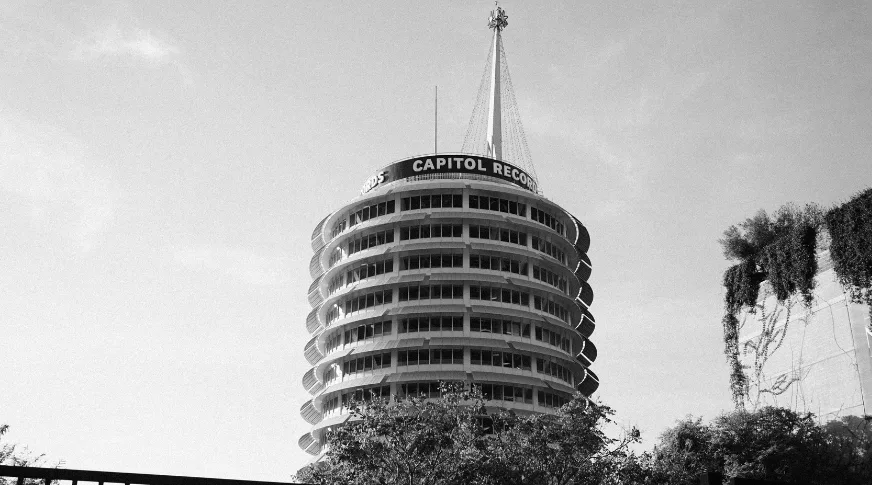
The music business offers many opportunities: manager, lawyer, agent, A&R, label head, publisher, distributor. In fact, there’s probably more money on the business side than in the music itself.
What Makes This Difficult?
Most people want to be artists, but not everyone is meant to be. Have you considered another side of the music business to work close to something you love? There are lots of cool, well-paying jobs. A job in the industry isn’t required to make it as an artist, but it helps. There are also plenty of other reasons music producers and musicians fail that have nothing to do with talent.
Think of your other skills. What else can you bring to the table? Just remember that at some point you have to do a little self-realization and figure out what you’re good at and how you can use it to make money in music.
What You Need to Know
Many people in the industry started with blogs, internships, and networking. Taking initiative goes a long way. If you want a music industry job, show some initiative and prove you’re a self-starter.
This Is Not a Passive Game
Making money in music isn’t only possible, it’s probable. The problem is that the majority of people experience a few setbacks and write off the industry entirely.
Show some perseverance. Be patient. If this was easy, everyone would do it!
Overall, we talked about a lot of different ways to explore the process of making money in music. If I had to offer one last piece of advice, it would be the following…
Figure out who you are. The happiest people work in jobs that are an extension of who they already are.
One of my favorite quotes I’ve ever come across is this: “When you combine two or more fields that you love, you can be average at both but be the best in the world at their intersection.” Ramit Sethi
Multiple income streams are the most efficient way to make money in music and the best way to cultivate your niche. Making money brings stability that fuels your creative passions.
Don’t give up when it gets hard. Making money in music might be just around the corner.
Heads up: some of the links below are affiliate links. If you buy through one, we earn a small cut (costs you nothing extra). But we'd point you at this exact gear whether we made a dime or not. As an Amazon Associate, we earn from qualifying purchases.