Jump to a section13
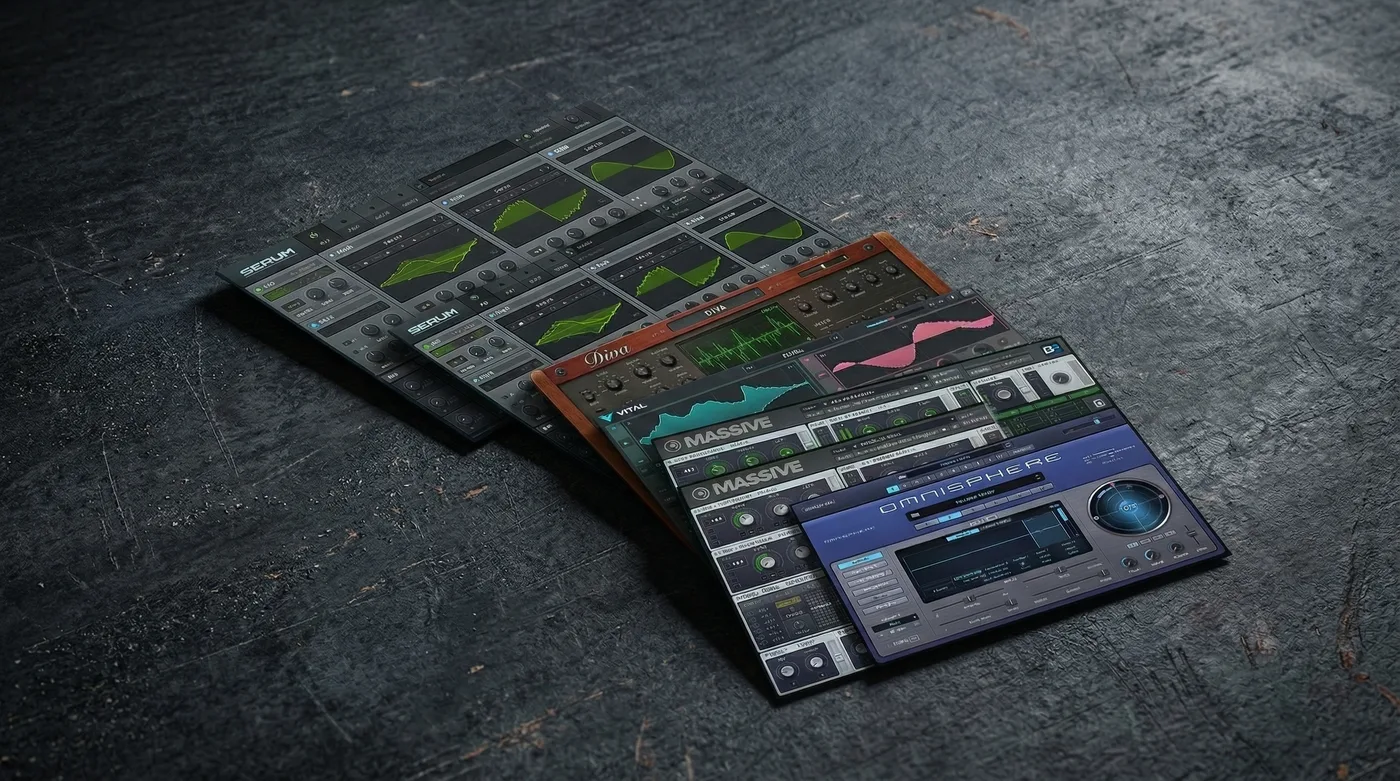
Serum and Vital are the best synth plugins to start with. Vital has a free version and makes custom wavetables easy, while Serum has more presets and tutorials online than any other synth. For warm analog sounds go with Diva, and for the widest sound design range, Omnisphere does it all.
Quick picks
| Name | Best for |
|---|---|
| Vital | Free wavetable synth, custom wavetables (free) |
| Diva | Warm analog sounds |
| Serum | Wavetable sound design with endless presets |
| Omnisphere | The widest sound design range |
| Arturia Pigments | One synth that covers wavetable, virtual analog and granular |
| Sylenth1 | Supersaw chords and warm basses |
| Kontakt | Real instrument sounds |
| Arturia Mini V | Moog Minimoog basslines and leads |
If you want polished-sounding music, your plugin library needs quality synth VSTs. The best synth plugins can do almost anything, and regardless of your genre, you’ll find them essential.
When I started out producing, I thought I could get by with the stock synth plugins within my DAW, but I quickly discovered just how wrong I was. Over time, I felt I could get by with only one or two third-party synth plugins. And wow, was I wrong there too. Having a variety of tools at your disposal will help you tackle a more comprehensive array of sound design challenges.
Why do you need third-party synth plugins? It’s the same reason that the best chefs in the world don’t use store-brand ingredients, preferring to go to the best bakery for their bread and the third-generation farm for their produce. You get better products from people who specialize in what they do.
Of course, this doesn’t mean that your stock DAW synths are bad, per se. It just means that Logic, Ableton, and other DAWs make many different synth plugins and pieces of production technology. They simply can’t put in the same time and energy as the boutique synth plugin designers, whose sole focus is on perfecting their small handful of digital instruments.
We’ve done the homework. We’ve spent hundreds of hours using these (and many more) synth plugins and VSTs. This is our final list of the absolute best ones for every genre. Before we get into the list, here’s a quick look at how layering synths can transform a simple sound:
Now let’s break down the types of synths you’ll encounter, and the eleven best plugins worth adding to your toolkit.
Hardware Synths vs VSTs
Every synth produces noise in its own way. The vast majority of synthesizers have filters and envelopes. Filters control the frequencies you hear in a sound, and the ADSR envelopes control when you hear them. Synth VSTs primarily differ in how they actually produce sound. This article will touch on three prominent families of synths that vary in how this sound is generated.
Virtual Analog: A synth is a digital translation of what you might expect from a hardware synthesizer. This generally means that sound is produced by oscillators with a set waveform (saw, triangle, pulse, etc.), passed along to the filter, envelopes, and other FX. You might also see this called subtractive synthesis.
Wavetable: These synths have a greater variety of waveforms you can use to produce sounds. A “wavetable” stores many individual waveforms, and the synth has the ability to cycle through those waveforms over time (throughout a single note and even multiple bars), which produces an evolving sound.
Sample/Loop-Based: Some purists will argue that sample or loop-based synths (often called romplers) aren’t actually synths, but I don’t really care if they’re right. What I care about is that these VSTs are super unique. What makes a sample and loop-based VSTs different is that you don’t produce a sound from scratch (via oscillators) but instead reshape pre-existing audio.
We’ve got examples of each below. Here are our 11 favorite synths and VSTs for any genre.
1. Vital
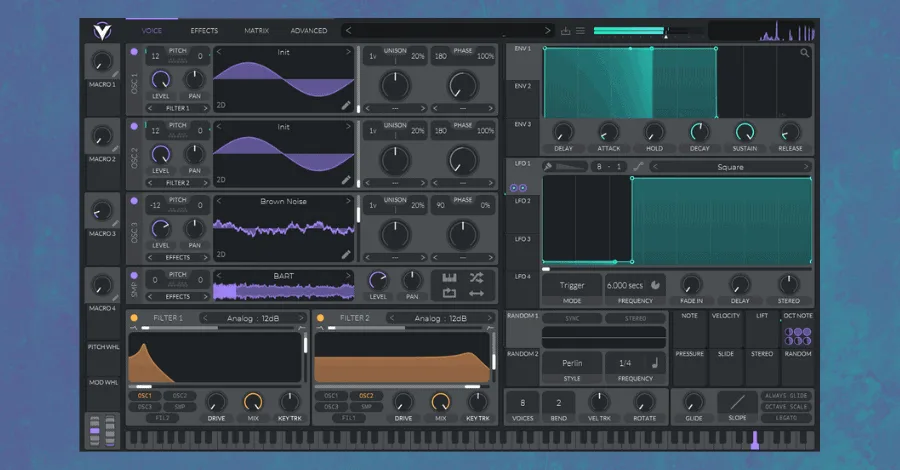
Vital is the new kid on the block in the synth community and has even been called the “Serum Killer” (more on Serum below). It’s a high-quality wavetable synth that allows you to easily create your own wavetables through its text-to-audio conversion. Meaning you have endless sound design possibilities.
Price: Free, $25, $80, or $5/month
Type: Wavetable
Specs: 3 Wavetable Oscillators, 2 Filters, 3 Envelopes, 4 LFOs, Plus Random Generators, Macro Controls, and an Extensive FX Section.
Why It Made The List: This has become a go-to synth for producers across every genre. The visual modulation system is exceptional, and the sheer depth of what you can build from scratch puts it in elite company.
Why It’s Unique: There is a free version of Vital (with some limited features), whereas all the others below are paid VSTs. As far as wavetable synthesis goes, Vital is the easiest to use for creating custom wavetables and sounds.
Pro Tip: Vital’s text-to-wavetable feature is genuinely wild. Type any word into the wavetable editor and it converts the waveform of those letters into a playable oscillator. Use it to create textures that no preset bank will ever have.
2. Diva
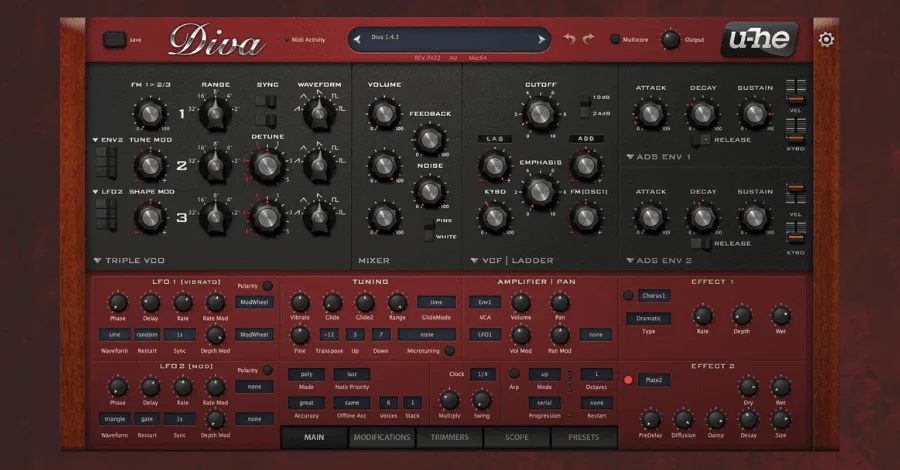
Diva by U-He is our favorite analog-style synthesizer. It emulates 5 of the most famous analog synths in existence: Moog Minimoog, Roland Jupiter 6/8, Roland Juno 60, Korg MS-20, and a digital combination of the Roland JP-8000 and Oberheim SEM. You can swap between the oscillator and filter banks of each of the five emulations above, leaving you with 25 oscillator/filter combinations.
Price: $219
Type: Virtual Analog
Specs: 5 Oscillator Banks, 5 Filter Banks, 2 Envelopes, 2 LFOs, Plus an FX Section and Oscilloscope.
Why It Made The List: Diva is a workhorse synth that will allow you to achieve all things analog. If you’re chasing that warm, slightly imperfect character of hardware, this is where you start.
Why It’s Unique: Diva is the perfect bridge between the analog and digital worlds. It is clearly inspired by famous pieces of analog gear but provides you the flexibility and stability we expect from digital synths. This is a one-stop-shop solution for analog-inspired sounds.
3. Serum
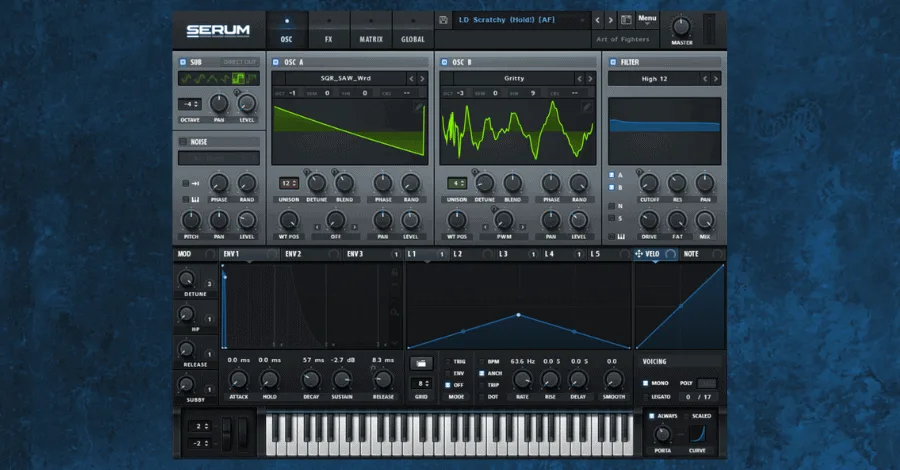
Serum by Xfer Records has been the most influential synth in electronic music over the past decade. With hundreds of stock wavetables, dozens of filter types, endless customizability. And a massive ocean of preset banks online, Serum conquers every genre. Beyond its versatility and fantastic sounds, the visual design is exceptional. You can see all the LFOs and envelopes working in real time, which is a huge plus for sound designers.
Price: $189, or $10/month rent-to-own via Splice
Type: Wavetable
Specs: 4 Oscillators, 1 Filter, 3 Envelopes, 4 LFOs, and a Suite of FX.
Why It Made The List: Because Serum has been the go-to synth for so many producers, there is a massive ecosystem of presets, sound banks, tutorials, and documentation available online. Whatever sound you’re chasing, someone has already documented how to get there.
Why It’s Unique: The sheer volume of community resources is unmatched. Have a question about a particular sound? The answer is one search away.
4. Arturia Pigments 7
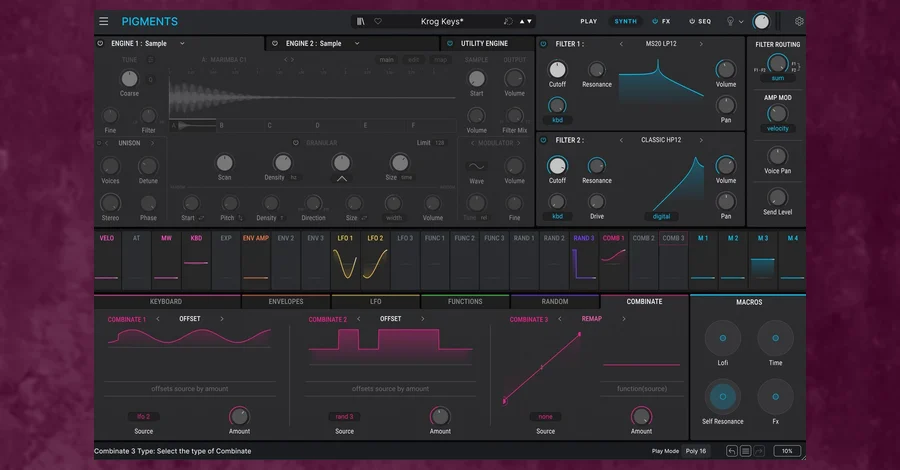
Arturia Pigments 7 is the synth people are told to learn modulation on, and it earns that. It runs two engines at once, picked from virtual analog, wavetable, sample and granular, and harmonic, plus a utility engine, feeding dual filters and a modulation matrix that lays every route on one screen as a draggable object. You can see what is moving what, which is the part that stays invisible in most synths.
Price: $199
Type: Virtual Analog, Wavetable, Granular, Harmonic
Specs: 4 Selectable Engine Types, 2 Engines Plus a Utility Engine in Parallel, Dual Filters, Full Modulation Matrix, Onboard FX Rack.
Why It Made The List: Granular synthesis appears nowhere else on this list except inside Omnisphere at $499. Pigments covers subtractive, wavetable and granular work at $199, so it does the job of three purchases for anyone who wants range rather than one signature sound.
Why It’s Unique: The colour-coded modulation matrix. Every other synth here makes you hold the routing in your head or hunt through menus for it. Pigments draws it, and once you have seen modulation laid out that way, you start using it more on every other synth you own.
Pro Tip: If you want to go further down the modular road, Kilohearts Phase Plant drops the fixed voice architecture entirely and lets you stack generators and modulators freely. It is also $199, but the full Snapin effect library is a separate purchase, so treat that price as a floor.
5. Omnisphere
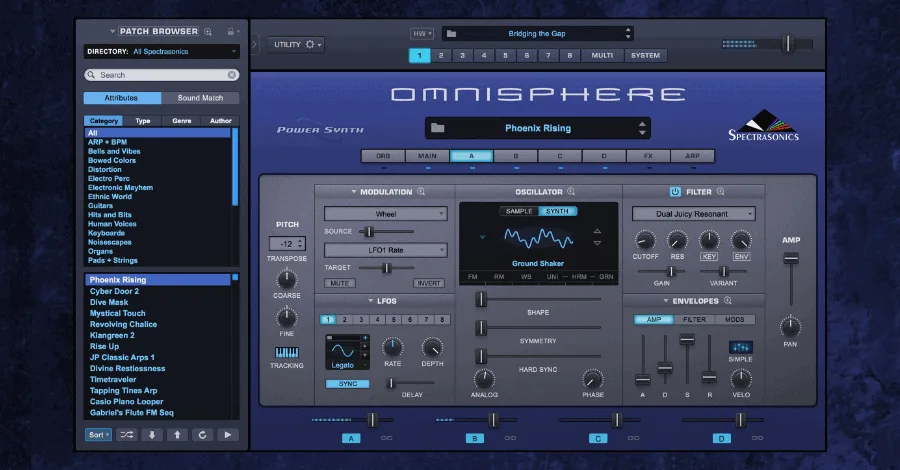
Omnisphere by Spectrasonics is one of the most extensive and versatile synthesizers on the market. Several types of synthesis, 14,000 presets, endless FX options. And direct integration with over 65 hardware synthesizers. Omnisphere is expensive. But it is expansive, and is an essential tool for creative sound design in every genre.
Price: $499
Type: Wavetable, Granular
Specs: 500 DSP Wavetables, 8 LFOs, 12 Envelopes, 34 Filter Types, and 57 Different FX Units
Why It Made The List: Diva handles analog sound, Serum manages unique wavetable synthesis. Omnisphere does it all. Of all the synths on our list, Omnisphere presents the most significant sound design potential for every genre.
Why It’s Unique: The hardware synth integration feature is genuinely singular. Plug in a supported hardware synth and Omnisphere uses it as a physical controller for its engine. No other plugin in this list does that.
6. Arturia Analog Lab
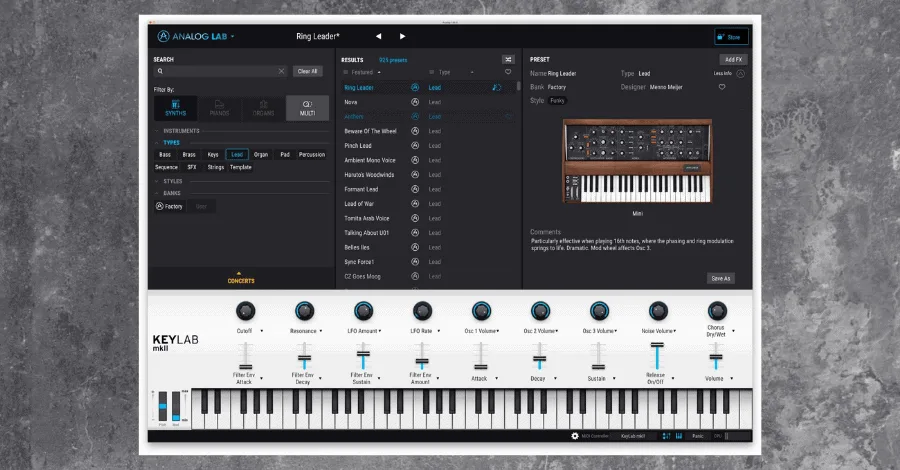
Arturia Analog Lab is our favorite Diva alternative. It harnesses Arturia’s V Collection power, a bundle of dozens of analog-emulation VSTs covering a range of classic synthesizers and keyboards. With Analog Lab, you can access and tweak thousands of presets from these other VSTs without buying the individual VSTs first.
Price: $199
Type: Virtual Analog
Specs: 6,500 Presets From Over 30 Synth Plugins. Each Preset Has Macro Controls to Tweak the Sound Design.
Why It Made The List: The high-quality sounds, versatility, and ease of use make it an easy addition to our list. Imagine having a room full of classic synths and being able to audition a patch from any of them with the click of a button. That is what Analog Lab allows you to do.
Why It’s Unique: Other synths take inspiration from hardware gear and reimagine them as a VST. Analog Lab gets you as close as possible to the original models, pulling directly from Arturia’s painstakingly accurate emulations.
Pro Tip: Analog Lab’s macro controls let you customize two knobs per preset to control whatever parameters you want. Map one to filter cutoff and one to reverb mix on your favorite patches, and you’ll have expressive, performance-ready sounds in seconds.
7. Sylenth1
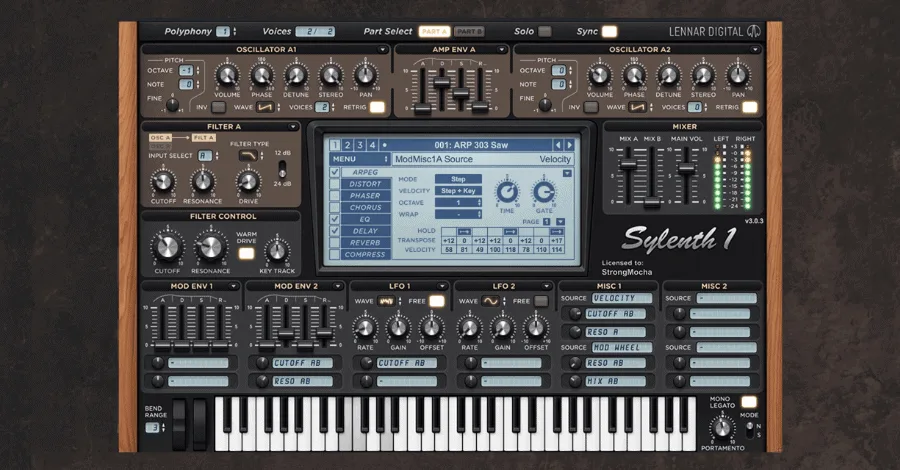
Sylenth1 by LennarDigital is a classic VST in electronic music. Some of its features have been surpassed by newer synths. But Sylenth1 is still a favorite for the “meat and potatoes” sounds every production needs: warm basses, supersaw chords. And crispy leads. This synth isn’t fancy and doesn’t have a ton of features, but what it does do, it does well.
Price: $169, or $12/month rent-to-own
Type: Virtual Analog
Specs: 4 Oscillators, 2 Envelopes, 4 Filters, 2 LFOs, Plus an FX Bank and Arpeggiator.
Why It Made The List: Sylenth1’s arpeggiator is a defining feature of the synth. Plus, its 4 oscillators are routed to 2 different envelopes. Meaning you can create and layer two totally distinct sounds within one patch.
Why It’s Unique: There’s a reason this synth has been on virtually every major electronic track for the past 15 years. The supersaw sound it produces is just that good.
8. Kontakt
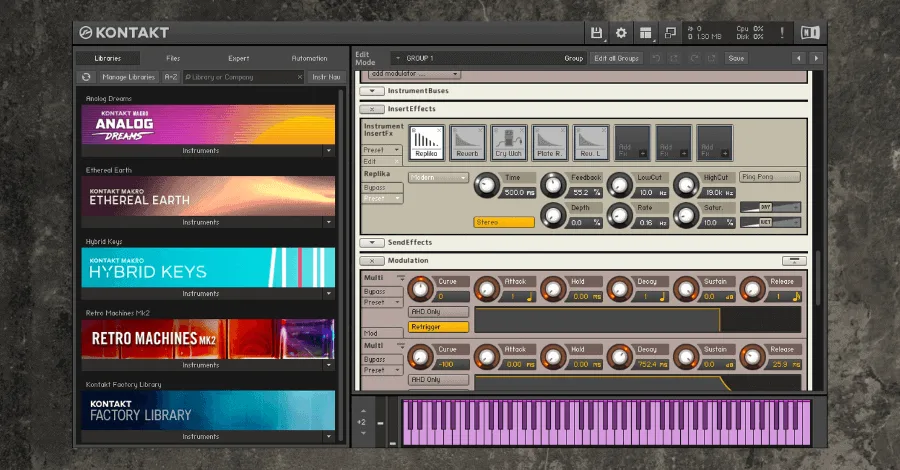
Kontakt by Native Instruments is one of our favorite samplers. It has a massive library of modules built-in, including everything from strings and orchestral sounds to drum kits to synthesizers. As a sampler, Kontakt relies on recorded audio files for sound generation, which is different from other forms of synthesis. But these recordings sound phenomenal, as do the sounds you can produce with them.
Price: $399
Type: Sampler
Specs: 55 GB+ Sample Library, Extensive Modulation Options, and Wavetable Synthesis Module.
Why It Made The List: This is our go-to solution for real instrument sounds. The third-party library ecosystem is also enormous. There are hundreds of premium libraries available for Kontakt covering everything from vintage tape machines to cinematic orchestras.
Why It’s Unique: Kontakt is different from the other VSTs on the list because it is a sampler. You start with real sounds from acoustic instruments but can still shape them using tools (like LFOs and envelopes) from traditional synth sound design.
9. Arturia Mini
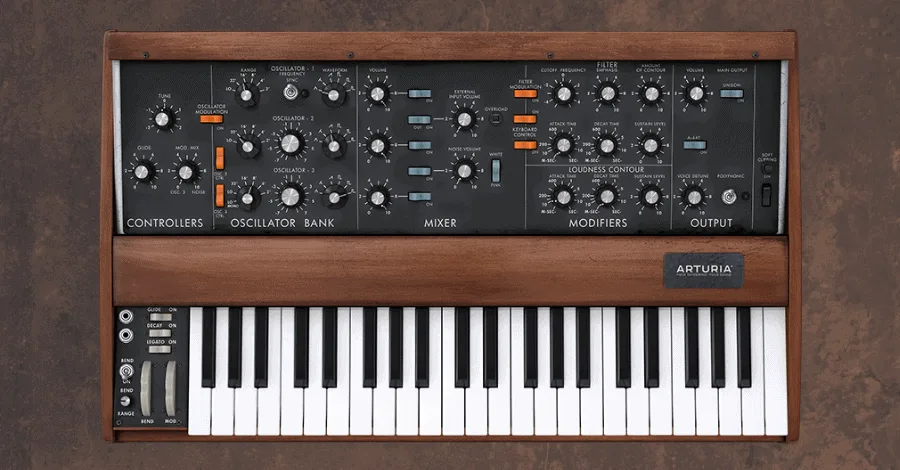
Arturia Mini V is our absolute favorite from Arturia’s V Collection. It’s an emulation of the Moog Minimoog, the most influential hardware synthesizer in music. Not just electronic music, all music. Period. The Arturia Mini is nearly indistinguishable from the original and produces fat basslines and heavenly leads.
Price: $149
Type: Virtual Analog
Specs: 3 Oscillators, 1 Filter, 2 Envelopes, 1 LFO, and Extensive Modulation Matrix
Why It Made The List: Regardless of your genre, the classic sounds of the Mini will give your productions a timeless feel. There is no substitute for that Moog ladder filter.
Why It’s Unique: Many synths claim to offer “Moog-style” sounds, but the Mini takes the cake for the most faithful emulation. It doesn’t provide endless sound design possibilities like some other synths, but it is a true analog emulation VST through and through.
10. Spire
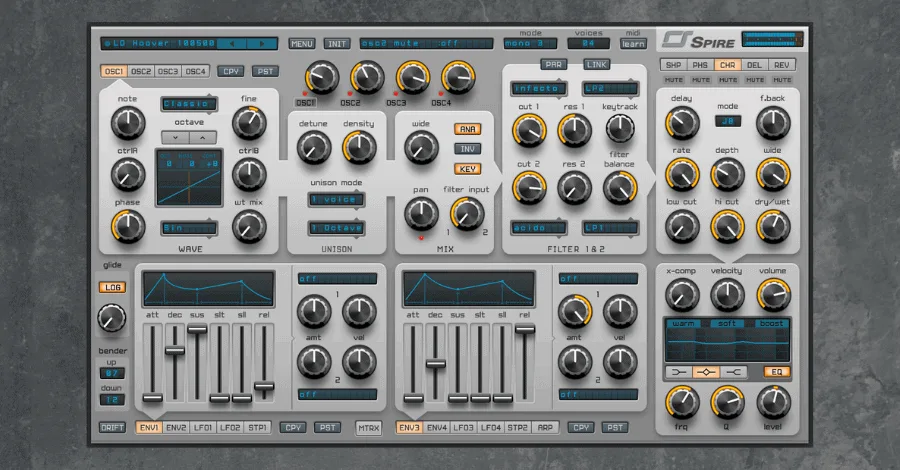
Spire by Reveal Sound isn’t my personal favorite synth. It sounds crispy clean, which can be good for some purposes but can sound too sterile for others. That said, Spire has left an unmistakable impact on all things progressive: this is the go-to synth for many trance producers. If you’re looking for big supersaw chords, stabby baselines, or lush pads, Spire is a go-to option regardless of your genre.
Price: $189
Type: Virtual Analog
Specs: 4 Oscillators, 2 Filters, 4 Envelopes, 4 LFOs, and FX Bank
Why It Made The List: Spire sounds punchy and clean. There is something about its unison engine that makes massive chords and pads sound clear, smooth, and transparent.
Why It’s Unique: The clarity is polarizing but useful. In dense, busy mixes, Spire patches cut through where a warmer, softer synth might get buried.
11. Arcade
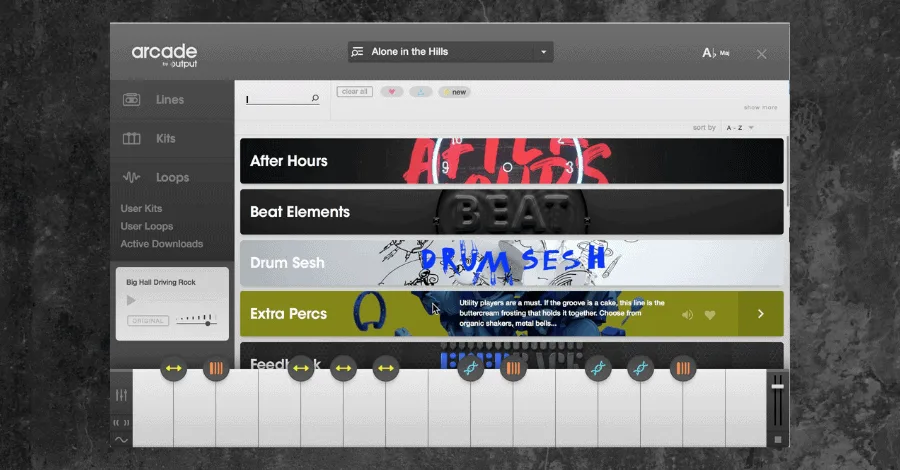
Arcade by Output is a totally different kind of synth. It’s a “15 voice sample playground” that connects to Output’s extensive loop library, processed through 11 effects, macro sliders. And robust modulations. Output’s loop library is updated regularly. Meaning you’ll always have new sources of inspiration every session.
Price: $10/month
Type: Loop Synthesizer
Specs: 15-voice sample playground connected to Output’s loop library, processed through 11 effects, macro sliders, and robust modulation options.
Why It Made The List: Arcade is an easy-to-use tool that gets you excellent sounds fast. It’s a total reimagining of synthesis (and music production) that is entirely different from the other synths on this list.
Why It’s Unique: Rather than building sounds from scratch and tweaking waveforms, you start with a full loop and tweak it to taste. The upside is that you can quickly get professional-grade sounds. But this comes at the cost of not having complete control over the sound itself.
At the end of the day, every plugin on this list has earned its spot. The best approach is to start with one or two that match your workflow, learn them inside and out, and expand from there.
The Right Tool for the Right Sound
Each synth will add something wildly different to your arsenal. It is essential to consider precisely what you are looking for:
Do you want rigid, bright, and modern sterility? Then Spire and Sylenth1 might be for you.
Do you want to introduce sonic randomness associated with hardware? Diva and Arturia might be your new best friend.
Do you want stringent control and endless possibilities? Omnisphere and Serum will offer you that, though in entirely different ways.
Pro Tip: Don’t try to master all eleven synths at once. Pick one (Serum or Vital are great starts), spend two weeks really learning it, then move on. You’ll get better results than spreading yourself thin across all of them.
Those are our 11 favorite synths and VSTs for every genre. We absolutely recommend picking up at least a couple of them to expand the palette of sounds at your disposal.
But grabbing your ideal soft synth is just the start of the battle. You also need to know how to use it. We dig deep into sound design, synthesis, and achieving a professional sound in the Hyperbits Masterclass. Instructors are on hand for current students and alumni alike to answer any questions surrounding all of the synths listed above. And so many more.
Related tool: Hyperbits Mighty: 40 house bass Serum presets with analog filter movement and custom macro controls.
Heads up: some of the links below are affiliate links. If you buy through one, we earn a small cut (costs you nothing extra). But we'd point you at this exact gear whether we made a dime or not.