
Jump to a section6
Quick guide to what is music publishing, written for producers who don’t have time for fluff.
Music Publishing
Music Composition vs. Master Royalties
Let’s clarify the distinction between music composition royalties and master royalties. When you create and release a song, there are two ways you can earn money from it: through the composition and the master recording.
The master recording is the final version of your song. You export it from your music software (DAW) and upload it to platforms like Spotify. That digital file is the “master recording” in music business terms. But your fans are hearing something else too: the composition itself. That’s the melodies, chords, lyrics, and overall musical content of your song.
When your fans listen to your music on platforms like Spotify or Apple Music, you receive royalties twice, once for the master recording and again for the composition.
But in some cases you only get paid for the composition, not the master. A cover of your song is the classic example. A singer/songwriter hears your song, feels inspired, learns it, and records their own version of it.
They’re not using your original master recording. So you, the original songwriter, collect the composition royalties on their cover. The cover artist collects the master royalties.
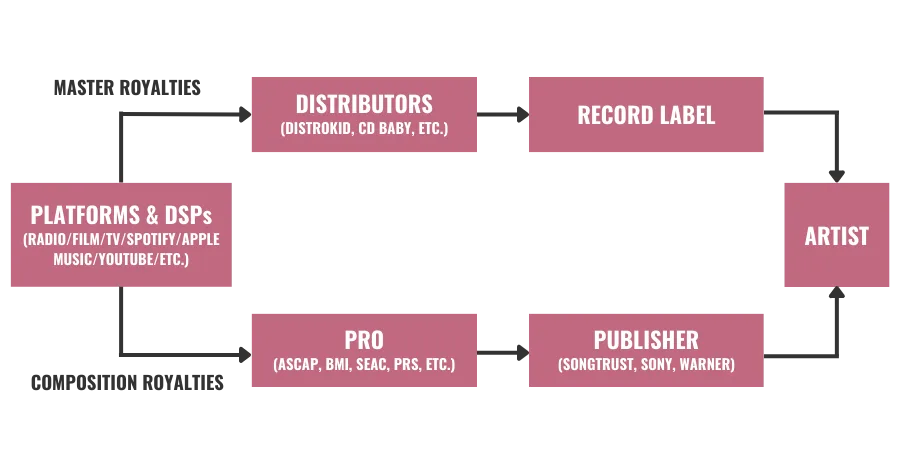
I’m sure you’re thinking to yourself, “this is complicated…” and trust me it is. Hopefully, the rest of this article will clarify a lot of this. But we’ve made a simple graphic for you to follow as well in case you get lost.
The Taylor Swift Example
Another great example of master vs. composition in music is what happened with Taylor Swift when she started re-releasing her old albums as “Taylor’s Versions.”
A few years ago, Taylor Swift’s record label sold her catalog to a new label. That new label would then start collecting royalties on her music. Taylor wasn’t happy about who the new owner was. She couldn’t stomach them making money off her work. Luckily for her, the deal only controlled the “master recordings.” The actual music composition in the songs was still fully owned by Taylor.
So she decided she wanted to remove this new catalog owner from her work by re-recording albums. So she did just that, using the same instruments, recording methods, and more to replicate her old master recordings closely.
That’s how we get an album like “Red (Taylor’s Version).” It’s all fresh new recordings, even though it sounds a lot like the original masters. So she collects both the master and composition royalties on this new “Red.” And it dilutes the value of the old “Red,” taking royalties away from her hated catalog owner. Badass, right?
What is Music Publishing?

Music publishing is a huge part of the music industry. It’s the management, protection. And monetization of musical compositions. Put simply, it’s the administration of copyrights and the licensing of songs.
Songwriters focus on creating music. Publishers handle the business side, making sure the work is protected and actually making money. Music publishers play a pivotal role by connecting songwriters with various opportunities and helping them maximize their earnings.
They act as middlemen between songwriters and everyone else: record labels, film and TV producers, advertisers. And streaming platforms. Their key jobs are copyright administration, royalty collection, licensing negotiations, and synchronization placements.
Copyright administration means registering your compositions, managing your rights, and making sure you get proper credit. Royalty collection means tracking and collecting your money from all over: performance rights organizations (PROs), streaming services, and radio stations.
Performance Rights Organizations
PROs (Performance Rights Organizations) collect and distribute performance royalties to songwriters and publishers. The two big ones in the United States are ASCAP (American Society of Composers, Authors, and Publishers) and BMI (Broadcast Music Inc.). Both represent a huge catalog of music across genres, and both have been doing licensing and royalty distribution for a long time.
When your song gets publicly performed or broadcast, ASCAP and BMI make sure you get paid for it. We at Hyperbits are personally affiliated with BMI.
Pro Tip: Register with a PRO as soon as you start releasing music. It costs nothing, takes 10 minutes, and means you won’t miss out on performance royalties that could be accruing right now.
But the PRO landscape isn’t limited to just these two PROs. ASCAP and BMI are US-based and mostly serve US citizens. Artists from other countries can affiliate with them, but a PRO more local to your region is often the better move. Here’s a full list of PROs sorted by country.
It’s up to you which PRO you affiliate with. The differences are minimal, but do your research anyway. This is usually a long-term relationship, so it’s worth a little due diligence up front to weigh the pros and cons of each one for you.
Licensing in Music Publishing
In music publishing, licensing is just granting permission to use a composition. Someone gets legal authorization from the copyright holder, usually the publisher or artist, to use the song for a specific purpose. It protects both the creators and the people using the music.
The 3 Main Types of Licenses
There are several types of licenses in music publishing.
- Mechanical licenses are required for reproducing and distributing musical compositions, such as when a song is recorded and released in a physical or digital format.
- Synchronization licenses allow music in combination with visual content, such as in films, TV shows, advertisements. And video games.
- Performance licenses are necessary for public music performances, including live performances, concerts, and radio broadcasts.
Why is Licensing Important for Artists?
Licensing comes down to negotiating the terms, fees. And duration between the copyright holder and whoever wants to use the music. It takes legal paperwork and a shared understanding of exactly what rights are being granted.
Why it matters so much: it makes sure artists and producers get paid fairly for their work, while opening up exposure and promotion at the same time.
For you, licensing is a way to make money and reach more people. It grows your fan base and your visibility in the industry. Plus, these agreements often include royalty payments, so you keep getting paid when your compositions get used commercially.
For media platforms and content creators, licensing gives them access to high-quality music. They get to level up their productions and build engaging experiences for their audience, all while respecting the rights of the people who made the music.
Publishing is just one piece of the income puzzle. For the full picture, check out our guide on making money in music.
Sync Placements in Music Publishing
Sync placements are the “synchronization” of music with visual content like films, TV shows, advertisements, video games. And online videos. Pairing music with visuals boosts the emotional impact and the storytelling. Synchronization licenses allow a person or business to use a musical composition with visual media.
It’s a complex, highly sought-after corner of music publishing. When a sync placement happens, the payout for the artists who made the song is usually big.
Sync placements take a lot of forms: film scores, background music for TV shows, theme songs for ads. And soundtracks for video games. These creators are trying to nail a memorable moment and add emotional depth. So they’re pretty picky about choosing the best music for their content.
How Are Sync Licenses Negotiated?
Negotiating a sync license means really thinking through what the visual content needs and what its creative vision is. The music has to match the mood, tone. And narrative they’re going for.
A successful sync placement can mean serious exposure for an artist, more sales or streams on the side. And open doors to bigger opportunities in the entertainment industry.
Sync placements can be highly lucrative. The fees swing widely depending on things like the scope of usage, how prominent the visual content is. And how exclusive the agreement is.
Also, royalties may be generated through performing rights organizations (PROs) when the synchronized music is publicly performed or broadcast. Basically, even more money for you.
Sync placements allow artists to gain recognition and earn substantial income from their creative works, making them an important revenue stream.
The Role of Music Publishers in Licensing, Placements & Syncs
Music publishers sit right in the middle of licensing, placements. And syncs. They’re the link between songwriters and composers and the people who want to use their music. They handle the administrative, legal. And financial side of the business, so creators can stay focused on their craft.
One of their main jobs is managing licensing agreements. They work through the messy licensing landscape, negotiating terms, fees. And durations to protect the rights of the copyright holders while still granting the right permissions. By handling mechanical, synchronization, and performance licenses, publishers help artists make more money from their work.
Publishers are also great at landing placements and syncs for their catalog. They actively chase opportunities to get their songwriters’ music into films, TV shows, commercials. And video games. Their industry connections and expertise let them spot the right fit for a specific song, match it to the creative vision, and maximize exposure for the artist.
Partnering with a publisher comes with real benefits. They guide and support you through a complicated industry. They bring expertise in copyright administration, royalty collection. And licensing negotiations, so you get paid fairly and your rights stay protected. They also plug you into a big network of industry pros, which opens doors to collaborations, placements, and promotional opportunities.
There are many successful music publishing companies in the industry, such as Sony/ATV Music Publishing, Universal Music Publishing Group, Warner Chappell Music. And Kobalt Music Publishing, to name a few.
To get in with a publisher, you can submit demos or seek representation through talent agencies or industry contacts. Build relationships and show a strong track record of work. That’s how you get noticed and land a publishing deal that actually fits your goals.
How to Find Sync Opportunities

Finding sync opportunities takes a proactive approach. You also need to understand where music supervisors and licensing pros actually find new tracks. Here are some practical ways to boost your chances of landing sync placements:
1. Connect with Music Supervisors
Music supervisors are the pros who pick and place music in visual media. Research and find the ones who work on projects in your genre or style. Networking events, industry conferences, and platforms like LinkedIn can help you connect with them. Build relationships and submit your music directly. That visibility is what opens doors for sync.
2. Use Music Libraries
Music libraries curate catalogs of pre-cleared, licensable music for sync. They’re where music supervisors and licensing pros go to find tracks for a project. Popular ones include Epidemic Sound, Audio Network, and Pond5. Get your music into these libraries and you boost its odds of getting licensed.
3. Explore Online Platforms
Websites like Taxi.com let independent artists submit their music to industry pros, music supervisors included. These platforms regularly turn up sync placements across all kinds of media projects. Research the reputable ones that connect artists with sync, then submit your music.
4. Independent Promotion and Networking
Promote your music yourself through social media, blogs, and online communities. Engage with filmmakers, content creators, and fellow musicians who might need music for their projects. Team up with indie filmmakers, offer your music for non-commercial use in student films, or enter creative competitions. All of it can lead to real exposure and sync opportunities.
5. Be Cautious with Label Agreements
Signing music to a label can affect your sync placements. Some labels take exclusive rights to license your music, which limits your ability to chase sync on your own. Read and understand the terms of any label agreement carefully. You want to keep the rights you need to pursue sync.
Pro Tip: Before signing any deal, ask specifically about sync rights. Make sure you understand whether the label controls synchronization licensing or if you retain those rights independently.
Remember, persistence and patience are everything here. Keep making high-quality music, keep building relationships in the industry. And keep promoting your work. That’s how you catch a music supervisor’s attention and land sync placements for your songs.
Publishing Is a Long Game. Start Playing It Now.
Understanding music publishing, licensing, placements. And syncs is essential if you want to get the most out of your music and actually make money from it. Partner with a solid publisher and lean on their expertise, and you open up real opportunities for exposure and income.
If you want sync placements, you have to take action. Start by building a portfolio of your best music that shows your talent and your range. Register your compositions with a publisher and a performance rights organization (PRO) to protect your rights and collect your royalties.
Finally, actively submit your music to licensing opportunities, whether it’s through direct connections with music supervisors, reputable music libraries, or online platforms dedicated to sync placements.
Take these steps and you set yourself up for sync placements, more visibility, and new creative collaborations. Stay dedicated to your craft, build relationships, and keep looking for ways to get your music in front of people.
With a smart approach and a little luck, your songs could end up in films, TV shows, advertisements. And beyond, paying you back for the work you put in.