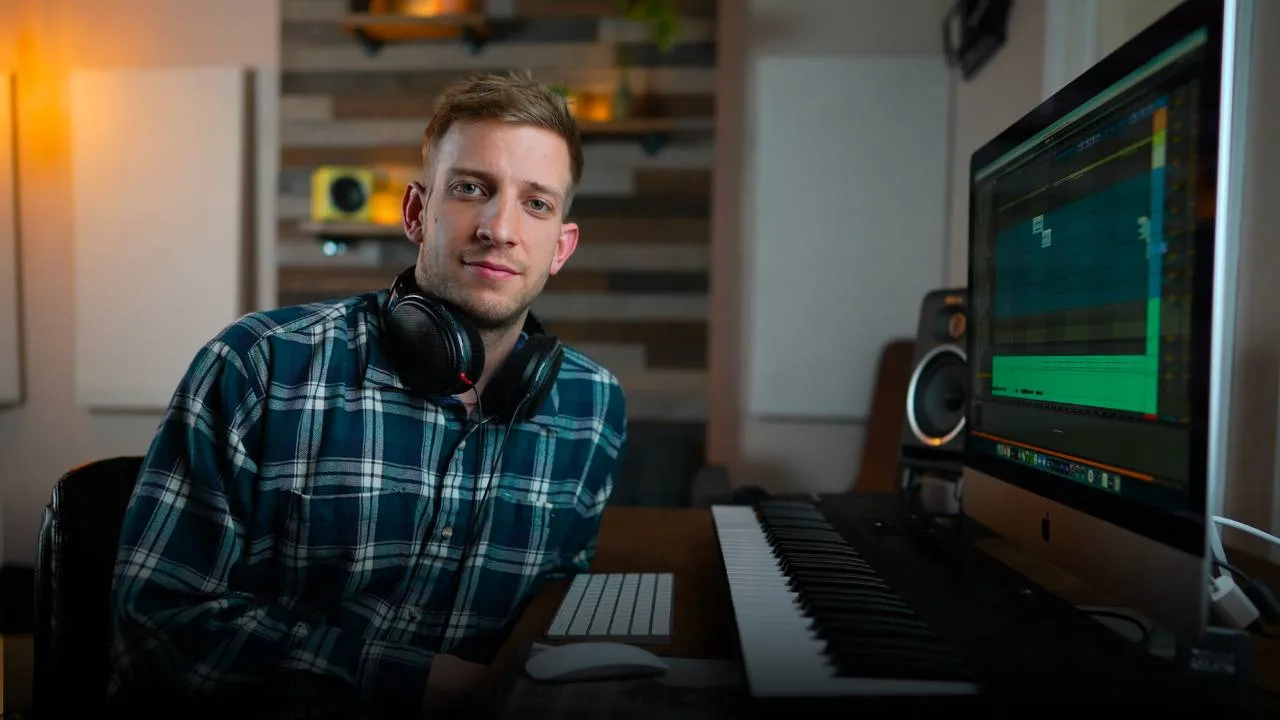
Adam Turley could hear exactly what was wrong with his music.
Not in a vague “something feels off” way. In a specific, A/B-comparable way. He would drop one of his tracks into a playlist alongside his favorite pop artists, hit play, and the difference would hit him before the first chorus.
His song was thinner. Softer. Less defined. It sounded like a demo sitting next to a master.
That’s the worst kind of plateau. Not the one where you can’t tell what’s wrong. The one where you can tell exactly what’s wrong and still can’t fix it.
Adam was in Salt Lake City, deep into pop production, trying to make records that could live next to the artists he looked up to. He had the melodies. He had the taste. What he didn’t have was the technical framework to get his mixes to the same level of polish.
Adam crossed that gap inside the Hyperbits Masterclass. A year after graduating, he had hundreds of thousands of monthly Spotify listeners, editorial features on Fresh Finds and New Music Friday, and a one-way ticket from Utah to LA.
The Starting Point
Before the Masterclass, Adam was already doing most of the hard work. He had been writing melodies since he was 15. He had a clear sense of what he wanted his music to sound like. He was making dance-pop at the time, and the ideas were there.
The problem was the sound.
His tracks had the bones of a pop record but none of the shine. The drums didn’t hit. The vocals didn’t sit. The mixes felt smaller than they should have when pushed up against the artists on his reference playlist.
And like every producer trying to self-teach their way out of a plateau, Adam was drowning in free content that contradicted itself. He spent hours on YouTube learning from people who might or might not know what they were doing. Some of it was gold. Some of it was noise. He had no way of telling which was which until he tried it on his own tracks and heard it fail.
He did not need more tutorials. He needed to learn from people whose music actually proved they knew what they were doing.
The Breakthrough
Two things changed for Adam inside the Masterclass, and both were unsexy but decisive.
First: he finally knew who to trust.
The Masterclass instructors were professionals whose music he could go listen to and verify. That alone solved the YouTube paralysis. When a teacher shows you a mixing move and you can pull up their commercial release and hear it working, you stop second-guessing.
You implement. You move on. The learning curve collapses.
Second: his drums started hitting and his vocals started sitting.
Adam is specific about this. He says the moment his production value jumped was when he figured out how to make his drums hit hard and his vocals sound clean and pristine. Those are the two elements a pop record lives or dies on, and they are also the two elements most bedroom producers get wrong for years without realizing it.
The fix is not any single plugin or trick. It is a patient, methodical approach to every stage of the mix. Adam says the class reshaped how he mixes at the structural level, not just which EQ bands to boost.
He started mixing slower. More deliberately. Listening between each move instead of piling decisions on top of each other and hoping.
That patience is what got his tracks into the same sonic neighborhood as his references.
The Sound
Adam’s signature is pop with edges. Vibrant and delicate at the same time, built around sentimental vocals, tight drums, and bass lines that give the songs real bottom weight. He leans eclectic because his taste is eclectic. The through line is craft, not genre.
He spent his early years chasing whatever was inspiring him at the moment (mostly dance-pop), and he is grateful for it. That era is where he learned to build the tiny production details that now show up all over his songwriter pop: the ear candy, the rhythmic counterpoint, the little bursts of synth that make a verse feel alive. That is the sound of a producer who trained in one world and brought the tools into another.
The result is pop that sounds clean and tight and bright the way the best commercial records do, without losing the personal edge of a bedroom songwriter.
The Results
The numbers since the Masterclass:
- 44M+ total streams across platforms
- Hundreds of thousands of monthly listeners on Spotify within a year of graduating
- Editorial features on Spotify Fresh Finds and New Music Friday
- Moved from Utah to LA to pursue music full-time
- Full-time career as an artist and topliner/producer for other artists
The line that matters most is Adam’s own. Before the Masterclass, he could hear the gap between his mixes and the artists he loved. After it, that gap was gone. “Now, there is no difference between their stuff and mine. I can’t stress how amazing that feels.”
That is not a vanity stat. That is the moment a producer stops being intimidated by their heroes and starts believing they belong on the same playlist.

The Gap You Can Hear
Adam’s story is useful because his gap was measurable. He was not guessing at what was wrong. He could hear it. A lot of producers can.
That is actually the harder version of the problem. When you cannot hear what is wrong, you keep making music and slowly improving. When you can hear exactly what is wrong and cannot fix it, you stall. You start doubting whether the ceiling you are hitting is talent or technique, and the doubt calcifies into quitting.
The answer is almost always technique, and the faster you prove that to yourself, the sooner you stop doubting. Adam proved it by getting in front of instructors who could show him the missing pieces and verify their own work. Six months of that broke through years of stuck progress.
If you can hear the gap between your music and the artists you look up to, that is information. Do not interpret it as a limit. Interpret it as a map of what you need to learn next.
Listen to Adam Turley
In His Own Words
We asked Adam a few questions about his experience.
What did you find most frustrating about music production before the Masterclass?
One of the things I was most frustrated with was that I didn’t know who to trust on the internet. I spent hours and hours on YouTube, and I definitely learned a lot of great things. But it was hard for me to know who knew what they were talking about and who didn’t.
One of the most significant benefits of the class for me was that I learned from professionals who I knew had the knowledge needed to make professional commercial music. I knew it because I checked out their music, and well, it checked out.
Was there a defining moment when your productions actually started to land?
I can’t think of a single defining moment because my progress has been so gradual, but once I figured out how to make my drums hit hard and my vocals sound really clean and pristine, my production value went up a lot. Those two things happen to be my favorite things in music, along with good ole fashioned BASS.
Another critical moment was when one of my tracks hit 1 million streams on Spotify. That was a goal of mine for a long time, and it gave me a lot more credibility and opportunity.
What would you tell a producer who isn’t sure about pursuing this seriously?
Don’t lose sight of why you started doing it in the first place and try to tap into that energy as much as possible.
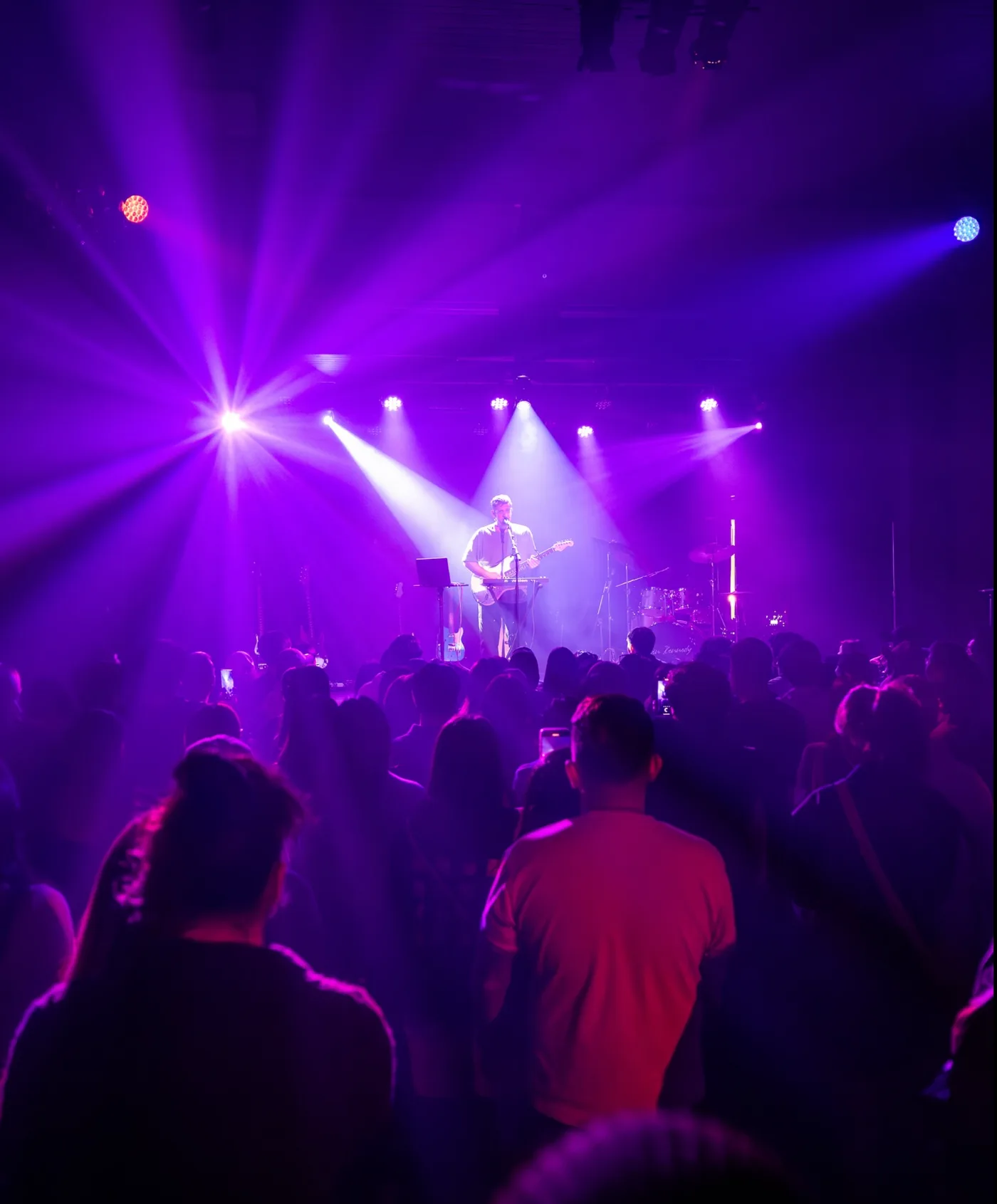
Adam Turley built his signature pop sound inside the Hyperbits Masterclass. If you can hear the gap between your music and the artists you look up to, it is the same program and the same framework that helped him close his.
The part that moved him fastest was working producers hearing his actual mixes. Here’s how our music production mentorship works.