Jump to a section28
- Pick a Reverb Based on What You’re Mixing
- Types of Reverb Plugins
- Why Do I Need So Many Reverb Plugins?
- Organizing the Best Reverb Plugins
- How I Picked These
- Our Favorite Reverb Plugins Reviewed
- 1Valhalla Vintage Verb
- 2iamReverb
- 3Cableguys ReverbShaper
- 4Valhalla Room
- 5Valhalla Supermassive
- 6Liquidsonics & Slate Digital Verbsuite Classics
- 7Relab LX480 Dual-Engine Reverb
- 8Liquidsonics Lustrous Plates
- 9iZotope Aurora
- 10UAD EMT 140
- 11FabFilter Pro-R 2
- 12UAD Pure Plate
- 13Soundtoys SuperPlate
- 14KSHMR Reverb
- 15Native Instruments Raum
- 16Eventide Blackhole
- 17Lexicon PCM Native Reverb Bundle
- 18Altiverb
- 19ChromaVerb (Logic only)
- 20Your Stock Reverb
- Frequently Asked Questions
- Become a Reverb Master
I love reverb. You should love reverb too.
Think about it. Reverb is everywhere. Every sound you’ve ever heard as a human has some amount of reverb on it, reflections bouncing off the walls, the floor and whatever else is around you. Brushing your teeth, talking to a friend in the car, dropping a weight at the gym. None of it is dry.
Which means a completely dry sound is the unnatural one. There are rooms built to kill every reflection (look up “the quietest room on earth”), and most people can’t stand being in them for long. It’s the same in a mix: with little to no reverb, it sounds harsh and kind of lifeless.
And here’s the thing most people don’t realize. The samples and sounds you use are recorded as dry as possible on purpose, so you can add your own space back in. Reverb is how you decide where your music lives, whether that’s a tight LA studio, a cathedral, or a place no real room could ever sound like.
So which reverb should you use? These are the 20 reverb plugins (or reverb VSTs, depending on who you ask) I’d actually recommend. My #1 is Valhalla Vintage Verb, and the newcomer you need to hear is iamReverb.
Quick picks
Each row jumps down to the full review.
| Plugin | Best for | Price |
|---|---|---|
| Valhalla Vintage Verb | Everything, 70s to now | $50 |
| iamReverb Partner Pick | Realistic rooms | $99 to $299 |
| Cableguys ReverbShaper | Responsive reverb | $39 |
| Valhalla Room | Wide synth tails | $50 |
| Valhalla Supermassive | Huge ambient spaces | Free |
| Verbsuite Classics | Drums and full mixes | $149 |
| Relab LX480 | The Lexicon 480 sound | $349 |
| Lustrous Plates | Bright vocal plates | $199 |
| iZotope Aurora | Reverb that clears vocals | $49 |
| Eventide Blackhole | Impossible spaces | $99 |
Pick a Reverb Based on What You’re Mixing
Vocals: iZotope Aurora keeps the reverb out of the way of the words, iamReverb puts a vocal in a real room, and the Relab LX480 gets you the classic Lexicon 480 sound. For a bright pop plate, try Lustrous Plates.
Drums: Verbsuite Classics is my drum pick, especially on snares and toms. For a snare that jumps forward, use a plate like the UAD EMT 140.
Synths and pads: Valhalla Room for wide, unnatural tails, Supermassive for huge ambient washes, and Eventide Blackhole when the reverb is the sound.
Plates: Lustrous Plates, Soundtoys SuperPlate, or the free UAD Pure Plate.
Free reverb VSTs: Valhalla Supermassive, NI Raum, UAD Pure Plate and your stock reverb.
Types of Reverb Plugins
When I was newer to producing, I had a hard time understanding why anyone bought extra reverbs. My DAW already has reverbs, why would I buy more?
I came to learn that there are many kinds of reverbs, at varying levels of quality, with different characters that suit different purposes.
Before we came up with techniques to emulate reverb, there was only one way to have reverb on your tracks: record them in a space that had the room characteristics you wanted. Phil Spector, famous for his “wall of sound”, was fresh in his approach to space by recording different elements of his song in different studios so that he could get different sizes and tones in the recordings.
As our audio gear became more sophisticated, we came up with many solutions to add reverb without having to have large spaces to suit our needs. This became the origin of what a lot of modern-day reverb plugins try to emulate.
There are 5 types of reverb, and every reverb plugin is either algorithmic or convolution. The video walks through all five with audio examples, so you can hear the difference.
Room Reverbs:
Plain and simple, the reverb of a room. Most room reverbs are an emulation of a studio room designed for the purpose of having a specific sound to them. The main purpose of a room reverb is for most or all elements of your mix to have a shared space. Think of this like a cohesive glue that places sounds into one real space.
Hall Reverbs:
Hall reverbs sound big, smooth, and spacious. They are the sound of the reverberations in a large space, like concert halls, cathedrals or concert venues. These large and flowing reverbs generally push a sound further back in a mix.
Chamber Reverbs:
Chamber reverbs were an invention to make reverb accessible without requiring massive spaces. They were basically a small side-room or chamber (hence the name) that had a lot of angles and was covered in very reflective surfaces.
The engineer would run the audio into the room via a speaker, which was then recorded with mics in the room. This gave them a “wet” reverb signal they could then mix into the original signal.
Chambers feel denser and thicker than other reverbs since they are really a small space artificially made to have more reflections.
Plate Reverbs:
Plates made reverb even more accessible. The audio signal would be run through a metallic plate, and the vibrations of the plate would be recorded.
The timbre of the reverb would be highly dependent on the material used for the plate. But plate reverbs are famous for their bright and smooth sound. Because of their brighter tone, plate reverbs are great for elements at the front of the mix.
Spring Reverbs:
A spring reverb is similar to a plate, except instead of vibrating a plate, we’re moving a spring. This allowed the plate concept to be miniaturized as you got more surface into a smaller area. And springs move more easily.
Spring reverbs sound almost like a lot of echos closely together as opposed to smoother reflections. Spring reverbs are known for their use on guitars and are a staple of the tone of classic rock.
Algorithmic Reverbs:
Algorithmic reverbs are reverbs that are digitally produced via the use of an algorithm, generally trying to emulate one of the previously mentioned reverb types.
Convolution Reverbs:
Convolution reverbs use samples (called impulse responses, or just IR) of real-life spaces to recreate how that space sounds. These reverbs can make very realistic sounding reverbs since they are based off actual naturally occurring reverbs.
Why Do I Need So Many Reverb Plugins?
The short and honest answer is, you don’t. You can absolutely make a polished mix with just one reverb. However, understanding the different characteristics of different reverbs will help you make your mixes that much better.
As with any skill, the deeper you go into producing and mixing, the more you learn about the details. And those details will inform your decision making and help you become a stronger producer. It’s all in the nuances.
Some reverbs like halls will make a sound feel like it’s in a space and push it further back in a mix, while plate reverbs are so bright that they can make elements jump to the front of a mix.
Here are some of our favorite reverb plugins in detail.
Organizing the Best Reverb Plugins
Every review below follows the same layout, so it’s easy to skim and compare:
Price: what it costs right now. Prices move around, and sales are common.
Type: algorithmic, convolution, plate or spring.
UX: how it feels to actually use.
Character: in short, how does the sound of the reverb, uh, sound?
Uses: where it works best.
Pro Tip: one move worth stealing, or the thing that makes it unique.
How I Picked These
I’ve been producing for 20+ years and working with artists for a big chunk of that. Along the way I’ve bought, tried and produced with an absurd number of reverbs, and every plugin on this list is one I’ve personally tried.
The ranking is simple: how often I actually reach for each one. That’s why a $50 Valhalla sits above $500 reverbs, and why a free plugin made the top five.
Our Favorite Reverb Plugins Reviewed
1. Valhalla Vintage Verb
Price: $50
Type: Algorithmic
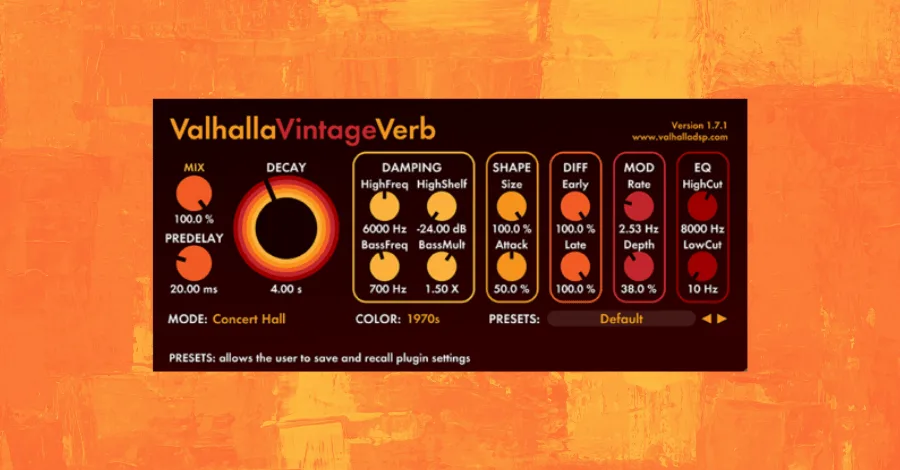
UX: Fun and psychedelic, while still simple to use.
Character: If I could only keep one reverb, this would be it. It’s famous for big, bright tails. The Color switch is the part people miss: it flips the whole reverb between 1970s, 1980s and Now, so the same plugin goes from gritty 70s tails to clean modern space.
Add its long list of modes (halls, rooms, plates, chambers, plus weird ones like Nonlin and Chaotic Hall) and it covers almost anything you’d want a reverb for. That range is why it’s #1.
Uses: Vocals, leads, drums, and anything that should be pushed forward and appear ‘large’ in your mix.
Pro Tip: Use the built-in low cut options to clean up the low-end of this reverb.
2. iamReverb
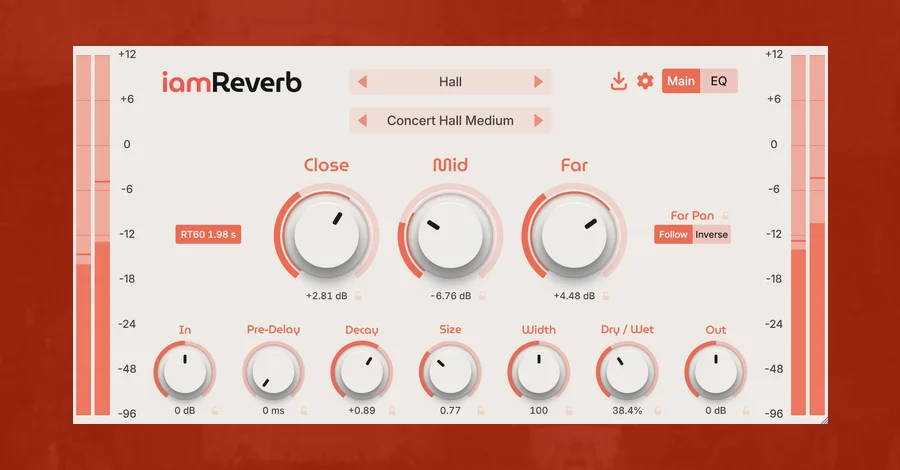
Price: $299, or $99 for iamReverb lite (free 14-day trial)
Type: Convolution
UX: Clean and really hard to get lost in. Three big knobs, Close, Mid and Far, sit in the middle, with pre-delay, decay, size, width and dry/wet along the bottom. A six-band EQ lives on its own tab for when you need it.
Character: This is the newcomer on the list. iamReverb is the first plugin from a small team in Vienna, and it only came out in April 2025. I made the four clips above with it, so give them a listen before you read any further.
Most convolution reverbs are built from a recording of a room, and the dry sound bleeds into that recording. iamReverb records its rooms differently (they call it Enhanced Reverb Modeling), capturing the early reflections up close without the dry sound getting in the way. What you get sounds like an actual room. The early reflections are clear, and the low end stays tight.
The Close, Mid and Far knobs are the fun part. Each one is a different spot in the same room, and you blend them like faders. Turn up Close and the sound sits right in front of you. Push Far and it walks to the back of the hall. It’s honestly the most natural way to set how far away something sounds.
It also runs at zero latency and is light on CPU, so you can leave it on while you record.
Sound On Sound called it “a most impressive debut product,” and Tape Op and Recording magazine were just as kind.
The lite version has 17 impulse responses instead of 38 and no size or width knobs, and you can upgrade later for $199.
Uses: Vocals, acoustic guitar, piano, strings, and anything you want sitting in a believable space. It’s also a great way to put a whole mix in the same room.
Pro Tip: Use Close, Mid and Far as your depth control. Want a backing vocal to sit behind the lead? Pull Close down and bring Far up instead of just turning up the wet signal. The vocal moves back in the room without washing out.
3. Cableguys ReverbShaper
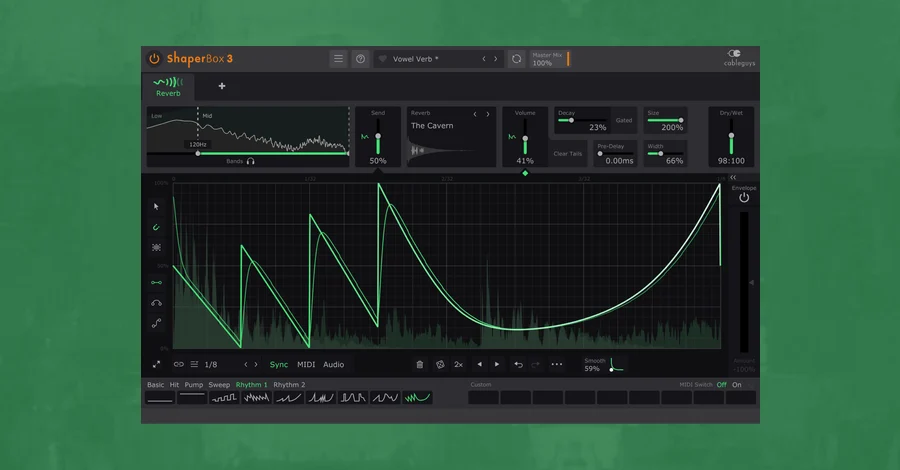
Price: $39 (or as part of the ShaperBox 3 bundle)
Type: Rhythmic reverb (127 reverb types, plus your own impulse responses)
UX: It lives inside ShaperBox 3, so if you’ve used VolumeShaper or any of the other Shapers, you already know how it works. You draw a shape and the reverb follows it.
Character: This is one of my more recent favorites, and it’s a different animal from everything else on this list. Instead of setting a reverb and leaving it, you draw how much reverb you want over time, synced to your track, to MIDI or to the drums. You can make it swell into the downbeat, open up only on the offbeats, or gate and pump in time with the track.
This is the part I love: no reverb I’ve used makes responsive reverb this easy. Flip on the envelope follower and the reverb listens to whatever’s feeding it. It ducks out of the way while the dry sound plays, then blooms in the gaps between notes and words. Add Clear Tails, which resets the reverb every time the shape hits its lowest point, and the tails never stack up.
Uses: Electronic music especially. Vocal chops, plucks, drums, transitions, anything where you want the reverb to move with the groove.
Pro Tip: Use the multiband split to keep the reverb off the low end entirely. Your kick and bass stay clean while the mids and highs get all the movement.
4. Valhalla Room
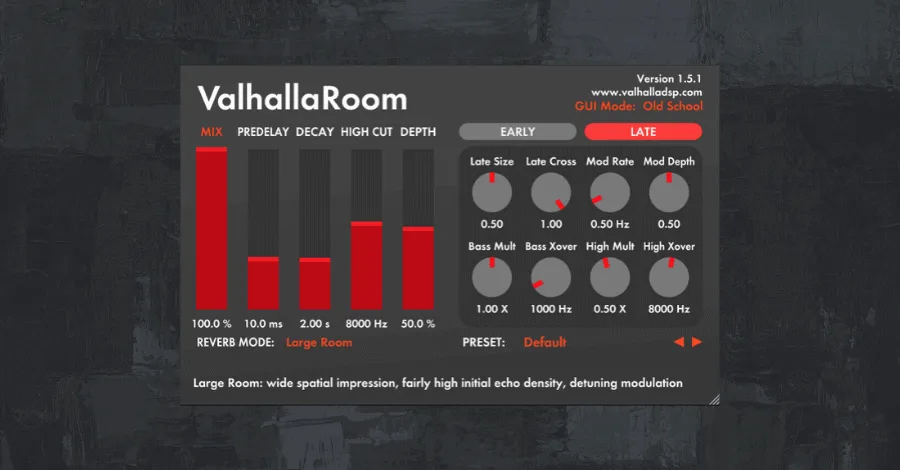
Price: $50
Type: Algorithmic
UX: Despite its many advanced options, Valhalla has one of the cleanest and simplest interfaces of any of the plugins on this list.
Character: The multiple different modes affect its character, but mainly Room is very clean and smooth, in an unnatural yet pleasing way. It’s possibly the most popular reverb amongst EDM producers, and for great reason. It sounds fantastic on pretty much everything, and is very affordable.
This is one of my two favorite reverbs (Vintage Verb is the other), and at $50 it might be the best bang for your buck on this entire list.
Uses: While it can be used on anything, I like using it when I want a bit of an unnatural reverb tail. Try it out on synths, drums, FX, reverb throws, long tail reverbs, and when you want wide reverbs.
Pro Tip: Try raising the ‘Early Cross’ parameter to get a wider reverb.
5. Valhalla Supermassive
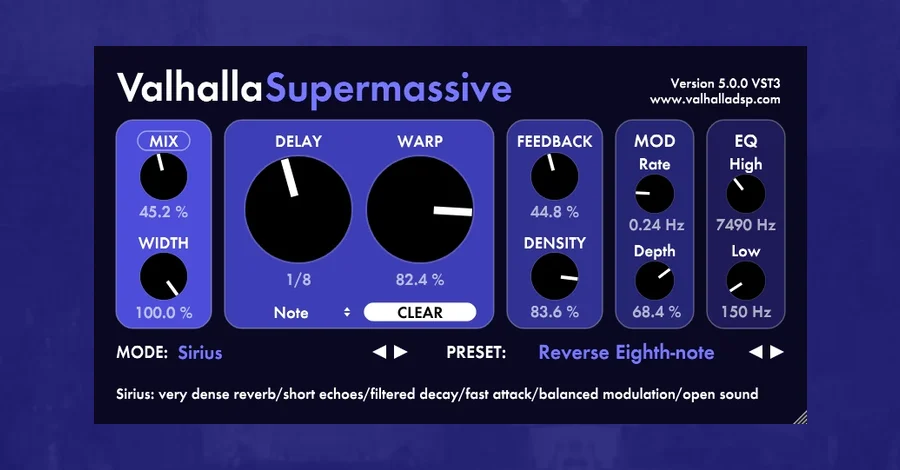
Price: Free
Type: Algorithmic (reverb and delay)
UX: Classic Valhalla: one screen, nothing hidden. Pick a mode, then shape it with Delay, Warp, Feedback and Density.
Character: I love this plugin, and it’s free, which still feels kind of crazy. Supermassive is built for huge spaces, the long washy tails and swirling echoes you put under a breakdown. It sits somewhere between a reverb and a delay.
There are 22 modes, all named after stars and galaxies (Gemini, Andromeda, Great Annihilator), and they range from tight, dense echoes to tails that seem to go on forever. Valhalla keeps updating it too. The latest version added a new mode called Sirius.
Uses: Pads, ambient textures, breakdowns, reverb throws, sound design.
Pro Tip: Set Delay to a note value like 1/8 so it locks to your tempo, then push Feedback for echoes that bloom into the reverb. Keep the Low EQ knob up around 150Hz so the wash doesn’t muddy your low end.
6. Liquidsonics & Slate Digital Verbsuite Classics
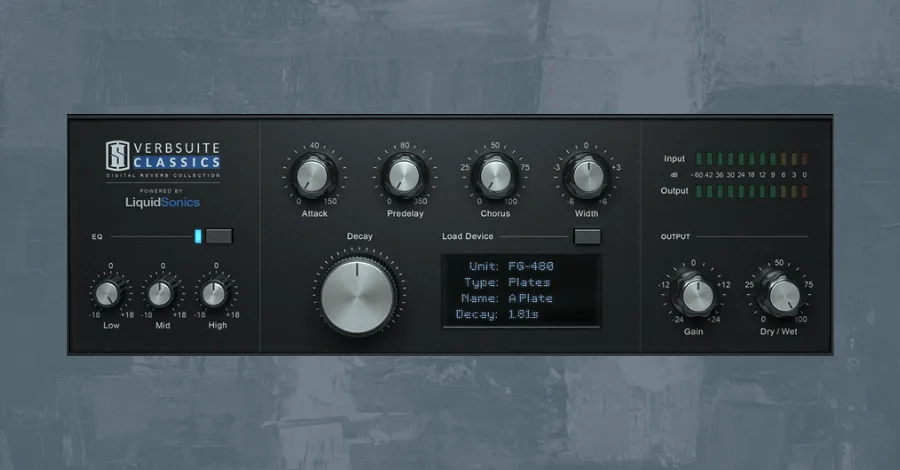
Price: $149 (or included in Slate Complete Access for $19.99/month)
Type: Convolution
UX: Sporting a simple interface with big knobs and no complicated settings, it’s easy to dial in fantastic tones with the Verbsuite Classics plugin. It also comes with many great sounding presets to use as a starting point.
Character: Liquidsonics brags they use a different technology than classic impulse responses by also capturing more information such as “the evolving character of modulating digital reverbs, making the overall tone rich, smooth and dynamic.”
Verbsuite includes models of many classic digital reverb units that were staples in the major studios many of our favorite records were produced and mixed in. This makes it extremely versatile as by switching the model you can completely change the tone of the reverb.
Uses: Verbsuite can be used across an entire mix. If you’re only going to have one reverb, this is the one since it is so versatile. I personally think it shines the best on drums.
Pro Tip: The “Gatey 80s Drums” preset sounds fantastic on snares and toms. I like to lower the mix to about 30%, lower the highs on the eq section to about 10 o’clock, and turn the width up a bit. I then set the decay to taste.
7. Relab LX480 Dual-Engine Reverb
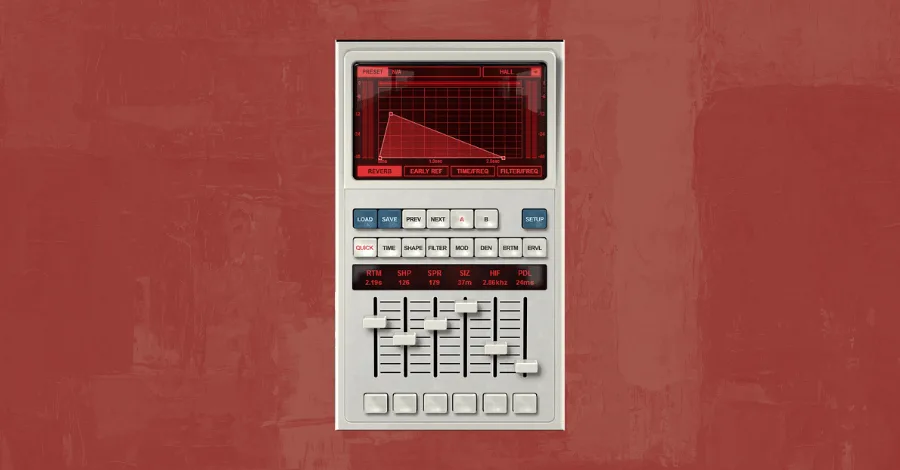
Price: $349 (Plugin Boutique runs it on sale a lot, often around $149)
Type: Emulation/Algorithm
UX: The interface isn’t for everyone. It’s built to look like the original Lexicon hardware, so it feels dated and takes some getting used to. The presets sound great right out of the box, though.
Character: The Lexicon 480 is possibly the most famous digital reverb unit ever made. There are a lot of emulations of it, and Relab’s is one of the most respected.
It has a great way of putting tracks in a smooth space without having the reverb conflict with other elements in the mix.
Uses: Vocals especially.
Pro Tip: Give it a long pre-delay to get the reverb out of the way of the vocal. Also, there are some great sounding delays built right into the plugin!
8. Liquidsonics Lustrous Plates
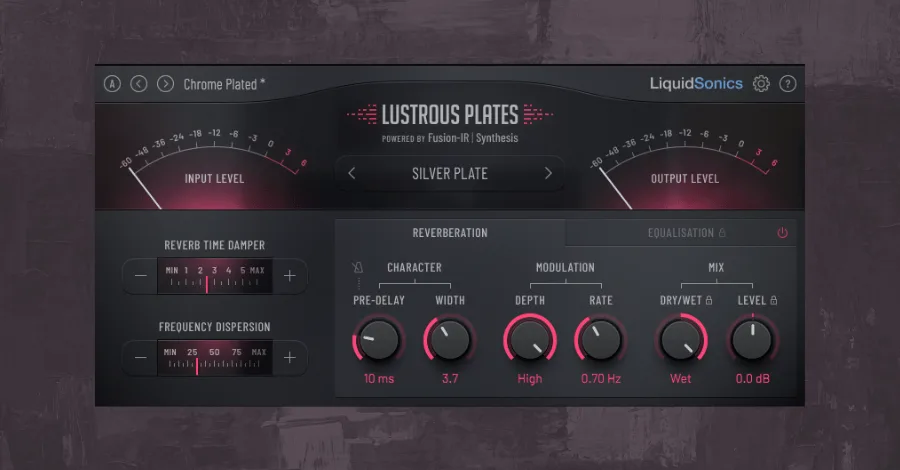
Price: $199 (or included in Slate Complete Access for $19.99/month)
Type: Plate
UX: Clean and visually appealing, options for both light and dark plugin skins.
Character: When Slate Digital announced they were adding a new plate plugin to the suite, I couldn’t imagine why. They already had so many plates in Verbsuites! Despite my doubts, I was shocked when I heard how good this plugin sounds.
It offers many plate modes, including a fictional metal called “Unobtanium”. This reverb is thick, lush, and bright, pushing tracks forward in your mix effectively.
Uses: Vocals, Lead Elements, Snares.
Pro Tip: Try pushing the width knob, and using the high shelf in the eq section to make this even brighter.
9. iZotope Aurora
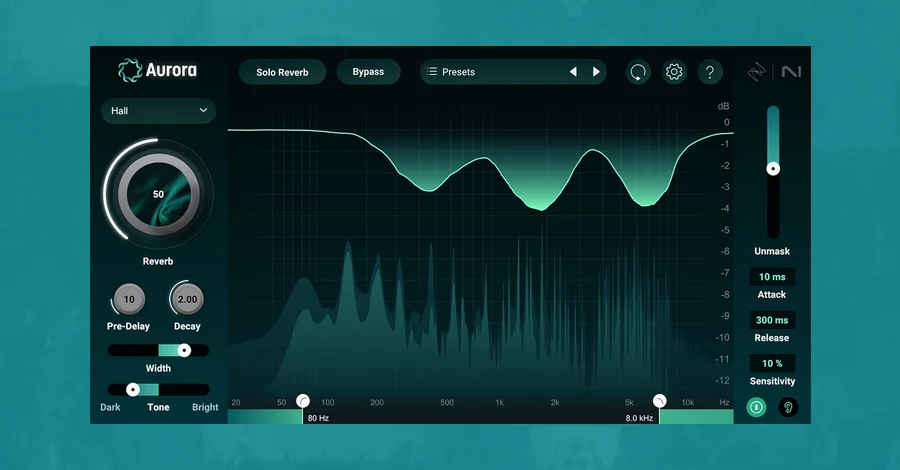
Price: $49
Type: Algorithmic
UX: Simple. One big Reverb knob, pre-delay, decay, width and a dark-to-bright tone slider on the left, with the unmasking display taking up most of the window.
Character: Aurora’s trick is what iZotope calls Adaptive Unmasking. It listens to the dry sound and carves the clashing frequencies out of the reverb in real time, so you can put a lush hall on a vocal without it smearing the words. Normally you’d need sidechain compression or EQ automation on the reverb to get that. Here it’s one slider.
The reverb itself comes from Exponential Audio’s algorithms, so it sounds smooth and polished right away. You get six types: hall, room, chamber, plate, ambience and cathedral.
Uses: Vocals especially, and any busy mix where reverb usually clouds things up.
Pro Tip: Hit Solo Reverb and turn up Unmask while the track plays. You’ll hear holes open up in the reverb right where the vocal sits. Then back it off until the reverb feels glued to the vocal again.
10. UAD EMT 140
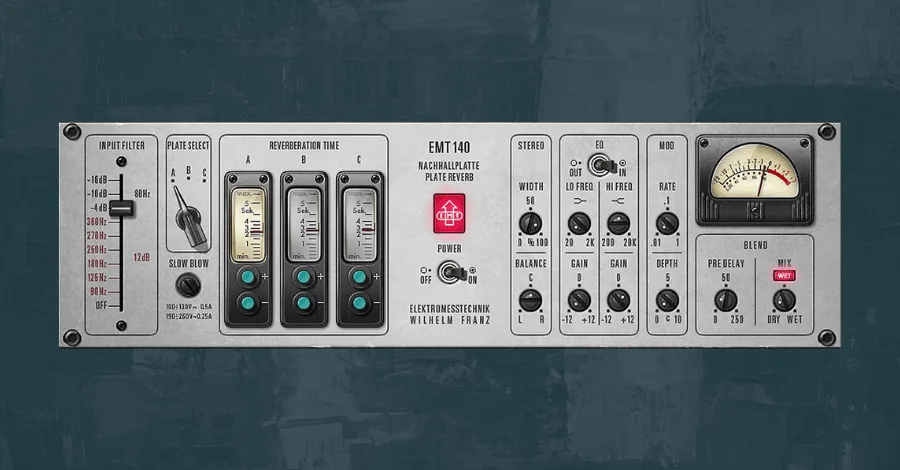
Price: $149 (it now runs natively, no UA hardware needed)
Type: Plate
UX: In the similar manner to most UAD plugins, the EMT 140 is designed to look like a hardware unit. The interface is nice though, and should be a quick learn.
Character: A very smooth and pretty reverb, the UAD EMT 140 includes three models of plate emulations which range in how much bandwidth they cover. A is the most bright, B has a bit more low-end as well to it, and C is the fullest of the three.
Worth knowing that Abbey Road’s famous plates were EMT 140s as well, so Waves Abbey Road Reverb Plates is a model of the same machine, built from the studio’s own four units. Its damper is modeled as a mechanism, so shortening the decay changes tone and diffusion the way the real plate did instead of just cutting the tail short. It lists at $149 and routinely drops to around $35 on a Waves sale, which makes it the cheap way into this sound.
Uses: Naturally recorded elements that you want to push forward in the mix.
Pro Tip: Use the ‘Depth’ knob to make the reverb thicker and fuller.
11. FabFilter Pro-R 2
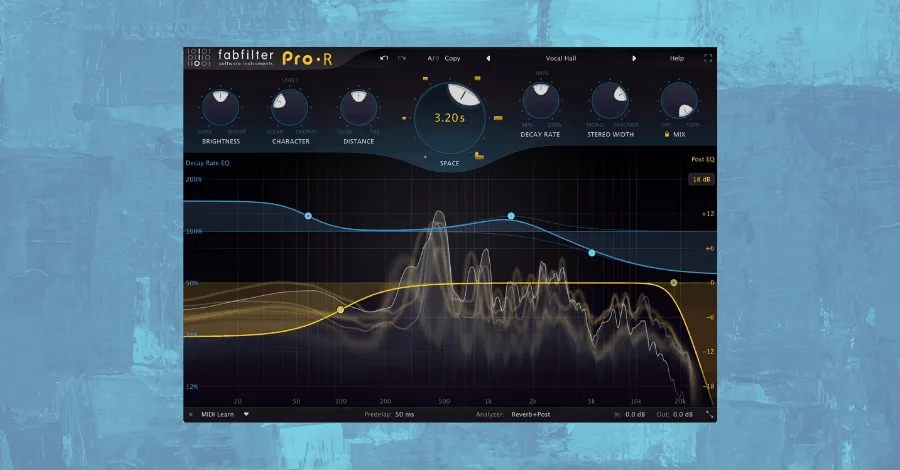
Price: $199
Type: Algorithmic
UX: While it has the beautiful interface we’ve come to love and expect from FabFilter, this is a very versatile reverb with a lot of options.
Character: This plugin is very malleable, but due to FabFilter’s strong digital algorithms and futuristic UX, it’s best at performing smooth, clean reverbs for a transparent, modern sound.
Uses: While it will work on anything, I believe it to be best suited for synths.
Pro Tip: The space knob doesn’t just affect the length of the decay, but also the kind of space the algorithm is emulating.
12. UAD Pure Plate
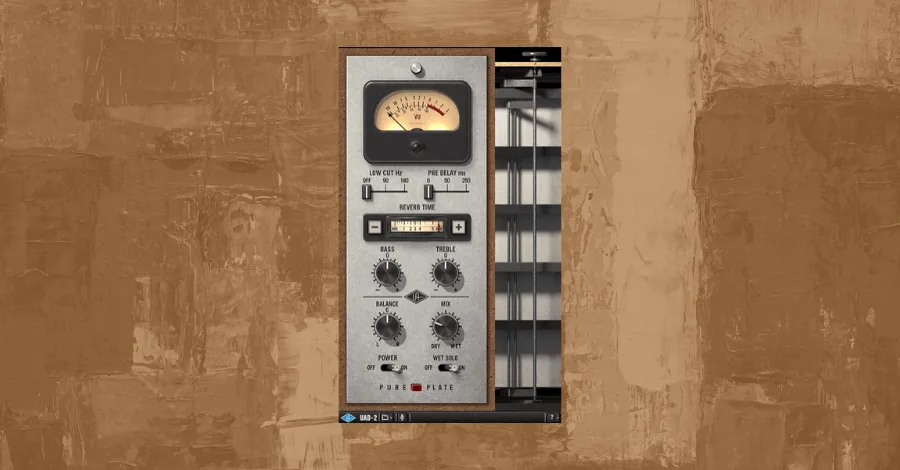
Price: Free with UA’s free UAD Explore bundle (runs natively, no UA hardware needed)
Type: Plate
UX: Not many options, but it doesn’t need them. Easy and straightforward to use.
Character: UAD is known for their super high quality plugins, and this one does not disappoint. Very smooth, full, bright and big tone. This is a very forward reverb.
Uses: Vocals, guitars, snares.
Pro Tip: I love to use this reverb with the UA Console app for live monitoring while tracking artists.
13. Soundtoys SuperPlate
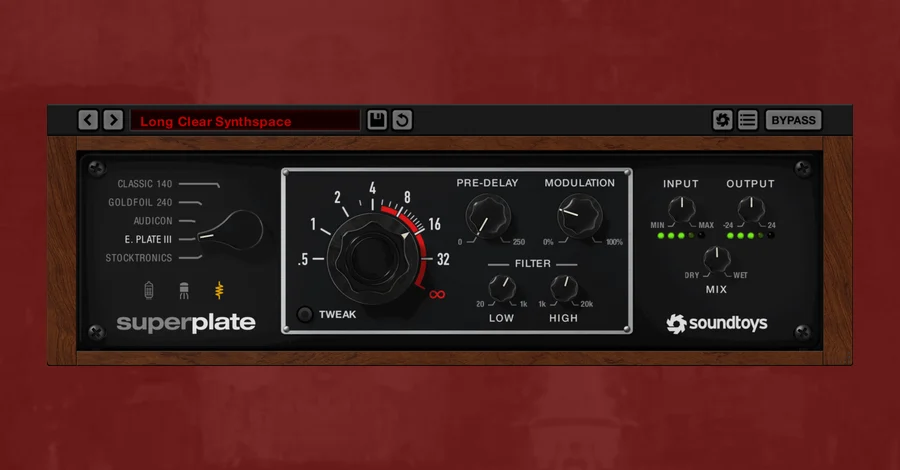
Price: $149 (Little Plate comes with it)
Type: Plate
UX: In the classic style of Soundtoys, pretty and simple with no more options than you need. Pick a plate on the left, set the decay on the big knob, and you’re basically done.
Character: SuperPlate packs five classic plates into one plugin: the EMT 140, the gold foil EMT 240, Audicon, Stocktronics and EcoPlate III. Each one has its own color, and you can run any of them through tube, solid-state or clean preamp modes for extra grit.
Little Plate, Soundtoys’ simpler one-plate reverb, comes with it, and that’s what you’re hearing in the clip. It’s a subtle-tone plate more than a big-space reverb. Think snare and vocal color.
Uses: Vocals, snares, guitars, keys, anything you want bright and forward.
Pro Tip: Crank the decay knob all the way to infinite and you can turn any sound into a frozen pad or ambience. There’s also built-in ducking (Auto-Decay) that pulls the tail back while the dry sound plays.
14. KSHMR Reverb
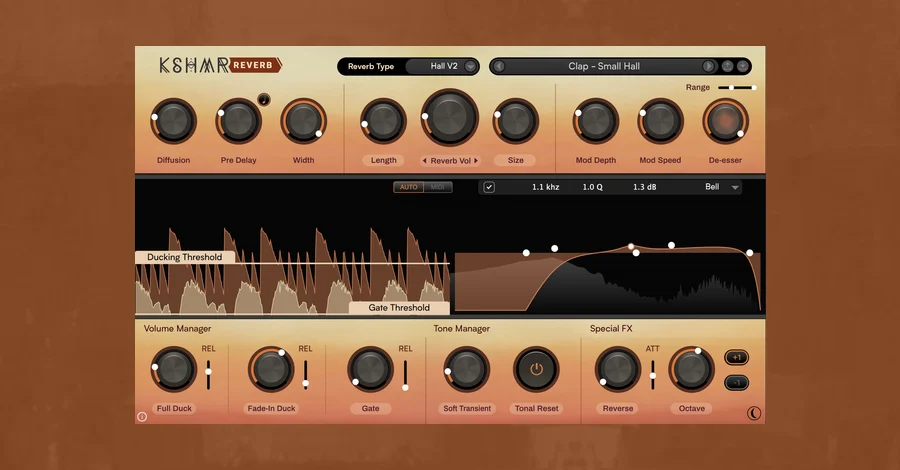
Price: $29.90
Type: Algorithmic (hall, plate and spring)
UX: Busy at first glance, but every section is labeled in plain English: Volume Manager, Tone Manager, Special FX. It also has light and dark modes and a resizable window.
Character: Built by W.A. Production with KSHMR, this one is made for modern electronic music. The tools wrapped around the reverb are the reason it’s on this list. You can duck the tail under the dry sound, fade it in, gate it, soften its attack, or reverse it so the reverb swells up into the next hit. There’s even an octave up or down harmony you can add to the tail.
Uses: EDM drops, claps and snares, vocal chops, leads, risers.
Pro Tip: Try Reverse on a clap or a vocal chop. The tail swells up into the next hit, the classic reverse reverb sound.
15. Native Instruments Raum
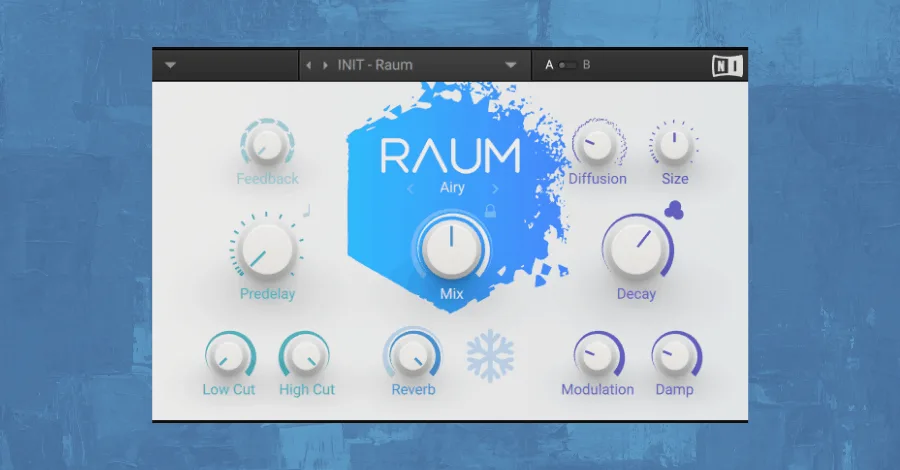
Price: Free
Type: Algorithmic
UX: Simple and modern, while still packing some more advanced options.
Character: With three modes, Raum can sound pretty different based on your needs. I love it because it is designed to sound very different from the traditional reverbs we are used to using and hearing. You can make some wacky unnatural effects with this plugin.
Uses: Synths, percussion, but especially on electric guitar.
Pro Tip: Predelay has a bpm sync option, that allows you to delay the onset of the reverb to note values based on your project’s tempo. Also, you can make some sweet ambiences using the freeze option.
16. Eventide Blackhole
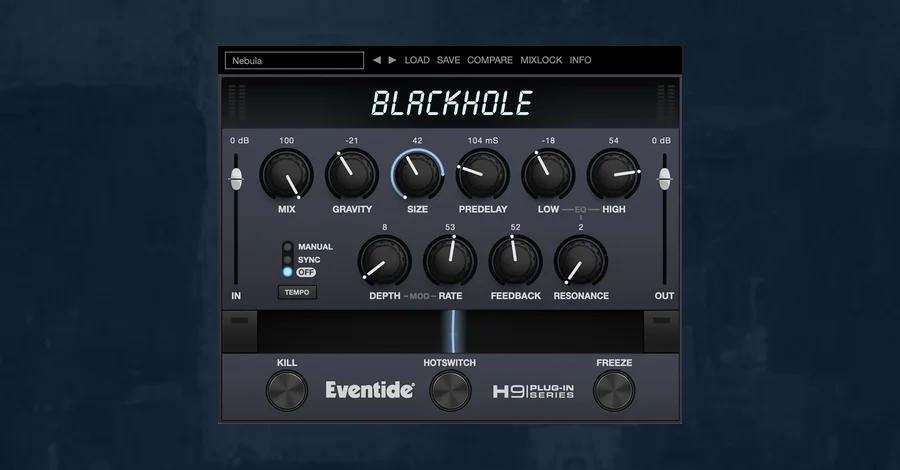
Price: $99
Type: Algorithmic
UX: Simple for what it does. Mix, Size and Gravity do most of the work, with Predelay, low and high EQ shelves, mod Depth and Rate, Feedback and Resonance arranged around them. Kill, Freeze and a Hotswitch that jumps between two complete settings of the plugin sit along the bottom.
Character: Nothing like a room. Size and Gravity run far past the length of any real space, and Gravity changes the direction and character of the decay on the way, so one sustained note becomes a pad. This is the plugin people mean when they talk about an impossible space. It comes from Eventide’s H9 and H8000 hardware and the algorithm is the same one.
Uses: Ambient, scoring, breakdowns, anywhere the reverb is the sound rather than the space. Hit Freeze and the tail holds indefinitely while you keep playing over the top of it, which is the fastest way I know to build a pad out of one note. What it will not do is a believable small room or natural ambience, so treat this as the second reverb in the session and keep something else on the drum bus.
Pro Tip: Blackhole works best as a specialty send rather than an insert. Keep the send level very low, then automate it up for the moment you want the drama and back down after. We go through that move in more detail in our guide to using reverb.
17. Lexicon PCM Native Reverb Bundle
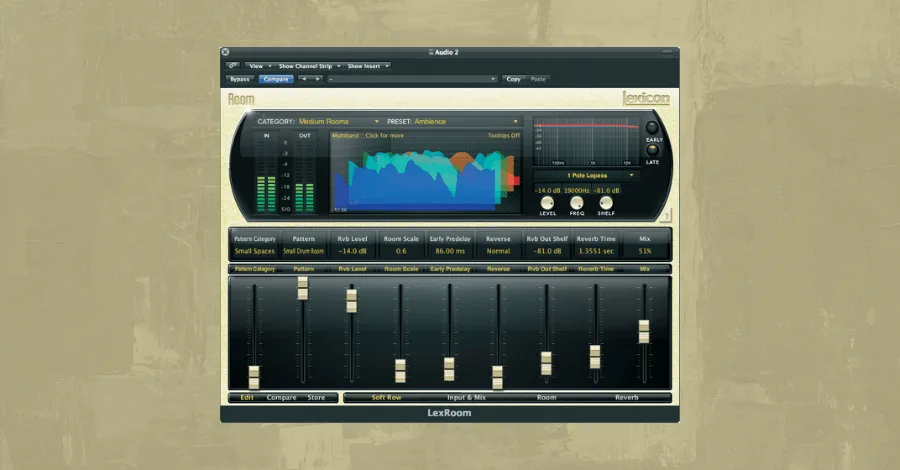
Price: $499 (now sold by FLUX::)
Type: Algorithmic
UX: Not super pretty or simple, may confuse users at first.
Character: Lexicon is the biggest name in algorithmic reverbs, having invented many of the most sought after and famous digital reverb units. They claim to offer that same quality in their plugin, which offers 7 different reverb modes and many options for customizing the tone.
Uses: Anything and everything.
Pro Tip: The Lexicon reverb can be run as a combination of both stereo/mono, which can help you gain tighter control over your stereo imaging.
18. Altiverb
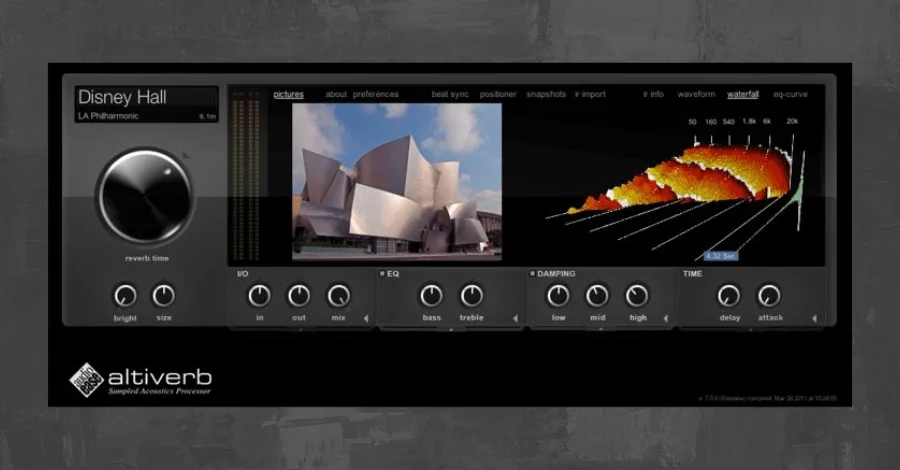
Price: $520 for Altiverb 8 Regular, $899 for XL
Type: Convolution
UX: While Altiverb doesn’t sport the most modern or prettiest of interfaces, it is fairly easy to navigate and dial in a sound.
Character: This is basically the best reverb money can buy, and it’s priced like it. Altiverb is a huge library of real spaces recorded around the world, from concert halls and cathedrals to famous studios, and they sound shockingly real. Put a dry string section in one of its halls and it sounds like it was recorded there.
That’s why it lives in film scoring rooms and post-production studios, where the job is making a sound believably exist in a real place. The XL version adds surround support for film and TV mixes.
For most producers making music in a bedroom studio, it’s overkill, and your money goes further elsewhere on this list.
Uses: Film and TV scoring, orchestral and acoustic recordings, and post-production, anywhere realism matters most.
Pro Tip: Use the brightness knob to adjust how forward you want that track to be in the mix.
19. ChromaVerb (Logic only)
Price: Included with Logic Pro
Type: Algorithmic
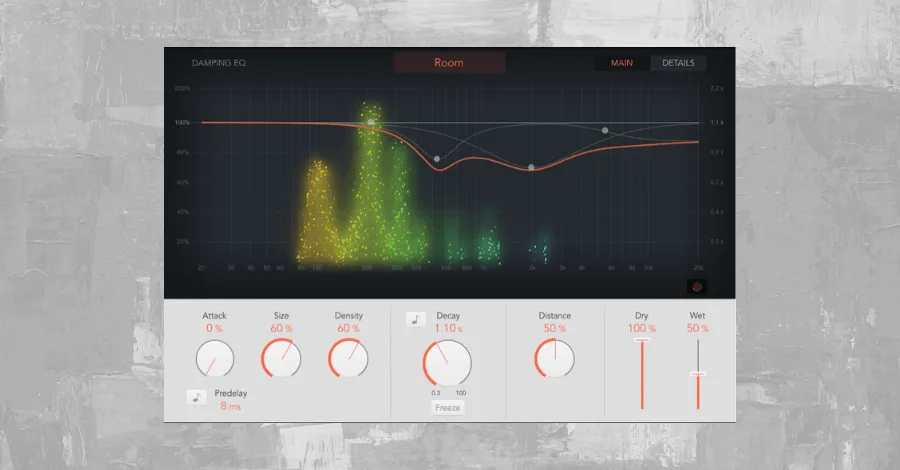
UX: Chromaverb is clearly designed by Apple with a clean, simple interface, that boasts great visual monitoring of the output through a creative color display.
Character: This reverb sounds shockingly good for a stock plugin, and has many different modes, both natural and non, that can radically affect the tone.
Uses: ChromaVerb can be used on any part of a mix.
Pro Tip: Use the nodes on the main screen to affect which frequencies will be accentuated in the tone of the reverb. This allows for some serious tone shaping.
20. Your Stock Reverb
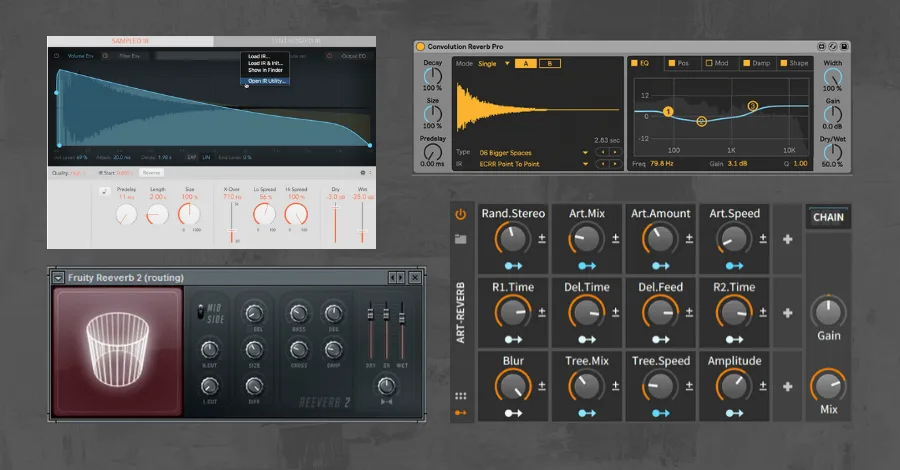
While not all reverbs are created equal. And there are stronger options than your stock reverb, not having tons of fancy reverbs shouldn’t hold you back from making awesome music. You can get great results with just your stock reverb. And you can use them until you’re ready to upgrade to some of the options we’ve discussed.
While Ableton’s stock reverb is basic, Logic’s Space Designer is one of the best sounding reverbs available.
Frequently Asked Questions
What’s the best reverb plugin for vocals?
There’s no single answer, but here’s where I’d start. iZotope Aurora listens to your vocal and carves the reverb out of the way of the words, so you can use a big, lush space without smearing the lyrics.
For the bright, glossy plate sound on pop vocals, reach for Liquidsonics Lustrous Plates, or the free UAD Pure Plate if you’re on a budget.
What’s the most realistic reverb plugin?
iamReverb. It’s built from recordings of real rooms, captured in a way that keeps the early reflections clear and the low end tight, so it sounds like an actual space instead of a plugin. And unlike a lot of realistic reverbs, it’s easy to bend. The Close, Mid and Far knobs let you place a sound anywhere in the room, and size, decay, width and a six-band EQ take it from there.
Accurate and flexible is a rare combo, and it’s why I think it’s one of the best reverbs you can own. Altiverb is the other big name for realism, but it costs a lot more and is really built for film and post-production.
What’s the best free reverb VST?
Valhalla Supermassive. It’s free, Valhalla keeps updating it, and it’s built for huge ambient spaces and echoes. NI Raum and UAD Pure Plate are free too.
Don’t sleep on your DAW’s stock reverb either. Logic’s Space Designer is one of the best sounding reverbs out there, free or not.
What’s the best reverb plugin for drums?
Verbsuite Classics is my drum pick. Its “Gatey 80s Drums” preset sounds great on snares and toms. For a snare that jumps forward in the mix, a plate like the UAD EMT 140 or Lustrous Plates does the job.
What’s the difference between algorithmic and convolution reverb?
Algorithmic reverbs build the space out of math, so you can tweak everything and stretch it into rooms that couldn’t exist. Convolution reverbs use recordings of real spaces (called impulse responses), so they sound like actual rooms but are harder to bend.
Valhalla Vintage Verb and Supermassive are algorithmic. iamReverb and Altiverb are convolution.
Are reverb VSTs and reverb plugins the same thing?
Yes. VST is one plugin format, and a lot of producers use it as shorthand for any plugin. Most reverbs on this list come as VST3, AU (for Logic) and AAX (for Pro Tools), so they’ll run in pretty much any DAW.
What’s the best reverb plugin for Logic Pro?
Start with what Logic already gives you. Space Designer is one of the best stock reverbs in any DAW, and ChromaVerb is great for shaping the tone of a tail. Every third-party pick on this list also comes in AU format, so they all run in Logic too.
Become a Reverb Master
The reverb you choose can make a big difference in how your final mix will turn out. We discussed many different types of reverbs, and the best uses for them.
Use this guide by first differentiating between rooms, halls, plates, chambers and spring reverbs. And then selecting the various reverb plugins at your disposal to learn more about their subtle differences.
Start with one or two and learn them like the back of your hand. Add more when you hear something they can’t do. And remember, a dry mix is the unnatural one.
Heads up: some of the links below are affiliate links. If you buy through one, we earn a small cut (costs you nothing extra). But we'd point you at this exact gear whether we made a dime or not.