Joel Freckelton had the nightmare scenario most producers spend their lives trying to avoid.
He’d get booked for a DJ set, drop his own productions into the mix, and watch the floor thin out. Not because the crowd hated him. Because the tracks just didn’t hit. They sounded fine on headphones at home and small on a real system next to the records he was playing before and after them.
When your own music empties the room, it’s hard to keep pretending you’re close.
Joel spiraled. He doubted his craft. He started losing faith that the gap between his sound and the Anjunabeats roster he loved was actually closeable. Every producer hits a version of this wall. Most quiet it with another tutorial or another plugin.
Joel crossed it in weeks.
The Starting Point
Before the Masterclass, Joel was chasing the “Trance 2.0” sound. Huge saw stacks, mainstage energy, emotional breakdowns. The ideas were there. The arrangements were getting there. But the mixes were the problem, and he knew it.
He was fed up not understanding how to turn an idea into a commercially finished song. He had a track called “Violet Rose” sitting on his hard drive that he loved conceptually, but the mix was awful. He couldn’t push it. He couldn’t send it. He couldn’t get it close to the records it was supposed to compete with.
Joel didn’t need more inspiration. He needed someone to show him the technical mechanics of turning an idea into a master. And as a self-described slow learner, he needed that framework laid out in a way he could actually absorb, not scattered across a thousand YouTube videos with conflicting advice.

The Breakthrough
Joel started with Serik’s Start-to-Finish house course (now folded into the Masterclass). It worked so fast he immediately knew he needed the full program.
First: the Masterclass gave him a framework he could trust.
Before the program, every mixing problem felt like a mystery. After it, there wasn’t a question Joel couldn’t answer for himself. That’s the shift nobody talks about. It isn’t about memorizing a hundred tricks. It’s about internalizing a system so the problem-solving becomes automatic.
Second: the feedback loop was finally built for finishing.
Joel pulled “Violet Rose” back open during the first few weeks of the course. The same track he’d been stuck on for months. Within those first weeks, he fixed the mix entirely, sent it out, and got it signed to RIDE during the program. The track that was killing his confidence became the proof that the framework worked.
Third: community that actually knew what they were doing.
When Joel hit a weird mixing issue, he didn’t have to post in a random Discord and sort through ten contradictory replies. He had the instructors. He had the alumni. He had people who could pinpoint the problem on the first listen.
The Sound
Joel’s signature is genre-blending electronic music with mainstage energy and emotional weight. Heartfelt melodies, huge drops, the kind of progressive trance DNA that made him a natural fit for the Anjunabeats universe.
After the Masterclass, he started letting himself follow inspiration into other rooms. Synth-wave, deep house, even pop and hip-hop beats. The technical confidence freed him to experiment across genres without his mixes falling apart in the translation.
That range is now part of his identity. He’s not a producer doing one thing well. He’s a producer who can chase whatever sound moves him and actually land it.
The Results
The Masterclass didn’t just unstick Joel. It changed the arc of his career:
- 2.1M+ total streams across platforms
- Signed to Anjunabeats after winning their worldwide Beats in School competition with Beatport
- Winner of the Laidback Luke remix competition before that
- Support from Above & Beyond, Armin van Buuren, and Tritonal
- “Violet Rose” signed to RIDE during the program itself
- ECMA nomination for Dance Recording of the Year
- International bookings and a collab placed on Armin’s Ibiza 2020 compilation
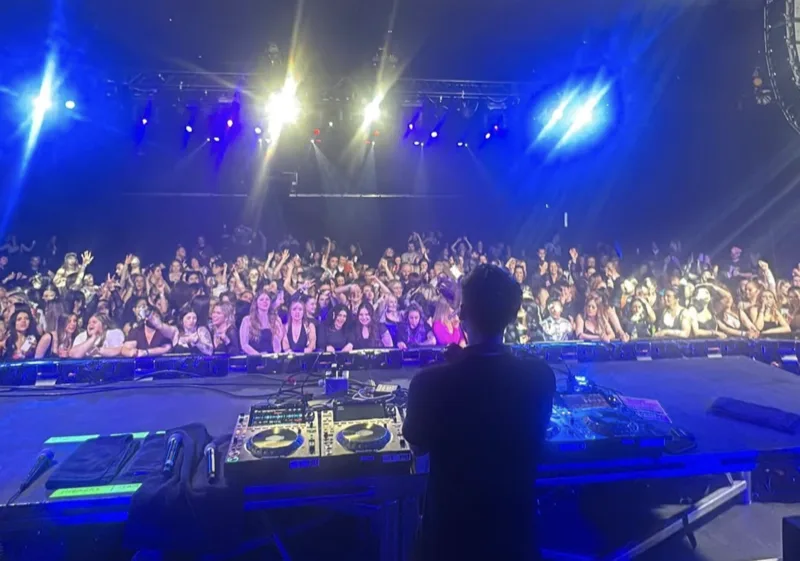
But the most important shift is the one that’s hardest to measure. Joel went from a producer whose own music cleared dance floors to a producer whose drops make crowds lose their minds.
Same hands. Same ideas. A completely different ceiling.
The Gap Nobody Talks About
Joel’s story isn’t about raw talent. He had the ideas long before the wins came. The gap was technical execution, and more importantly, the confidence that comes from knowing you can execute.
Most producers live in that gap for years. They know something’s off. They can hear it. But they can’t name it, so they can’t fix it. And every failed mix chips away at the belief that they’re even capable of closing the distance.
The fastest way out of that spiral isn’t another plugin. It’s a framework and a room full of people who’ve already walked the same path.
Joel found that room. The rest is two competition wins, a label signing, and a career that actually looks like the one he dreamed of.
In His Own Words
We asked Joel a few questions about his experience in the Masterclass.
What made you sign up for the Hyperbits Masterclass?
Mixing and mastering has always been my number one issue. It’s actually the reason I took the Masterclass. I was fed up not understanding how to turn an idea into a commercially finished song. I purchased Serik’s Start-to-Finish house course (now part of the Masterclass), and it helped me so much that I knew I needed the Masterclass to get that more in-depth education.
Did you see the biggest improvements during the Masterclass or afterward?
Both, actually. I had a track going into the Masterclass called “Violet Rose” that I loved the idea of, but the mix was awful. Within the first few weeks of the course, I solved all the mix issues with it and sent it to RIDE where it was signed during the program. I also whipped up more ideas during the class that I later developed, which helped me win Beatport’s “Beats in School” competition with Anjunabeats. It was a total turning point for me. After the Masterclass, there wasn’t a question I couldn’t easily answer for myself.
What’s the single most effective trick a producer can use to put more emotion into a track?
Take your time making melodies that genuinely resonate with you. Or, if you’re going for something darker, really search to find the right sounds to articulate that. The song has to make you feel something. If you feel it and love it, then it’s almost guaranteed others will too. And even if nobody does, as long as you love it, then it doesn’t really matter what anyone else thinks. It’s all creative expression at the end of the day.
Joel built his Anjunabeats-ready sound inside the Hyperbits Masterclass. If you’re a producer whose ideas are bigger than your mixes right now, it’s the same framework and the same room full of people that got him there.
A big part of that room is the feedback loop, with instructors and alumni hearing your mixes every week. More on how the music production mentorship works.