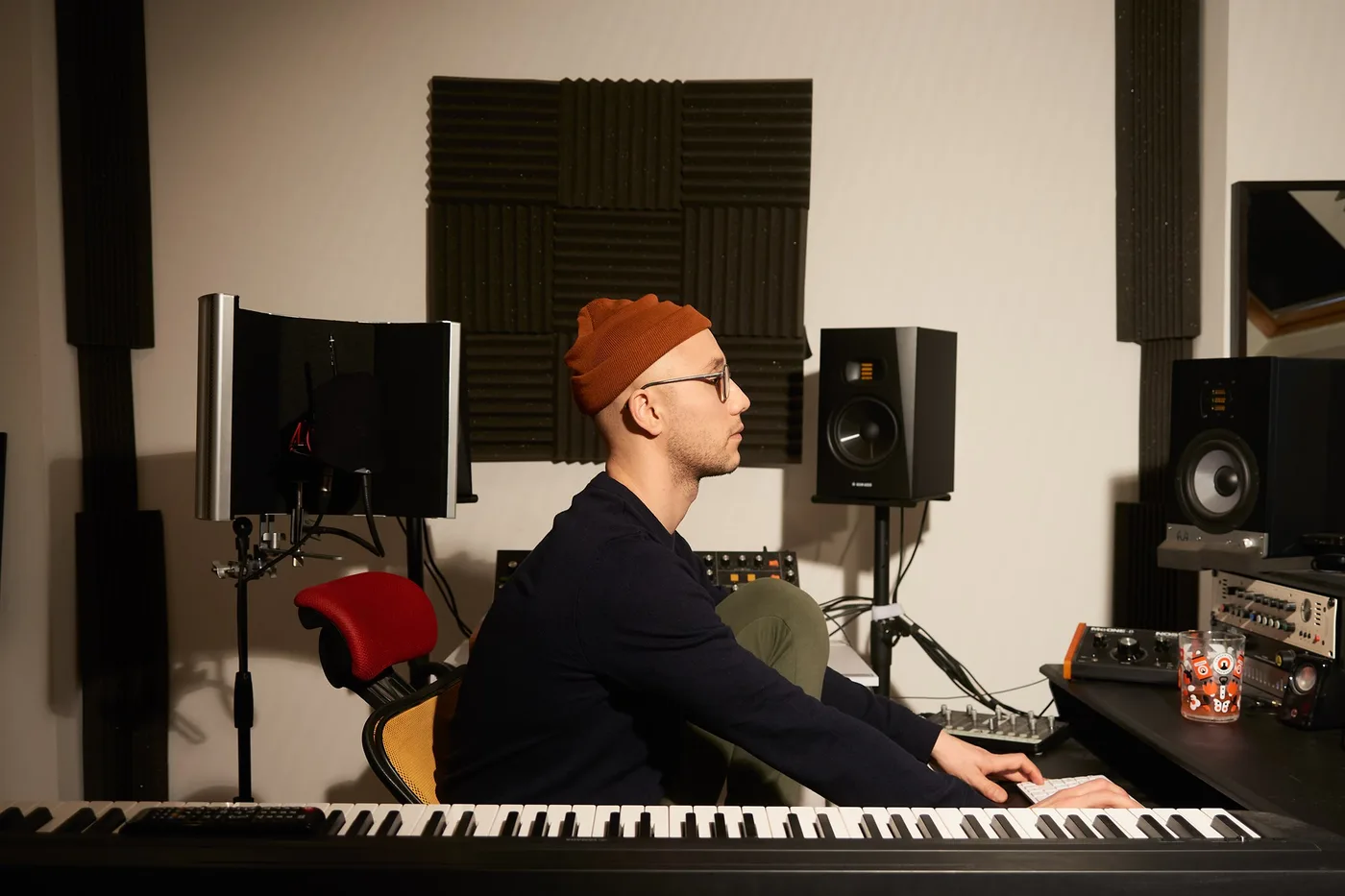
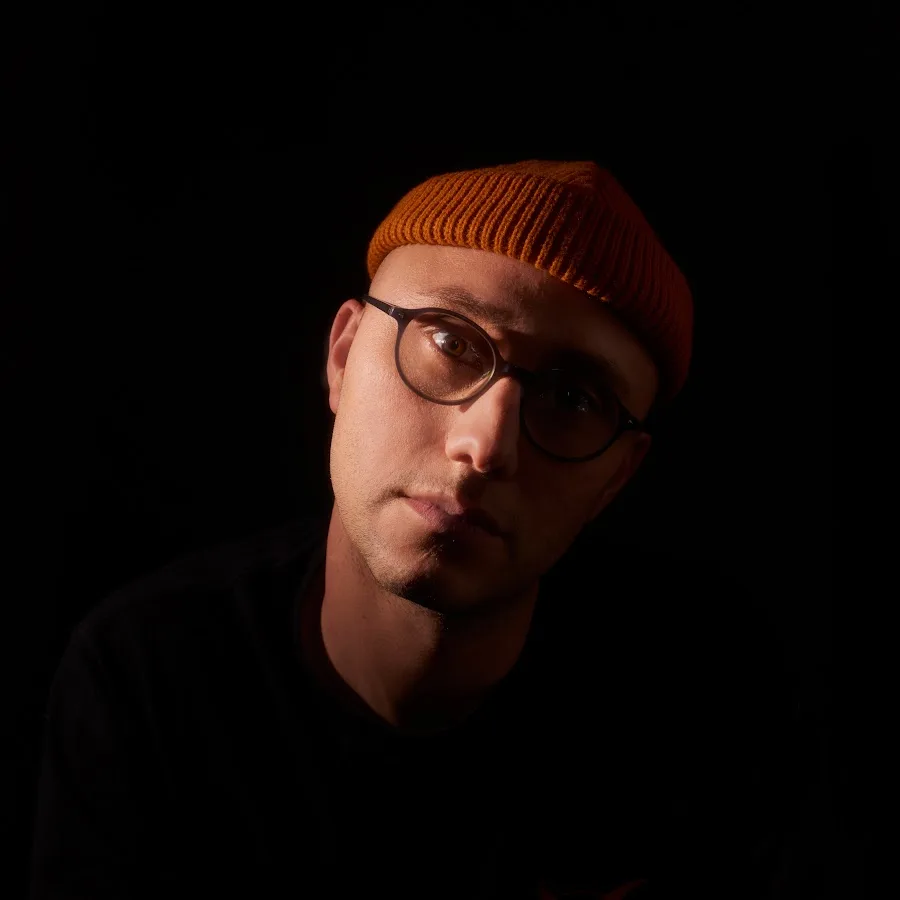
Sam Welch had been singing and producing for eight years before he ever heard of the Hyperbits Masterclass.
He had the voice. He had the ideas. He was writing songs he genuinely liked.
But every time he stacked his records against the artists he looked up to, the gap was obvious. His mixing was off. His mastering was thin. His arrangements felt like they were built by someone guessing, because that’s exactly what they were.
He had never been taught any of it. He was making it up as he went along.
He’d sit down in front of Logic, stare at the blank arrange page, and think, “what am I doing?” The creativity was there. The trade wasn’t.
Sam closed that gap in a few short years. Then he quit his day job.
The Starting Point
By 2018, Sam had spent nearly a decade in a loop that a lot of self-taught producers will recognize. He could write. He could sing. He could get a demo 80% of the way there. The last 20% was the part that separated hobbyist tracks from commercial releases, and he couldn’t find it on his own.
The biggest problem was vocals. Sam’s own voice is his signature instrument, and he knew that if he wanted to carve out a real lane as a topliner, he couldn’t keep sending raw takes to other producers and hoping they’d mix them right. He needed to own the entire chain himself. But he had no framework for how vocal production actually worked at a commercial level.
He had the raw talent. What he didn’t have was a repeatable system he could sit down to every day and trust.
On top of that, he needed a workflow that wouldn’t eat his creativity alive. Hours lost to FX sends. Days lost to overthinking a chorus. The blank arrange page was starting to feel less like an opportunity and more like a wall.
The Forced Hand
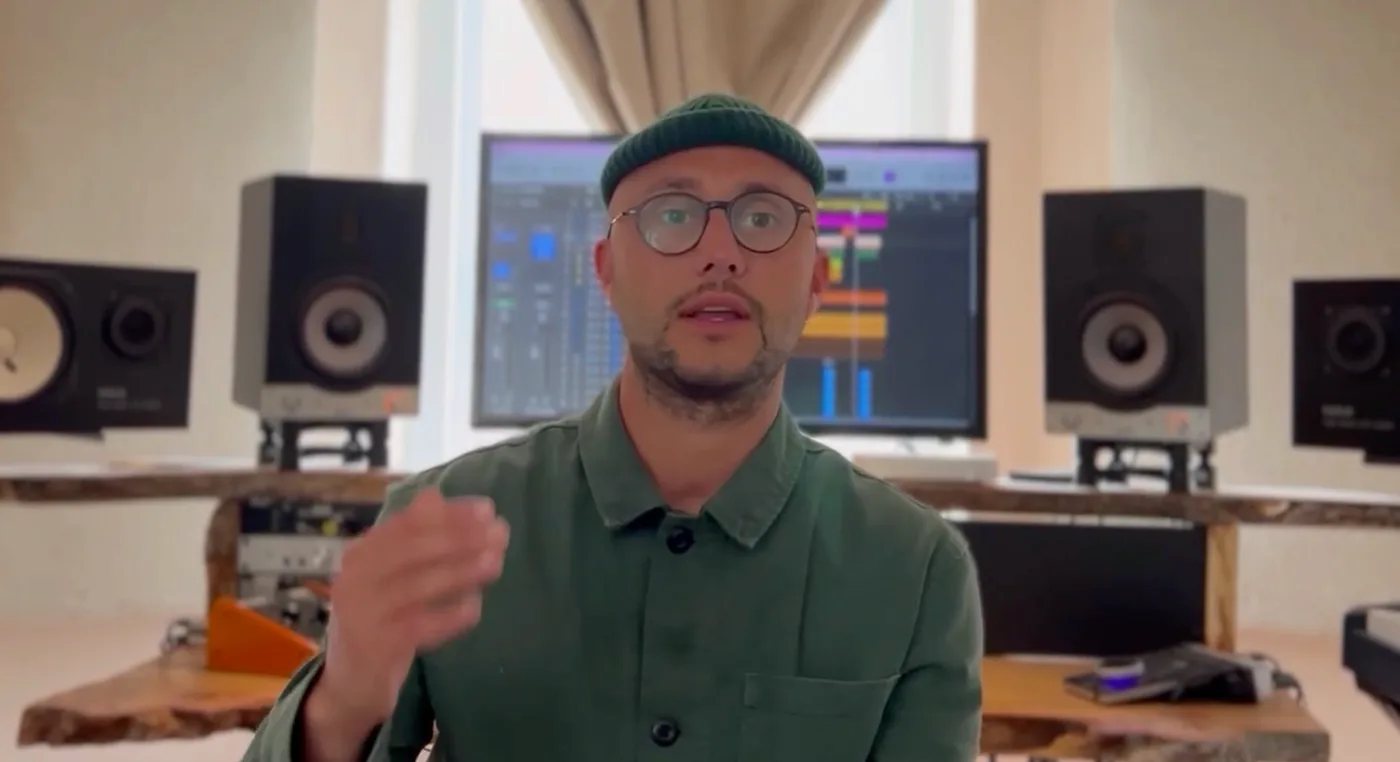
Sam took the Masterclass in 2018 and started building. Vocal chains. Mastering chains. The signal-flow logic he’d been missing for a decade. He kept his theater day job hanging speakers and lights, came home, made music in the evenings, and waited for the time to be right.
The time was never going to be right. So the universe took the decision out of his hands.
In late 2019, Sam was working a theater gig in London and severed the tendons in his finger and thumb. Six months in a cast. Self-employed, no sick pay, paying London rent with his partner. The only thing he could physically do was sit at his computer and click a mouse with his left hand.
A six-month forced sabbatical was either going to end his career or build it.
One of the Masterclass instructors had mentioned a website called Vocalizr, where producers post instrumentals looking for vocal toplines. Sam had a working voice. He had a Hyperbits framework. He had nothing else to do for half a year. So he opened a profile and started bidding on every job that came through, regardless of genre.
Heavy metal. Rap. Acoustic singer-songwriter. Anything.
Whatever popped up that morning, he’d write it that afternoon, mix the vocal with the chains he’d learned in the Masterclass, send it back, and wait. At first he was winning maybe one in ten. By the end of the six months he was winning four to seven out of ten and clearing real money from his couch. With one hand.
Then the cast came off. He went back to work for two months. Then COVID hit and the theaters closed.
So he doubled down. Vocalizr full-time. Sessions stacking up.
Producers coming back to him for repeat work because he was fast, the vocal chains held up, and the toplines kept landing. His first signed release was a cover of Sex on Fire with One7 that immediately did 30,000 streams a day. He looked at the number and thought: that’s what happens?
A manager at Osetero approached him a few months later. He hasn’t looked back since.
The injury didn’t sideline him. It cleared every excuse off the table and forced him to actually use what he’d learned.
The Breakthrough
The story above only works because Sam had a real toolkit waiting when life forced his hand. Two specific things from the Masterclass made the Vocalizr hustle viable:
First: vocal and mastering chains that actually worked.
Sam is specific about this. The vocal chains and mastering chains he learned in the program were, in his words, “absolute game-changers.” For a singer who’d been fighting his own mixes for years, having a reliable, repeatable signal chain meant his voice finally sounded the way he heard it in his head. Clean.
Present. Commercial. The kind of vocal that doesn’t need to be re-mixed by whoever he collaborates with. That’s what let him turn around a Vocalizr brief in a single afternoon and still send back something a producer would actually pay for.
Second: a system he could come back to every time.
The real shift wasn’t any single plugin trick. It was workflow. Instead of making it up every session, Sam now had a framework for how to go from idea to finished topline, consistently, even after a long day of work or in a cast on his couch. That consistency was what turned a hobby into a side income, and eventually into a career.
The vocal chains got his sound professional. The system got his output relentless. Together, they made him impossible to ignore the moment he was forced to bet on himself.

The Sound
Sam’s lane is topline-driven pop and dance. Warm, emotive lead vocals sitting over house, melodic bass, and the gritty UK flavor he gravitates toward (he’s on record calling Bicep and Fred Again his current favorites, which tells you exactly where his ear is).
What makes him distinctive isn’t just the voice. It’s that he produces and processes his own vocals to the point that collaborators now send him his own records as a reference for the sound they want. That’s a rare place to end up as a vocalist. It means your sonic fingerprint is specific enough that other artists can hear it and say, “I want that.”
It took years. He says so himself. But once it clicked, it stayed.

The Results
The outcomes Sam has built on top of the system:
- 130M+ total streams across platforms
- 800K+ monthly listeners on Spotify (crossed the 1M mark)
- Releases with Sony, Universal, Selected, Interior Minds, Loudkult, and Oneseven
- Signed with management at Osetero (via John Saunderson)
- Music as sole income (he quit his day job)
- Collaborations with Alok, Tom Enzy, Palastic, and Nu Aspect
The numbers matter, but the moment that hit him hardest was hitting one million monthly listeners on Spotify. He took the day off, went out for a steak dinner with his girlfriend and friends, and let himself actually feel it. After years of staring at the arrange page and wondering if it was ever going to add up, he finally had a number that said yes, it did.
The bigger win was quieter: the day he stopped needing a day job to pay rent.

The Gap Nobody Talks About
Sam’s story isn’t really about vocal chains. It’s about the specific thing that stops most self-taught producers cold: the absence of a system.
Raw talent gets you to 80%. Intuition gets you to 85%. But the leap from “I think this sounds good” to “this sounds like something a label will actually release” requires structure. It requires a repeatable workflow. It requires knowing which decisions you don’t have to make every time, so you can save your creative energy for the ones you do.
Most producers stay stuck in the gap because they keep looking for a better plugin instead of a better process. Sam looked for a process. That’s why his trajectory changed.
If you’re sitting at your own blank arrange page right now wondering what you’re doing, the honest answer is probably not more tutorials. It’s a framework to stand on.
Listen to Sam Welch
In His Own Words
We asked Sam a few questions about his experience.
What problems were you looking to solve when you signed up for the Masterclass?
I’d been producing and singing for about 8 years when I came across the Hyperbits Masterclass. I was creating stuff I was very happy with. However, when comparing my music to the established artists, I knew that my mixing, mastering, and composition were lacking.
I had never had any schooling and was always making it up as I went along. Sometimes I’d look at the blank arrange page and think, “what am I doing?” I really wanted to develop a method of music-making that I could come back to every time. The vocal chains and mastering chains I learned in the class were absolute game-changers for me.
How has processing your own vocals helped you stand out as a topliner?
As artists and producers, we’re all constantly trying to define our sound. We want to be original and unique while also making sure what we come up with stands up against all the fantastic music being released all the time.
Processing my own vocals has enabled me to stand out from other artists. It took a really long time, but more often than not my collaborators now send me my own stuff as a reference when they approach me for a vocal. That’s such a good feeling. It makes me feel like my vocal is becoming recognizable and sought after. I LOVE it.
Any advice for producers trying to go full-time?
Find a system. I cannot express how much having a system has helped me improve my productivity. Spending hours playing with FX sends is fun, but it soaks up your creative juices fast. You want a system in place so you can throw ideas down ASAP.
Find a consistent work schedule. “Inspiration exists, but it has to find you working.” A bit cliche, but that Picasso quote has stuck with me. Whatever time you can spare, spend it doing what you love.
And seek education. If you’re struggling to finish music, or you’re finishing it but not happy with the result, get some proper training. Everyone from bricklayers to doctors has had to learn their trade. Making music is no different. Knowledge is power.
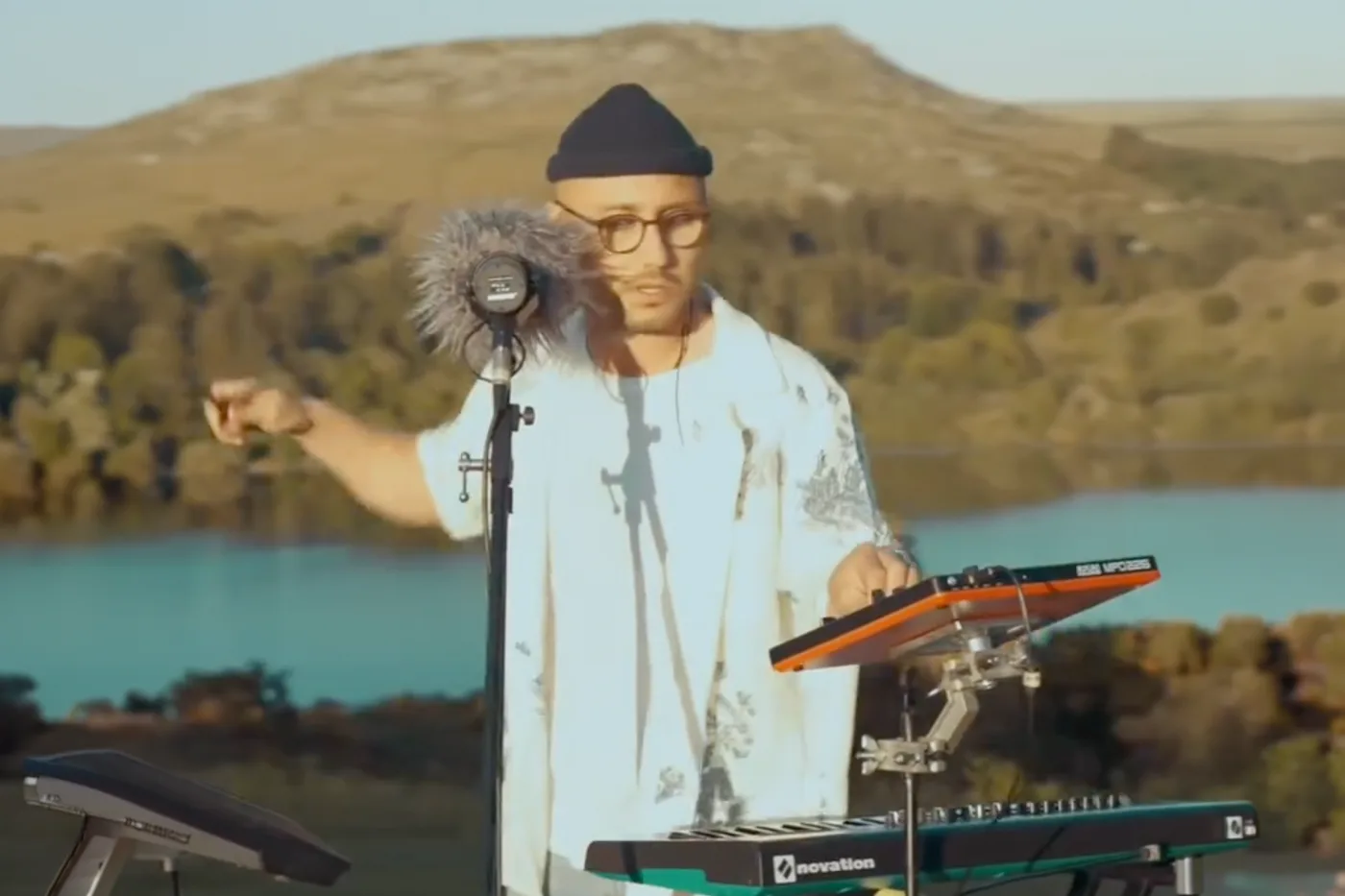
Sam built his signature sound, his vocal chain, and his workflow inside the Hyperbits Masterclass. If you’re a singer or producer stuck in the gap between “I like this” and “a label would release this,” it’s the same program and the same framework that got him there.
If vocals are your sticking point too, see how music production coaching at Hyperbits works, including the private 1-on-1s.