Aasheesh Paliwal had the part most producers wish they had. He had ideas.
Melodies showed up when he sat down at the keyboard. He could hear the track in his head. He knew what it was supposed to feel like when it hit.
What he couldn’t do was finish it.
His tracks would make it to 95%, then stall out. He’d upload them to Spotify, and nothing would happen. No streams, no press, no reaction. The gap between the record he could hear in his head and the file he was exporting was small on paper and miles wide in practice.
Shishi crossed it. And then he got flown to Ibiza for it.

The Starting Point
Shishi was not starting from zero. Both of his parents were Indian, his mom was a classical Indian singer, and he grew up with her melodies in the house every day. He played classical violin, then guitar. By the time he was ten he’d already lived on three continents, China, Switzerland, and the USA, which gave him an ear for blending sounds across cultures most producers never try.
The raw material was there. The melodic sense, the cultural palette, the curiosity. What was missing was the technical layer underneath.
He had a lot of great ideas and no way to get them out of his head the way he heard them.
Every bedroom producer knows this pain. You load up the project, you find the hook in twenty minutes, and then you spend six weeks trying to make the mix sound like the records you’re competing with. Something is always off.
Something is always muddy. Something is always a little bit less than the reference. You stack up to the artists you love and you can hear the gap, but you can’t name it.
Shishi stacked his tracks up against the people he was trying to share a stage with and knew his weren’t ready. And he knew posting them anyway wasn’t going to solve it.
The Breakthrough
Shishi was an early adopter of the Masterclass, one of the first cohorts to go through it. Two things changed everything for him.
First: the Start-to-Finish sessions.
The thing he’d always found mystifying was that final 5%. The part where a good idea either becomes a release-ready record or dies in the project folder. He’d watched enough YouTube tutorials to know how to make a sound. He hadn’t seen anyone actually sit down and walk through the full arc of a song from first loop to final master, in order, without skipping the ugly parts.
The Start-to-Finish videos did exactly that. Step by step, methodical, no handwaving. For the first time he could see the finishing process as a system instead of a mystery. That alone got more tracks finished than years of tutorials had.
Second: the mental rewrite on perfectionism.
Shishi’s biggest stuck point wasn’t technical. It was the fear dressed up as “this isn’t ready yet.” He says it twice when asked for his biggest lessons, once for life and once for music, because it applies to both. Perfectionism is just fear in disguise. You aren’t polishing the track. You’re stalling on sending it out because you’re scared of what happens when it leaves your hard drive.
Once he could see that, he stopped polishing forever and started finishing. The Masterclass gave him the technical confidence to actually believe his finished versions were good. The two worked together. Technique killed the technical excuse, and the technique killed the emotional one.

The Sound
Shishi’s music lives at the intersection of club energy and something more spiritual. He runs parties called Full Circle and a label called CASHIR, both built around the idea that dance music can be a portal to a bigger experience, not just entertainment. His album CHRYSALIS is a 14-song arc through the darker parts of the human psyche, complete with guided meditations for working through lust, anger, fear, and shame on the dancefloor.
The musical fingerprints are all there. Eastern melodies woven into Western electronic structures. Melodic instruments underneath the drums because he’s a violinist and guitarist first. Club-ready low end because he put in the work to learn how. It sounds like someone who grew up across three continents making dance music that remembers where it came from.
That signature is why the support list reads the way it does: Diplo, Major Lazer, Mark Knight, Lost Frequencies, Gorgon City. Those are not names you get on by chasing a trend.
The Results
The numbers tell one version of the story:
- 25M+ total streams across platforms
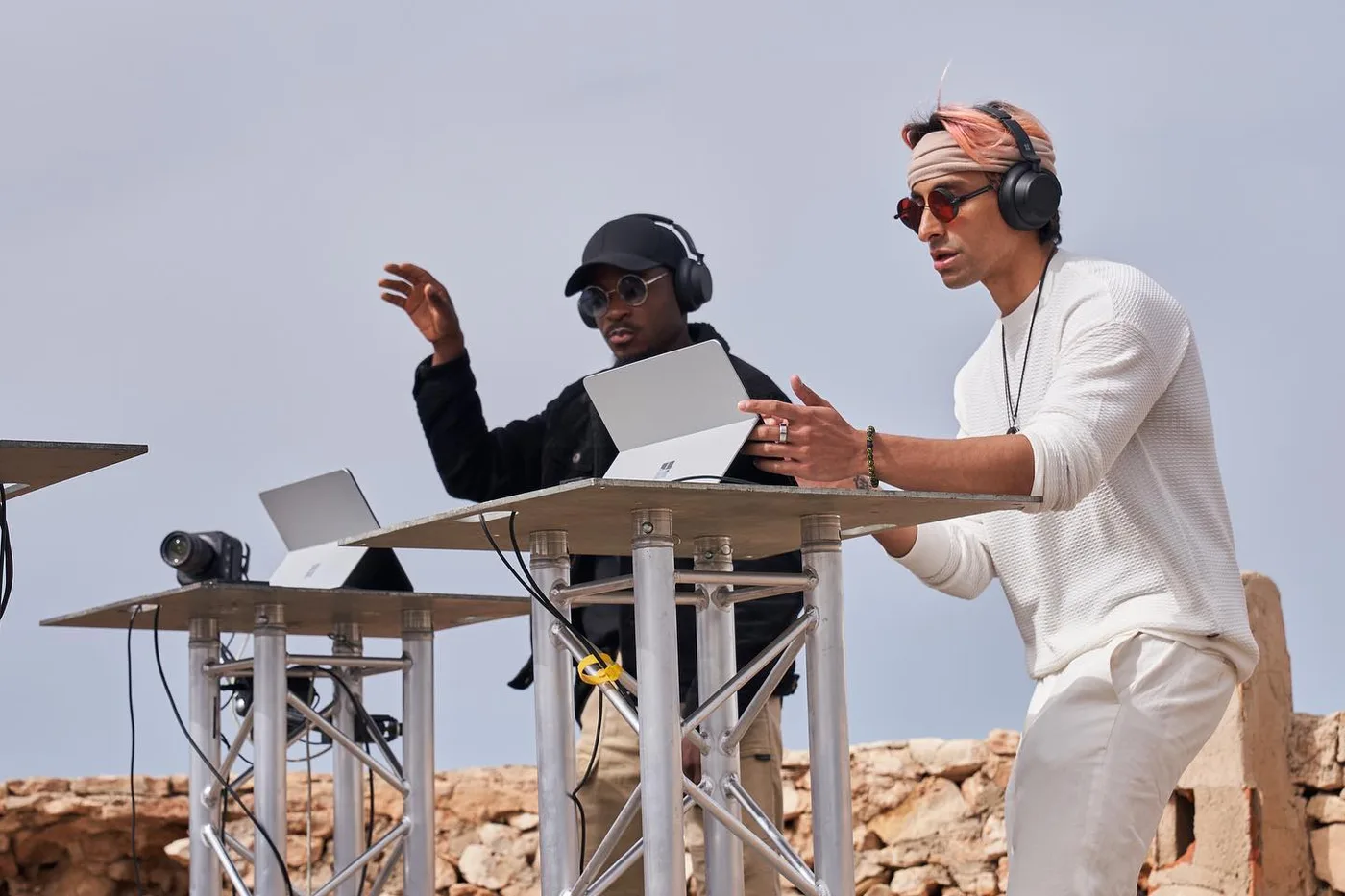
- Beatport x Microsoft remix competition winner, flown to Ibiza for the performance
- Rolling Stone press pickup
- DJ support from Diplo, Major Lazer, Mark Knight, Lost Frequencies, and Gorgon City
- His own label (CASHIR) and party series (Full Circle)
But the number that actually matters to Shishi is harder to count: how many tracks he finishes now versus how many he used to shelve. The ratio flipped, which is what separates a producer from a hobbyist.
He went from uploading music to silence to running a label, throwing his own parties, and building a career he describes as the best investment he’s ever made. The Masterclass didn’t give him ideas. It gave him the ability to land them.
The Gap Nobody Talks About
Shishi’s story is a quiet one if you read it wrong. He’s not the producer who came in with nothing and got signed. He’s the producer who came in with everything except the last 5%.
That’s most of you. Most producers who have been at this for more than a year are not lacking inspiration. They’re lacking the specific skillset that turns a strong idea into a finished, professional track. And because the missing piece is small and technical and hard to name, they assume the answer is more ideas, more plugins, more tutorials, more time.
It isn’t. The gap between “I have a great idea” and “I have a great record” is the entire job. Closing it is what separates people whose music ends up on Spotify from people whose music ends up on Spotify and gets listened to.
Figure out exactly where your tracks stall out. Then get in a room with people who have already solved that specific problem. That’s what Shishi did.
Listen to Shishi
In His Own Words
We asked Shishi a few questions about his experience.
What did you find to be the most frustrating thing about music production when you started? Did the Masterclass change your perspective?
I always felt like the process of actually finishing a song, that crucial last 5%, was this mystifying process that always evaded me. I always felt like I had great ideas, but could never quite get them to the finish line sounding as professional as the records I love.
Hyperbits definitely changed my perspective on this, especially watching the Start-to-Finish videos, because I got to see in a very step-by-step, methodical way how to actually bring a song to the finish line. This gave me a ton of confidence in my own ability to do the same.
What are the two lessons you wish you’d learned earlier, one in life and one in music?
Life: Perfectionism is just fear in disguise.
Music: Perfectionism is just fear in disguise.
How did the Hyperbits Masterclass help your success as a producer?
It really gave me the blueprint to produce music at a professional level. There’s a clear “before and after” demarcation line in my life as a producer and artist. Before Hyperbits I had a lot of great ideas. After Hyperbits I also had the ability to bring them to fruition the way they sounded in my head.
Shishi built his signature sound inside the Hyperbits Masterclass. If you’re the producer with the ideas and none of the finishes, it’s the same program and the same framework that helped him turn great ideas into a career.
If finishing is where you stall, mentorship with working producers is the fastest way we know to get tracks over the line.