
Jump to a section8
Yes. There are courses that show one full track being made from start to finish, and they have a name: start to finish courses. One producer opens an empty session, and you watch every step until the master is done. The idea, the sounds, the arrangement, the mix and the master.
We make four of them at Hyperbits. Each one follows a real track by a working artist, in a different genre, from the blank session to the finished master. They’re listed further down, along with how to pick one (ours or anyone else’s) and when a course like this is the wrong thing to buy.
The first time I saw anything close to this was Avicii’s studio session with Future Music, back around 2011. Two things got me. The first was how fast he was. I couldn’t believe how quickly he moved around his DAW, and it was the first time I realized how much workflow matters. The second was how simple it all was. I was expecting some crazy, intense sound design. What I saw was more or less simple writing with simple sounds. Inspiring, to say the least.
So I knew pretty early on how much one whole track can teach. When Laidback Luke’s team at Mixmash sent over his track “XOXO” and asked me for an official remix, they agreed to let me record the entire thing. I’m still honored by that. I had about two days to make it. The course that came out of it is 62 videos and about 5 hours: prepping the stems, finding the idea, the drop, the build, the structure, the mix and the master.
What a start to finish course is
A regular tutorial teaches one move. How to sidechain. How to layer a kick. How to write a chord progression. You learn the move, and then you’re back in your own session, staring at an 8-bar loop, with no idea what comes next.
A start to finish course teaches the order. One track, one producer, every decision in the sequence it really happened. You see what they do first, what they leave for later, and how long they spend on each part.
That sequence is the thing most producers are missing. If you’ve read our post on how to learn music production, you know I think every song you make has to be a whole song, because the parts you avoid are the parts you never learn. A start to finish course is the same idea from the other side. You watch someone else go through all of it, including the parts you’d skip.
Why one whole track teaches more than fifty tutorials
Fifty tutorials give you fifty answers to questions you asked. A whole track answers the questions you didn’t know to ask.
Why did they bounce that synth to audio before the drop was written? Why is the vocal chain already on before the arrangement is finished? Why did they delete a part that sounded good? None of that shows up in a ten-minute video about reverb.
Here’s how one student put it after going through our course with Syence:
The biggest thing I picked up was workflow. I've been producing for five years and I still have trouble getting down a fast, diligent workflow. Watching someone like Syence show everything from start to finish, setting everything up was huge for me.

Darius Thomas, Start to Finish with Syence
Five years in, and the thing he took away was workflow. That’s pretty typical. Most producers who can’t finish tracks already know how to do each step. They’ve just never seen all the steps in a row.
What a good one includes
Not every “full track” course is worth your time. Before you buy one, from us or from anybody, check for these.
1. A real track, not a demo made for the camera. The best version follows a song that was released, or a remix that a label signed off on. A track built only to be taught tends to be simpler than real work, and the hard decisions never come up.
2. All of it, including the mix and the master. A lot of courses stop when the arrangement is done. The last 20% is where most tracks die, so that’s the part you most need to see. If the outline doesn’t have mixing and mastering chapters, it isn’t start to finish.
3. The reasoning, out loud. Watching someone click is not teaching. You want a producer who says why they’re doing each thing, and what they tried that didn’t work.
4. Files to follow along with. Stems, samples, presets or the session. Watching is step one. Rebuilding the track yourself is where it sticks.
5. A genre close to what you make. The big ideas carry across genres, but the sound choices don’t. A melodic techno walkthrough won’t show you how to treat a pop vocal.
6. A teacher whose music you’d listen to. You’re borrowing their taste for a few hours. Go listen to the track first. If it doesn’t move you, pick another course.
7. A refund if it’s not for you. You can’t tell from a sales page how someone teaches. A money-back window takes the risk out of finding out.
What matters less than people think is the DAW. If the course is about decisions and not button locations, it works in whatever you use.
The four we made
Each of ours is one track, one producer and one genre. All four stream on our member site with lifetime access, work with any DAW, and come with a 30-day, no-questions-asked refund. Each one is $97.
Start to Finish with Hyperbits
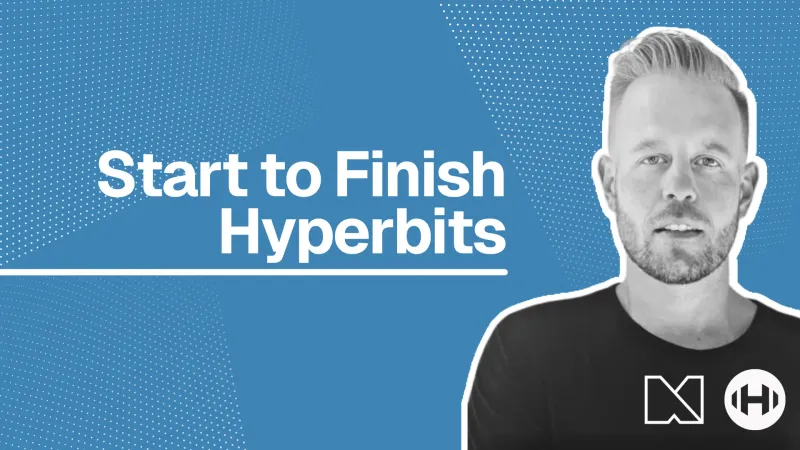
Future bass. I build an official Laidback Luke remix from the stems to the final master. 60+ lessons, about 5 hours. I jump between Logic and Ableton.
Start to Finish with Syence
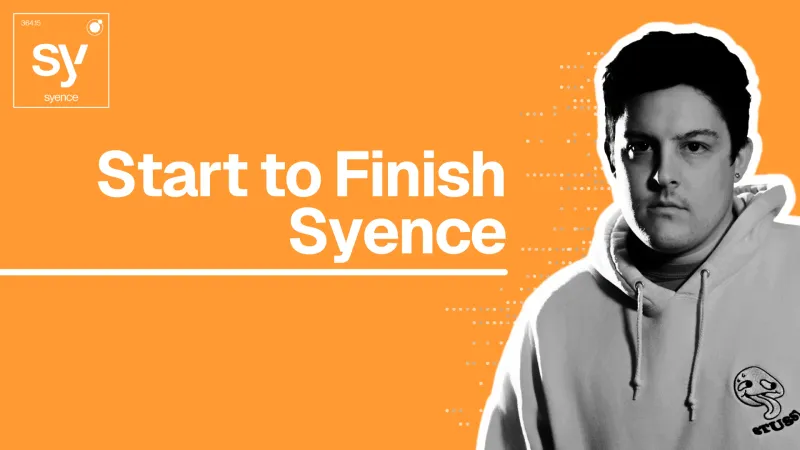
Vocal pop. Zach from Syence takes a vocal track from an empty session to a commercial master, including writing the topline. 50+ lessons, about 10 hours, in Ableton and Pro Tools.
Start to Finish with Anden
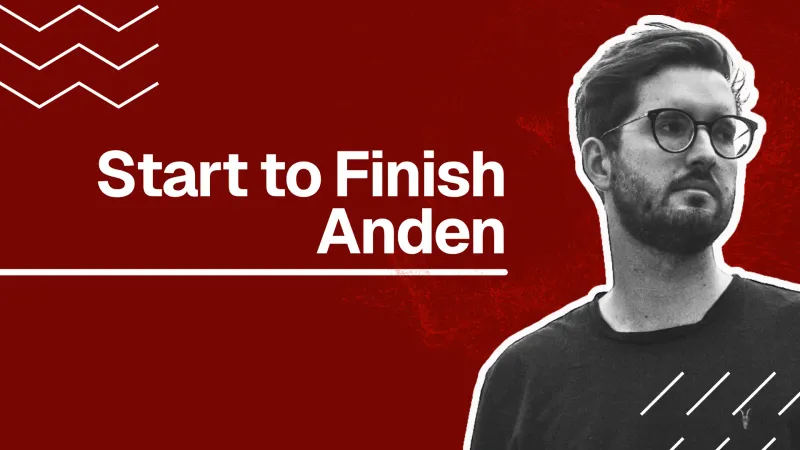
Melodic techno and house. Pete from Anden produces a dancefloor track step by step. 25+ lessons, about 9 hours, in Logic.
Start to Finish with Jaytech
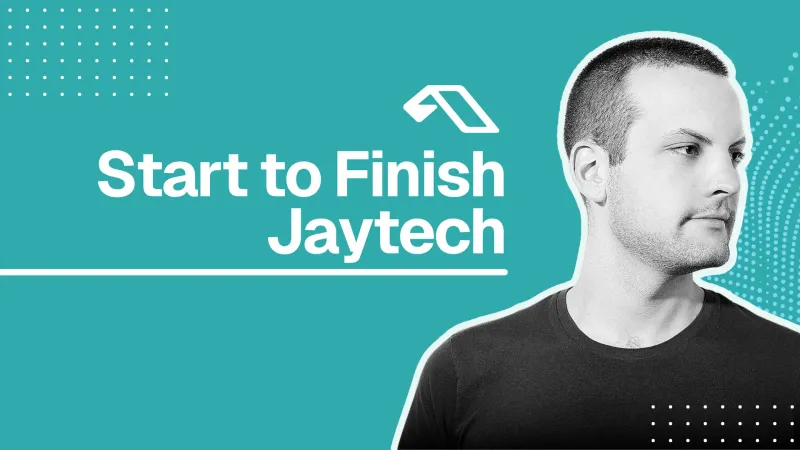
Progressive house. Jaytech builds “Nebula,” his Anjunabeats release, from a blank session to the final master. 22 lessons, about 6 hours, in Ableton and Reaper.
If you want all four, the Start to Finish Bundle is $197. That’s 150+ lessons and 30+ hours, and it’s the one I’d point most people to. Watching one producer finish a track gives you their recipe. Watching four shows you which parts of the recipe are personal taste and which parts everybody does.
They’re built for producers who have been at it for six months or more and can get around their DAW. If your tracks have decent ideas but never sound finished, that’s who these are for.
How to get the most out of one
Most people watch a course like this the way they watch a TV show. Then nothing changes. Here’s the way that works.
Watch it once without touching your DAW. Just follow the order. Write down every moment where they do something earlier or later than you would.
Rebuild it. Second time through, open the files and make the track alongside them. Yours will sound a little different. That’s fine. You’re practicing the sequence, not cloning the song.
Steal one thing per song. Don’t try to adopt somebody’s whole process at once. Take one move into your next track (how they set up a session, how they check the low end, when they start mixing) and keep it if it helps.
Then finish your own. Use the same order on a track of yours, with a deadline. If you’re never sure when a song is done, our 8-step finishing checklist helps, and so does knowing your song structure before you start arranging.
When it’s the wrong pick
A start to finish course is not the answer to everything.
You’ve never opened a DAW. Start with the basics first. Our free Groundwork course teaches them in Ableton or Logic, and it’s built for day one.
Your problem is only mixing. One track shows you one mix. If mixing and mastering are the gap, you want a lot of mixes. Mix Master Flow goes through nine complete projects.
You need someone to listen to your music. No recorded course can hear your track and tell you what’s wrong with it. That takes a person. It’s the reason the Hyperbits Masterclass is built around homework and feedback from instructors (and it includes three of these track breakdowns as a bonus).
Questions people ask about start to finish courses
Is there a course that shows a full track being made from start to finish?
Yes. They’re usually called start to finish courses or track walkthroughs. Hyperbits has four, each following one real track from a blank session to the finished master: future bass, vocal pop, melodic techno and progressive house.
Do I need the same DAW as the instructor?
No, as long as the course teaches decisions and not menus. Our instructors use Ableton, Logic, Pro Tools and Reaper, and the ideas carry over to FL Studio, Cubase, Bitwig or anything else current. Your version will sound a little different, and you’ll learn the same things.
Are start to finish courses good for beginners?
They’re best once you can get around your DAW, usually after about six months. Before that, too much of your attention goes to finding buttons. If you’re brand new, learn the basics first and come back.
How long does a start to finish course take?
Ours run from about 5 to 10 hours of video each. Plan on double that if you rebuild the track alongside the lessons, which you should.
Is one genre enough, or should I watch several?
One is enough to learn the order of a whole production. Several is better, because you start to see what changes from producer to producer and what never does.
Will watching someone else produce make me sound like them?
Only if you copy the sounds. Copy the order they work in and the reasons behind their choices, then make your own choices. That’s how every producer you love learned too.
Watch one, then finish one
A start to finish course is a few hours of sitting next to a producer who’s better than you while they make a whole record. That used to take an internship or a lucky friendship.
So pick one in a genre you care about. Watch it through. Rebuild it. Then open a blank session and finish one of your own, in the same order, by a date you’ve told somebody about.
And if you can’t pick one, don’t. The Start to Finish Bundle is all four courses for $197. Bought one at a time they’d be $388, so you save $191 and get four producers’ ways of finishing a track.