Tom Rogers got the moment most trance producers daydream about.
Armin van Buuren world-premiered his track “Train to Nowhere” on A State of Trance. The song won Future Favorite. His 19-year-old self would have called it the endgame. And for a minute, it kind of was.
Then the writer’s block hit.
He kept trying to write the next “Train to Nowhere.” Then the next. Then the next. Every idea got chased through the same filter: would Armin play this? Would it land on ASOT again? Each new track was a slightly worse photocopy of the last one.
One afternoon it finally landed. He said it out loud to himself: this isn’t even making Tom Rogers music. This is making Armin van Buuren music. And he was never going to out-Armin Armin.
That was the moment the real work started.
The Starting Point
Before the Masterclass, Tom was further along than most producers who sign up. He had technical chops. He had industry attention. He had a track with a platinum singer-songwriter getting spun by one of the biggest DJs in the world.
What he didn’t have was a sound of his own.
He was optimizing every track for somebody else’s radio show, and it was quietly killing the part of him that actually wanted to make music. The early production problems were still there too. He couldn’t reliably tell a good drum sample from a bad one. His layering wasn’t pulling festival weight. He could feel the ceiling on his mixes, even if he couldn’t always name why.
He came into the program at what he called the perfect point. Decent skills. A little bit of small success behind him. And a very specific need for mentor-level guidance instead of another YouTube rabbit hole.
The Breakthrough
Two things shifted for Tom during the Masterclass, and one of them took years to fully settle in.
First: a framework for sound selection. Tom’s biggest early bottleneck was that he couldn’t hear the difference between a good sample and a bad one. That sounds like a beginner problem, but it actually infects everything downstream. Muddy mixes. Weak drops. Vocalists who can’t find the pocket because the instrumental isn’t inspiring them. The Masterclass gave him the ear training and the reference points to finally make that call with confidence.
Second: permission to stop chasing somebody else’s sound. Tom kept coming back to the same realization during the program. Deadmau5, Skrillex, Porter Robinson, Seven Lions. None of them sound like each other. All of them are at the top. The through-line is identity, not technique. Once that clicked, he stopped writing ASOT-bait and started writing Tom Rogers songs.
The measurable result came fast. Within months of the program, he signed his first record. It hit #4 on Beatport Trance with a debut from Sean Tyas. He knew there was still room to grow, but the signing proved the framework was real.
The deeper result took longer. He describes it as “applying the concepts over multiple tracks and dedicating myself to finishing projects start to finish.” That’s the boring answer nobody wants to hear. The Masterclass handed him the blueprint. He still had to show up every day and build on it.
You are your own greatest obstacle. Tom says it plainly. The program can map the gap. Only the producer can walk across it.
The Sound
Tom’s current sound is not a genre. It’s a collision.
Imagine 2000s nu-metal guitars crashing into psytrance bass drops, interrupted by a dreamy IDM breakdown, then resolving into something modular and cinematic. His own shorthand: “if Seven Lions, Slipknot, and Porter Robinson had a baby.” It shouldn’t work on paper. It works because it’s built on the one thing most producers skip: a clear point of view.
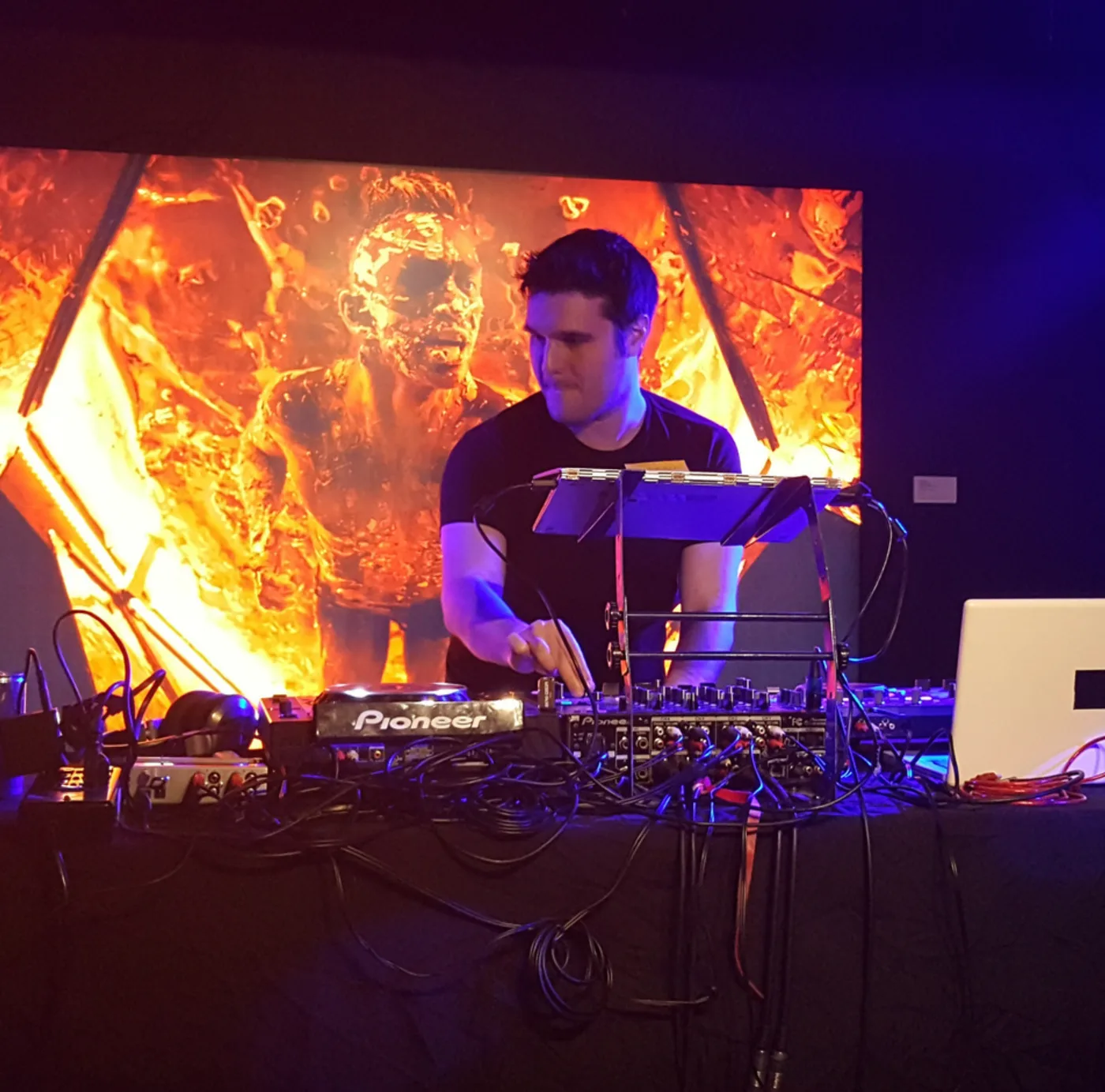
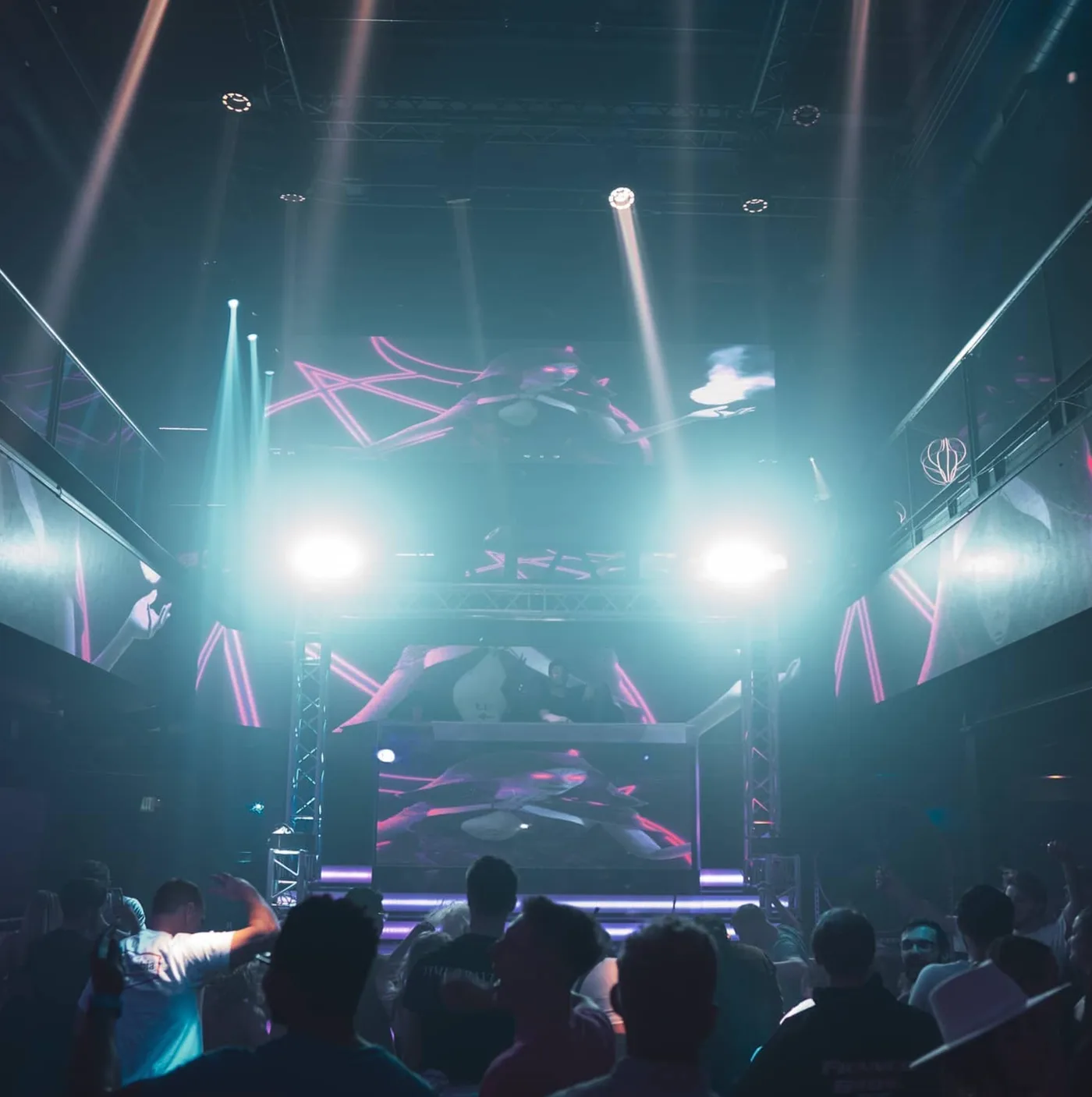
His “Castle of False Light” EP became a full visual experience, debuted at BETA Nightclub in Denver. It includes a custom manga comic Tom designed characters for, alongside a team of collaborators. The insignia on the project is a pentagram co-created with Daniel Jung, the designer behind Seven Lions and the Ophelia Records brand. It combines the alchemic symbols for fire and gold with a sigil from Solomon’s Goetia.
That is not a producer hedging his bets. That is a producer who has fully decided what he’s doing and who it’s for.
The Results
- Armin van Buuren premiered “Train to Nowhere” on A State of Trance and it won Future Favorite
- First signed release hit #4 on Beatport Trance with a debut by Sean Tyas
- Ongoing DJ support from Armin van Buuren and Blasterjaxx
- Founded Akashic Rift, a sample distribution company and 20+ artist collective spanning producers, DJs, lighting techs, video editors, and visual artists
- “Castle of False Light” Visual Experience debuted at BETA Nightclub in Denver, combining music, manga, and custom symbology
The intangible result is the one Tom talks about most. Before the program, every track he finished was a hedge. A guess at what someone else wanted. After the program, he stopped asking that question entirely.
He stopped making music for other people’s radio shows and started making music for his own universe. That shift is the one that separates a working producer from an artist with a career.
The Gap Nobody Talks About
Tom’s story is not about mixing or sound design or loudness. He already had those. His story is about what happens when a producer is good enough to succeed by mimicking someone else, and then has to choose whether to keep mimicking or build something real.
Most of the producers who break through that wall don’t do it alone. They do it inside a room full of people who will tell them the truth: the early success was real, and also the direction you’re chasing it in is a dead end. Nobody in Tom’s Discord servers was going to tell him that. Nobody commenting on his tracks was going to tell him that. That feedback has to come from people whose job is to look at the gap instead of the likes.
For Tom, the Masterclass was that room. The technical stuff mattered. The identity shift mattered more.
Watch Tom Rogers
In His Own Words
We asked Tom a few questions about his career and the Masterclass.
What was the biggest A-HA moment for you in music?
I hit a massive writer’s block after winning Future Favorite on A State of Trance. Armin van Buuren did the world premiere of my track “Train to Nowhere” with platinum singer-songwriter Mickey Shiloh. I got excited. 19 year old me would be beaming, this would have been the entire goal. Yet I found myself constantly trying to write new, less inspired versions of “Train to Nowhere” to get on ASOT again. It destroyed the process for me.
One day I finally admitted to myself, “this isn’t even making Tom Rogers music, this is making Armin van Buuren music.” And I wouldn’t be at the top of that game ever, because that’s not who I am. So I had to sit there and think about what I loved most about art.
There are so many greats in this industry. Deadmau5, Skrillex, Porter Robinson, Seven Lions. None of them sound like each other. They all have their own sonic identity. Once I internalized that, the most significant changes happened.
How much did the Hyperbits Masterclass help you overcome your production issues?
I saw a significant leap while taking the Masterclass, but it didn’t all come together until a few years after. I had signed my first record within months, as many of Serik’s students do, and it did well. #4 on Beatport Trance, with a debut by the legendary Sean Tyas. Still, I knew there was room for improvement.
Applying the concepts, over multiple tracks, and dedicating myself to finishing projects start to finish is what made the biggest difference. And as many times as the Hyperbits Masterclass will stress the importance of this, it’s up to you to sit there and commit. You are your own greatest obstacle.
What makes you most excited about music as you look to the future?
Collectives and collaborations. I think this is the future. We’re going back to something like rave crews, or small factions of rebel artists. Think Andy Warhol’s “The Factory.” There’s going to be a wave of incredibly unique yet refined art.
Artists are going to have to be more. The days of being a “baby” or “junior” are over. You have to bring something truly unique to the table to have any longevity in this industry. It’s a real challenge. But the upside is huge if you’re willing to seize the opportunity.
Tom Rogers found his signature sound inside the Hyperbits Masterclass. If you’re a producer who is technically decent but quietly making somebody else’s music, it’s the same program and the same framework that helped him figure out what his own actually sounds like.
Finding your own sound is easier with someone who can hear it before you can. That’s the idea behind our music production mentorship.