
Jump to a section6
Spotify playlists are the most direct route to big streaming numbers. And yet I hear this story way too often: a producer finishes a track, sends it to their distributor, and on release day the plays just don’t come. It stings. I’ve been there.
Related tool: Hyperbits Promo Database: Contact info and submission links for the labels, curators, and playlists that actually matter.
The key isn’t begging your friends to share it on social media. It’s getting featured in playlists. 68% of all plays on Spotify are generated through playlists. Get on them, and the plays follow.
Here’s how the system works, and what actually gets results.
Types of Spotify Playlists
Two types: Spotify-Curated and User-Curated.
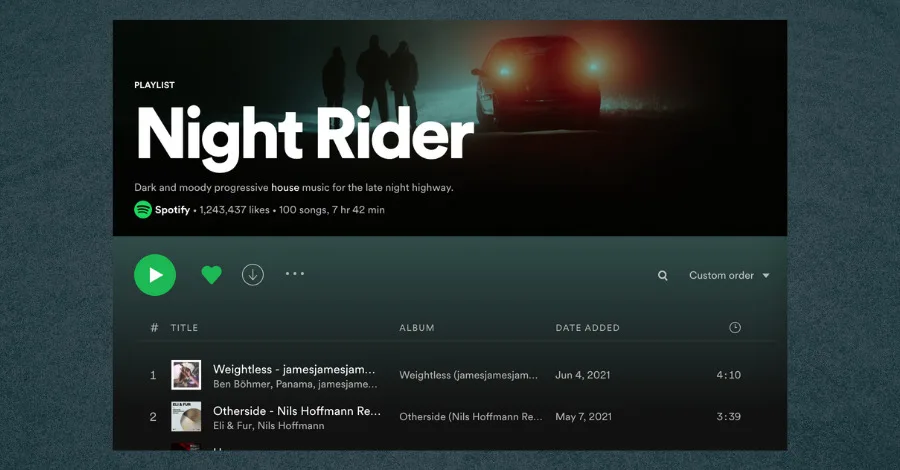
Spotify-Curated are controlled in-house. Some use algorithms (Release Radar, Discover Weekly). Others have real A&R people, yes, a real person manages Mint and other playlists.
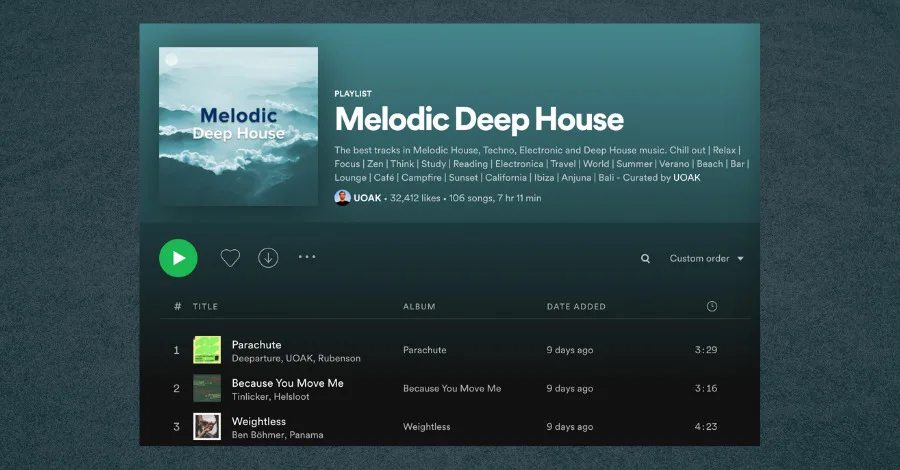
User-Curated are created and maintained by users. Most are small, but some are huge (bigger than official playlists). Record labels run some. Armada Music Official has dozens with 100K+ followers. Individual users can build big followings too.
How To Submit To Spotify Playlists
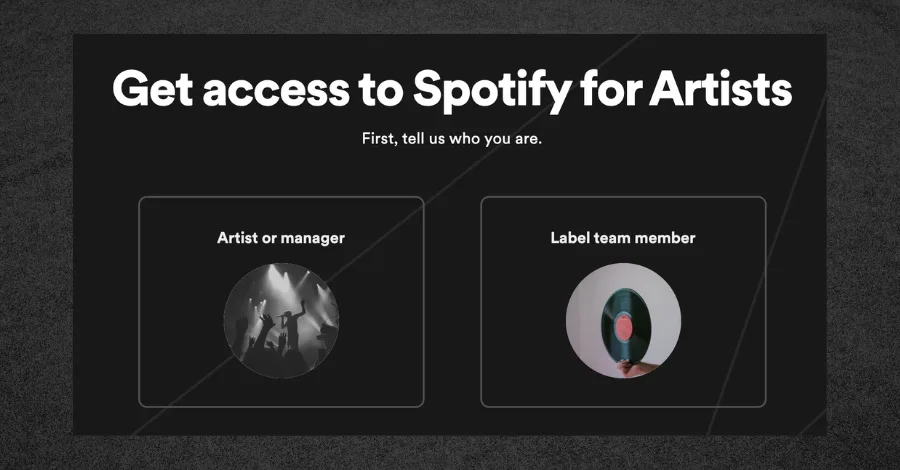
Submit to Spotify-Curated playlists via Spotify For Artists (a creator toolkit).
Step 1: Create a Spotify for Artists account.
Step 2: Go to the Music tab and click “Upcoming.”
Step 3: Fill out the song questionnaire (genre, mood, characteristics). This routes your track to the right A&R people.
Done.
Submitting To User-Curated Playlists
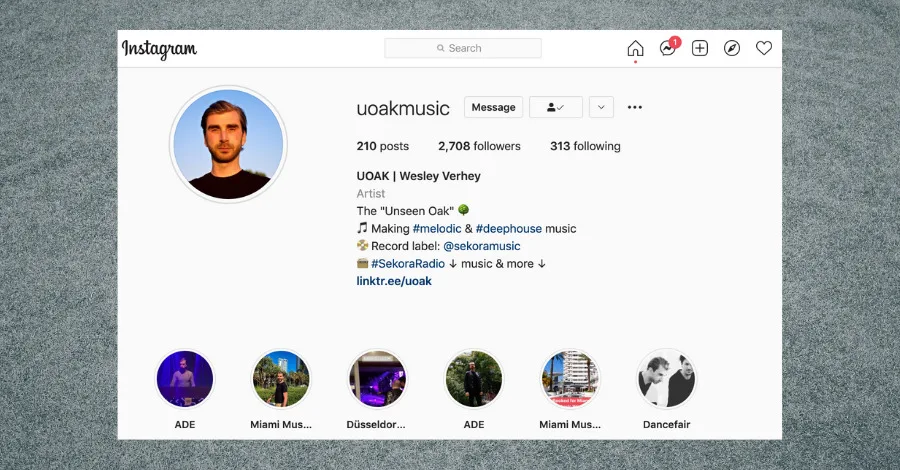
This is more manual but similar to label submissions.
Step 1: Find playlists with music like yours. Bigger playlists = harder to get featured.
Step 2: Find the curator’s contact info on social media (Spotify has no DM feature). Check out playlists like UOAK for example.
Step 3: Send your track with a short, personalized message: who you are, what the track is, a polite ask.
About pay-for-play: Most services are scams that over-promise and under-deliver. Skip them. Instead, build your own playlist. Use it to promote your music and swap playlist placements with other curators.
7 Essential Tips for Getting Playlisted
Seven tips to help you maximize your chance of getting featured on Spotify playlists.
Get Verified
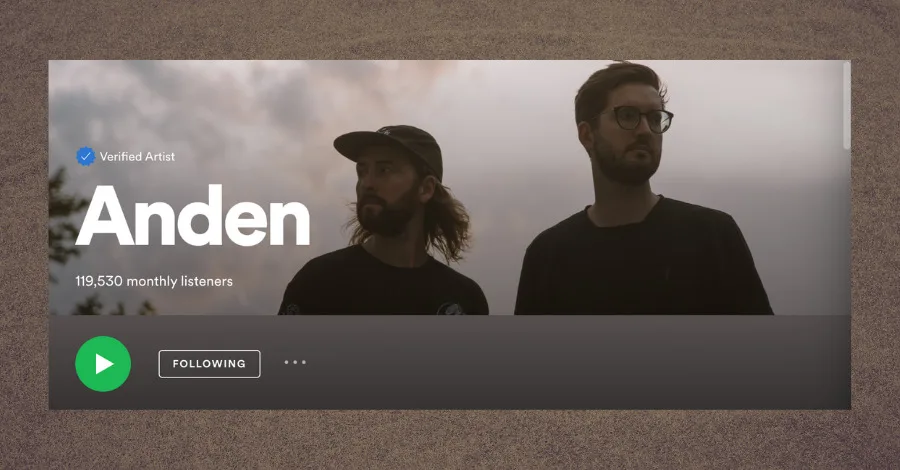
It’s easy to get verified on Spotify. That beautiful blue check makes your page look professional and legitimate. Plus, you need to be verified to submit music to Spotify-curated playlists. Learn how to get verified. I recommend doing this today!
Cast a Wide Net
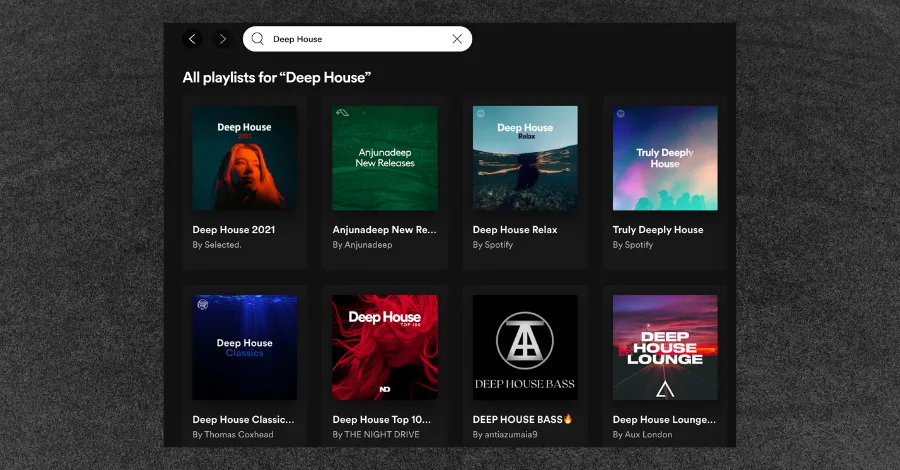
Unlike submitting music to record labels, where it is (sort of) a faux pas to submit a track to multiple labels at once, submitting your song to many playlists is a great idea. Maintain a spreadsheet of playlists, curators, and their contact information so you can easily send out your music to lots of playlists with each release. You spend SO much time producing a record, why not spend a few hours per song sending emails and Instagram DMs?
Write Effective Outreach Messages
This is absolutely essential. In many cases, writing a concise, personal message will be the difference between getting playlisted or not. There are four elements to a great outreach message:
- A brief description of who you are
- A brief description of the track
- A link to the track
- A mention of the name of the playlist (so they know you aren’t copying, pasting, and spamming your message to everyone under the sun)
And please folks, proofread your message before sending it…
Reach Out Before, On, Or Immediately After Release Day
Curators want the newest, freshest music. If your song is already over two weeks old, it’s best to start planning for the next release. By that point, it’s likely already old news…
With Spotify-Curated playlists, you want to submit music via Spotify For Artists well ahead of release day, at a minimum, you need to submit your track to Spotify-curated playlists a minimum of 7 days ahead of the release!
As for User-Curated playlists, many curators are inundated with music and might not be able to check out your track for a couple of weeks after you send it. Submitting ahead of time makes sure that the music is still new, even if they don’t check it out until a few weeks after your submission.
Maintain A Great Visual Image
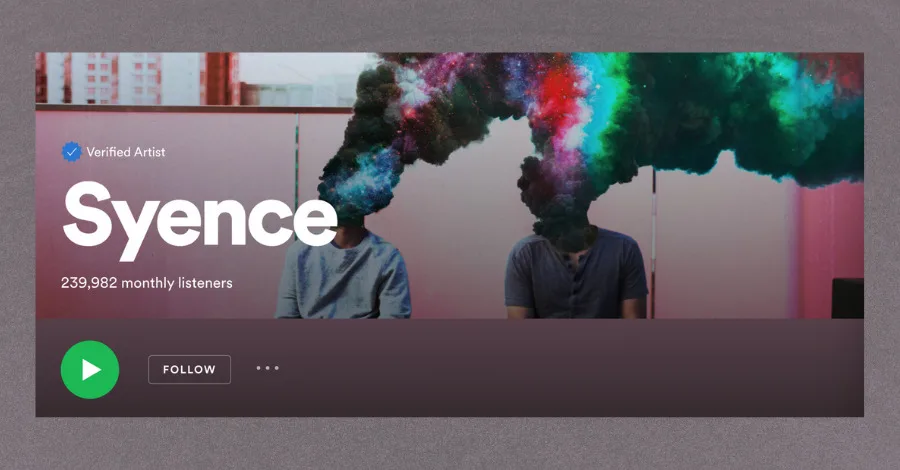
Let’s say a curator likes your track and clicks your profile: what do they see? Make sure you have a clean, professional banner photo on your Spotify artist page. That, along with clean album art on the track itself, will help the curator know that they are featuring a professional artist.
It’s a simple step, but I’m constantly astounded to see how many producers think that all you need is for the music to speak for itself when really the visual aspect plays a significant role in how your music is perceived.
Release Regularly
Nobody wants to feature an artist who only pops up once in a blue moon. Curators want to feature the next big thing: if they playlist you today, they are hoping that next month, you’ll send them another great track. Regularly releasing is helpful for a variety of reasons, but showing curators that you are consistently releasing quality music will only help you get more features.
Network, Network, Network
With the exception of a handful of algorithm playlists in-house at Spotify, the overwhelming majority of playlists are curated by real people. Real people who, like other real people, you can talk to, get to know, and who want to help out their friends. This tip is so important that I’m finishing the article with a whole section just about networking.
The #1 Key to Getting Featured in Spotify Playlists: Networking
Have you heard of Austin Kramer? Austin was the in-house A&R at Spotify who curated ALL Dance/Electronic playlists from 2015-2020. Every.
Single. Electronic. Playlist.
That’s right. He was on the payroll at Spotify, and his job was to maintain all the electronic music playlists. It was an unspoken rule amongst the upper echelon of producers that you HAD to be friends with Austin. If you were, you could DM him your music and he would put it in the playlists. That would get you streams, clout, and ultimately accelerate your career. If you can pull this off with the in-house Spotify curators, you are golden (Austin has since left Spotify, sorry!).
For a comprehensive guide on uploading to Spotify in the first place, check out How to Upload to Spotify: 10 Ways in 2026.
But of course, we can’t all do that. The next best option is networking with the owners of User-Curated playlists. I recommend following these four steps:
Meet curators online. We’ve talked all about sending personalized email pitches. This is absolutely essential to building online connections. Be sure to actually follow the playlists, and maybe try giving them a couple of shoutouts on your Instagram story before sending in your own music for consideration.
Meet Curators In-Person. Playlist curators are all around you. Go out to events in your local city to meet other producers and fans of the music, many people have their own playlists. Music conferences like Miami Music Week and Amsterdam Dance Event are hotbeds of playlist curators. Meet people in person, exchange contact information, and keep in touch with new music. Never underestimate the power of in-person connections.
Build Your Own Playlists. Nobody likes the person who is always asking for something. What can you offer? Well, your own playlist of course! Start your own playlist that features music in the genre you produce. Update it once a week with new music, and if you can, spend $3 per day on Instagram ads to promote the playlist.
Pro Tip: With effective ads, you’ll have a couple of thousand followers before you know it. Put your own music at the top of the playlist, and offer to swap spots with other playlist curators to help get your releases into more playlists.
Public Thank You Shout-Outs add a personal touch when you finally land some placement. Did you get playlisted? Congrats! Take a screenshot and post it to your Instagram story. Tag the playlist owner in a quick thank you shoutout. This helps get your song more visibility and gives the curator more return on their investment because their playlist appears in front of all your Instagram followers.
Getting playlisted takes some time and effort. But at the end of the day, it’s only a fraction of the time you’re putting into creating a track. Remember, it’s that extra little effort that will get your track the visibility it deserves.
The Music Still Has to Be Great
Spotify is an incredibly powerful platform for growth, and you have to learn to play by its rules if you want to succeed. But the reality of it all is that you won’t even have a seat at the table or a fighting chance of getting playlisted unless your music is damn phenomenal. And the Hyperbits Masterclass is there to help you get there.
My entire mission at the Masterclass is to get you sounding as good, if not better than your favorite artists. And if your favorite acts have no trouble getting thousands of plays across dozens of playlists, then you can do it too. All it takes is having a professional in your corner every step of the way.