Jump to a section38
- Complete Programs
- 1Hyperbits Masterclass
- 2Abbey Road Institute
- 3Cosmic Academy
- 4Point Blank
- 5Mix With The Masters
- 6The Blackbird Academy
- 7Liveschool
- 8Mastering.com
- 9343 Labs
- 10Futureproof Music School
- Beginner Courses
- 11EDM Foundations
- 12Finish More Music
- 13Recording Revolution
- 14Beat Lab Academy
- Universities
- 15Berklee College of Music
- 16Full Sail University
- 17SAE Institute
- Genre Specific Offerings
- 18Toolroom Academy
- 19School of Bass
- Membership Sites
- 20MasterClass
- 21Sonic Academy
- 22Soundfly
- 23ADSR
- 24Noiselab
- 25URM Academy / Nail The Mix
- Frequently Asked Questions
- Schools That Have Closed
- ICON Collective
- Dubspot
- Pyramind
- Ex’pression College / SAE
- The Art Institutes
- What Course is Right for You?
The best music production schools are the Hyperbits Masterclass (ours, and we couldn’t leave ourselves off), Abbey Road Institute, Cosmic Academy and Point Blank for complete programs, or Berklee and Full Sail University if you want a degree. Prices run from $12 a month to $92,000, so we listed all 25 with verified prices and who each one is really for.
Quick picks
| Name | Best for | Price |
|---|---|---|
| Hyperbits Masterclass (ours) | Intermediate to advanced producers who can already finish a track | Starts at $2,997 |
| Abbey Road Institute | The Abbey Road name and hands-on time in the facility | £17,900 UK, £23,950 international |
| Cosmic Academy | Electronic producers whose bottleneck is career traction | Not published, quoted after application |
| Point Blank | A campus and cohort in a major music city | LA certificate $7,795, London from £9,790/year |
| EDM Foundations | Beginners who want a cheap, structured first program | $197, often discounted |
| Berklee College of Music | The name on the resume, plus theory and arranging | Online from $1,575/course, campus $54,020/year |
| Full Sail University | The degree and alumni network, with federal aid | Campus $92,000, online $65,000 |
| Toolroom Academy | House and techno producers | £29.99 to £249.99 on-demand |
In collecting the absolute best music production schools in the online and physical world today, I figured we should start with what this guide is NOT.
For starters, this guide is NOT about quantity. We could’ve easily piled on another 50 or even 100 courses, classes and schools for you to sort through. But frankly, that would waste your time. This guide is all about schools that get you results.
We work with thousands of music producers every year. A lot of them tell our team about their past frustrations, including which schools got results and which ones flopped. That feedback puts us in a unique position to write this guide.
Also, this music production school guide is NOT a collection of courses that simply have anything to do with music (songwriting, composition, music theory, singing, performance arts, DJing, etc.). This guide attempts to strictly focus on music production itself.
How did we organize these music production schools?
We’ve done our best to pick the top schools and lay them out so you get a true snapshot of what you’re getting into.
First off, we organized the schools into over-arching buckets. Jump straight to whichever one fits you:
From there, we broke down each offering inside of the major buckets so you can make an informed decision about what is right for you.
Length: How long does it take to get through this program?
Location: Is the school physical (requiring relocation) or online?
Focus: Complete solution, or specific to a topic like sound design or mixing?
Commitment: Minimal, moderate, intensive, or severe (equivalent to a full-time job).
Verified: When we last confirmed this school's pricing directly with the source.
It’s worth noting that minimal requires little to no commitment, while severe requires the equivalent of a full-time job or full-time student.
How should you pick a school?
To pick the right music production school, we’d start with a budget and narrow down from there. We’d never tell anyone to go into serious debt or finance something they can’t afford, even for a passion.
Next, consider exactly what you want to learn. A specific focus like sound design or composition will drastically change the course you end up signing up for. So get a clear vision of what you want to achieve.
After you’ve sorted out your budget and your key focus areas (it’s ok if your focus is everything by the way, most schools offer a complete solution) you should consider the type of commitment you’re willing to make.
How much time do you have to devote to music production? How much work and mental stress are you willing to take on to hit your goals? Your answers point to your learning style too. They’ll tell you whether you want a physical music production school or an online one.
That said, let’s get into our 25 best music production schools in the world today by focusing on schools that get you real results.
Complete Programs:
These are full programs that try to take you from wherever you are to releasable music, without the price tag or the credential of a university. The tradeoff is that you are buying structure and accountability rather than a qualification, so the only thing that actually matters is whether the teaching is any good.
1. Hyperbits Masterclass
8 weeks, then lifetime access
Online
Complete Program
Intensive
Price verified July 2026
Obviously we couldn’t put together a list of the best music production schools and leave out our own. We’re biased here, so we’ll stick to the specifics and let you judge them against everything else on this page.
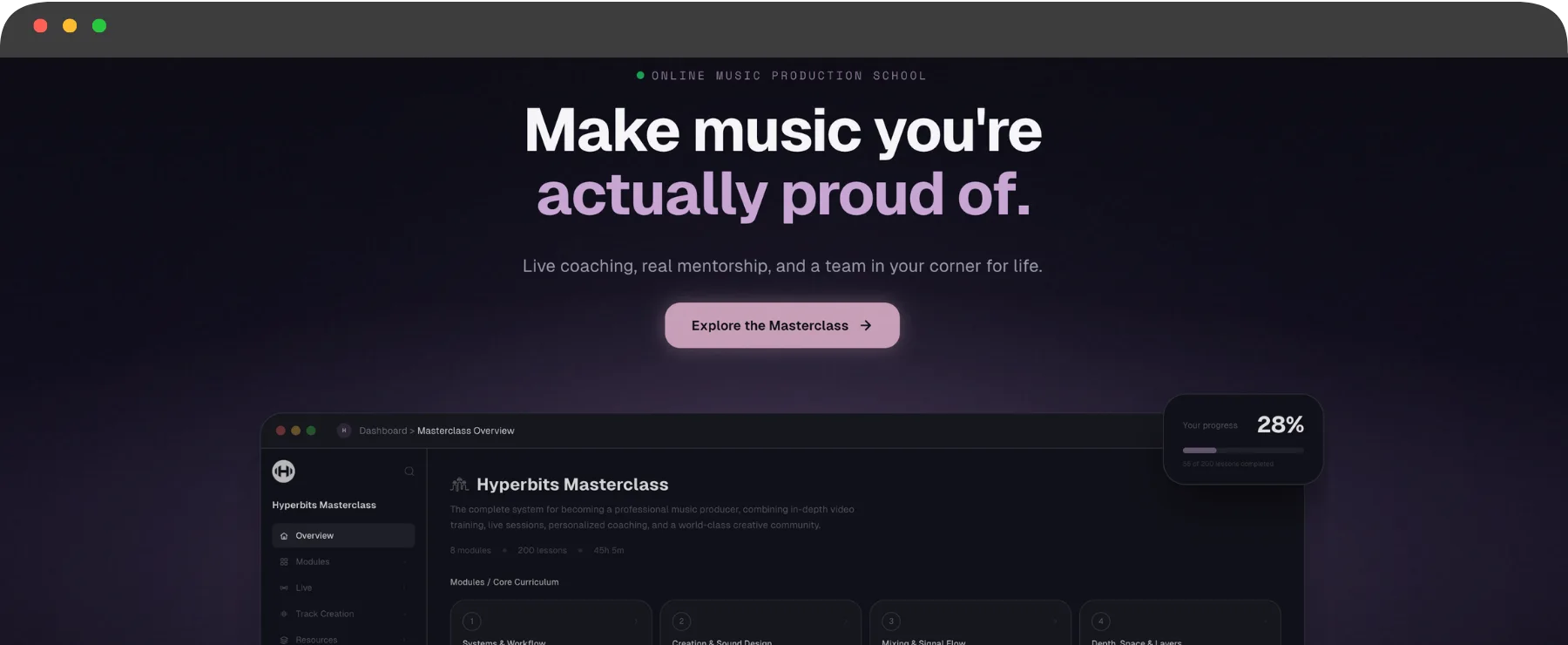
The Masterclass is 8 modules and 200+ lessons, built to be worked through in about 8 weeks. After that, nothing expires: the recorded lessons, the live session replays and every future update stay yours, and the weekly live sessions and office hours keep running for as long as you want to show up.
It’s taught by six working producers rather than career educators, which is the whole design. It’s also deliberately not built for beginners, and that’s exactly what makes it efficient.
The feedback runs through all of it: weekly notes on your assignments, live sessions where instructors work on student tracks, and private 1-on-1s. Here’s how that music production mentorship works in practice.
What you actually get: the course content, individualized homework and feedback, group live sessions, office hours, and a community that stays active. Plus educational pricing on plugins: up to 50% off Ableton, FabFilter, Xfer, Soundtoys, iZotope, Waves, Slate Digital, Splice, Output and tons more (40+ total plugin partners).
1,700+ producers have come through it, and their music has passed 3.2 billion Spotify streams between them. Anson Seabra crossed a billion by himself, and has toured the world multiple times. INZO sold out his Earth Magic tour and played Red Rocks. Niko Kotoulas won a remix competition three months after finishing. There are hundreds more producers with wins like these.
If you’d rather not take our word for this, go check out 350+ student reviews and the alumni stories, then come back and compare. There’s also a 14-day money-back guarantee if it isn’t what you expected.
Best for: intermediate to advanced producers who can already finish a track and want it to compete with the records they listen to, without relocating.
Not for: beginners. If you’re still learning your DAW, start with our free Groundwork course instead and come back when you’re comfortable in Ableton, Logic or FL Studio.
2. Abbey Road Institute
12 months
Physical
Music Production
Severe
Price verified July 2026
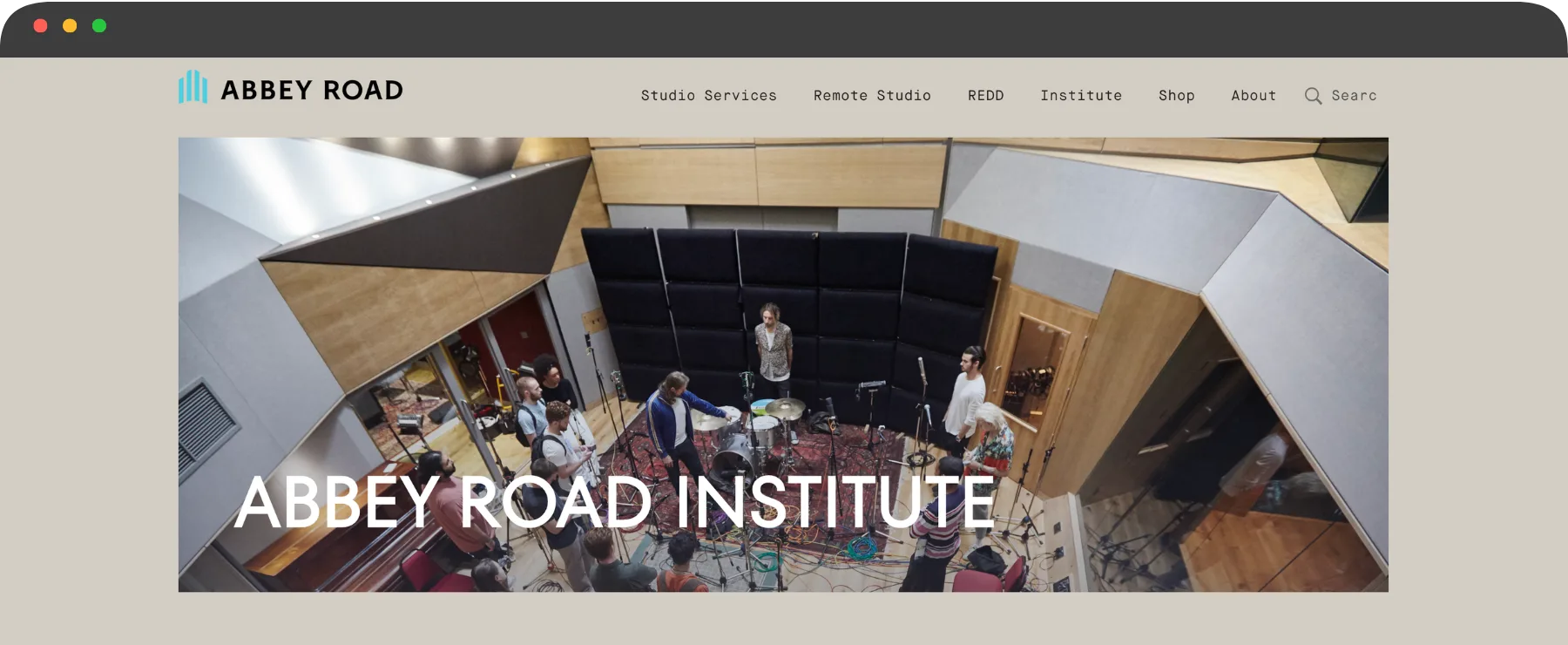
Abbey Road Institute trades on one of the most famous names in recording history. For a lot of applicants, that name plus access to the facility is the entire appeal, and there’s nothing wrong with that.
The program runs 12 months. Tuition is £17,900 for UK students and £23,950 for international students.
Two things catch people off guard, so we’ll put them plainly. It is not a degree. And it is not eligible for student loans. If either of those matters to how you’re planning this, factor it in before you get attached to the name on the door.
Best for: people who want the Abbey Road name and hands-on time in the facility.
Not for: anyone who needs a formal credential, or who needs financing to make it work.
3. Cosmic Academy
5-week intensive, then ongoing
Online (live over Zoom)
Artist Development
Intensive
Price verified July 2026
Cosmic Academy has been running since 2012, founded by Justin Cohen, and more than 950 artists have gone through the program.
The format is 100% online and live. Sessions are cohort-based over Zoom, built around a five-week intensive of 50 hours of live coaching, followed by an ongoing community and feedback phase. Cohorts are small and hand-selected, and there are only a few intakes per year.
Understand what this is before you apply. It’s an artist development and career program rather than a technical audio engineering school. Their own framing is professional-quality sound, building a brand and a following, and building a network. There is no published mixing, sound design or audio engineering syllabus, no credit hours and no certification.
The strongest verified signal in their favor: Cosmic Academy is Insomniac’s Academic Sponsor for 2026, confirmed on Insomniac’s own Discovery Project competition pages. They took over that role after ICON Collective closed.
Two practical notes before you apply. Pricing is not published anywhere on their site and is quoted only after an application. And they publish no instructor or faculty names anywhere on their site.
Best for: electronic and dance producers who can already make near-releasable music, and whose real bottleneck is career traction, branding and industry relationships.
Not for: beginners still learning a DAW, anyone who needs accredited credentials or financial aid, producers working outside electronic genres, and anyone who wants to compare published prices before applying.
4. Point Blank
1 year
London, LA, Ibiza + Online
Complete Program
Severe
Price verified July 2026
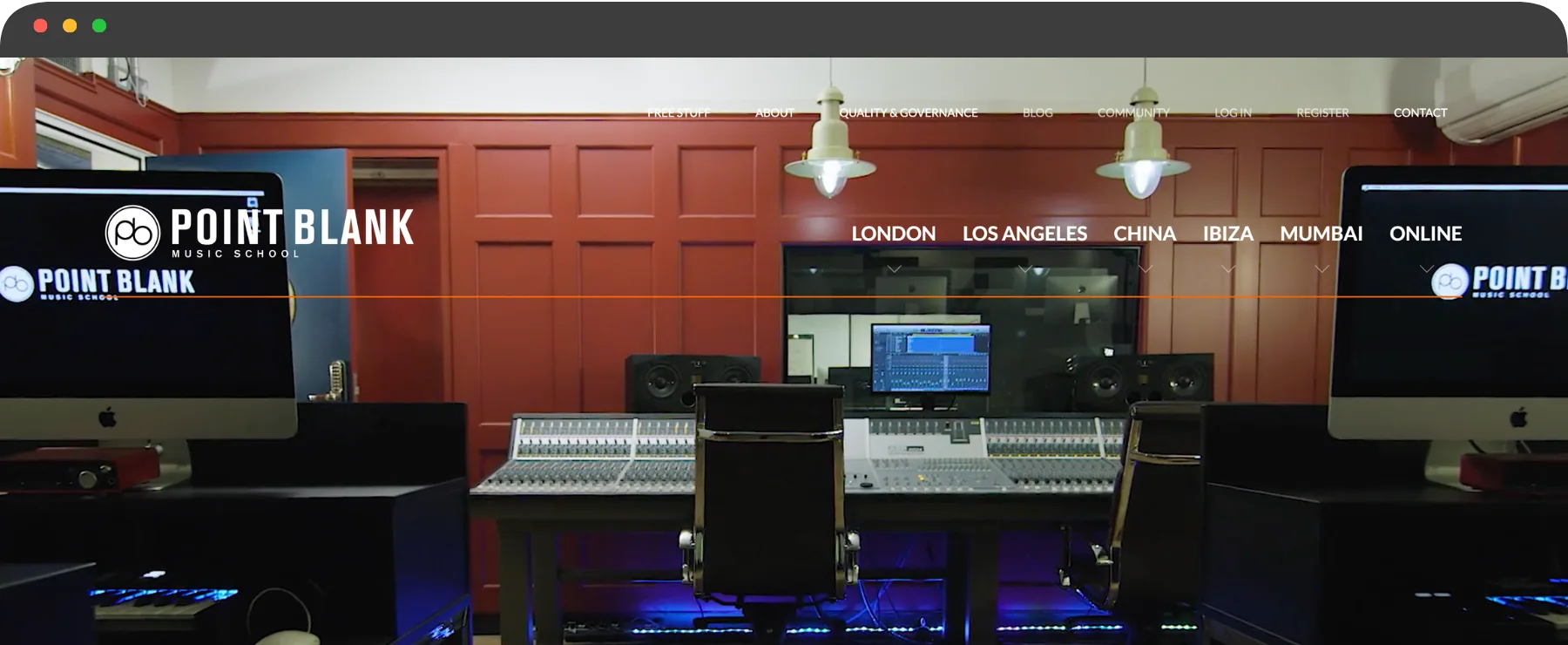
Point Blank started as a London-based school and has since expanded to Los Angeles and Ibiza, plus a full online offering. The Mumbai and China campuses are no longer part of the picture.
Pricing depends heavily on where and how you study. The Los Angeles certificate runs $7,795. London is £9,790 per year for UK students and £15,750 per year for international students, so that international gap is worth doing the math on before you commit.
The bigger news: Point Blank now offers degrees online, which wasn’t an option before, and NASM-accredited degrees launch in Los Angeles in October 2026. That puts them in a different conversation than most private schools on this list.
The only complaint we’ve ever received about Point Blank’s programs is that they tend to move a bit slowly. But if you’re a beginner, this could be a very good thing. Their active blog, YouTube channel and state of the art studios all back up the teaching.
Best for: producers who want a campus, a cohort and a recognised name in a major music city, with a degree path arriving in Los Angeles in October 2026.
Not for: anyone in a hurry. You’d be paying campus prices for a deliberately beginner pace.
5. Mix With The Masters
Seminars or annual membership
Physical & Online
Mixing & Production
Intensive
Price verified July 2026
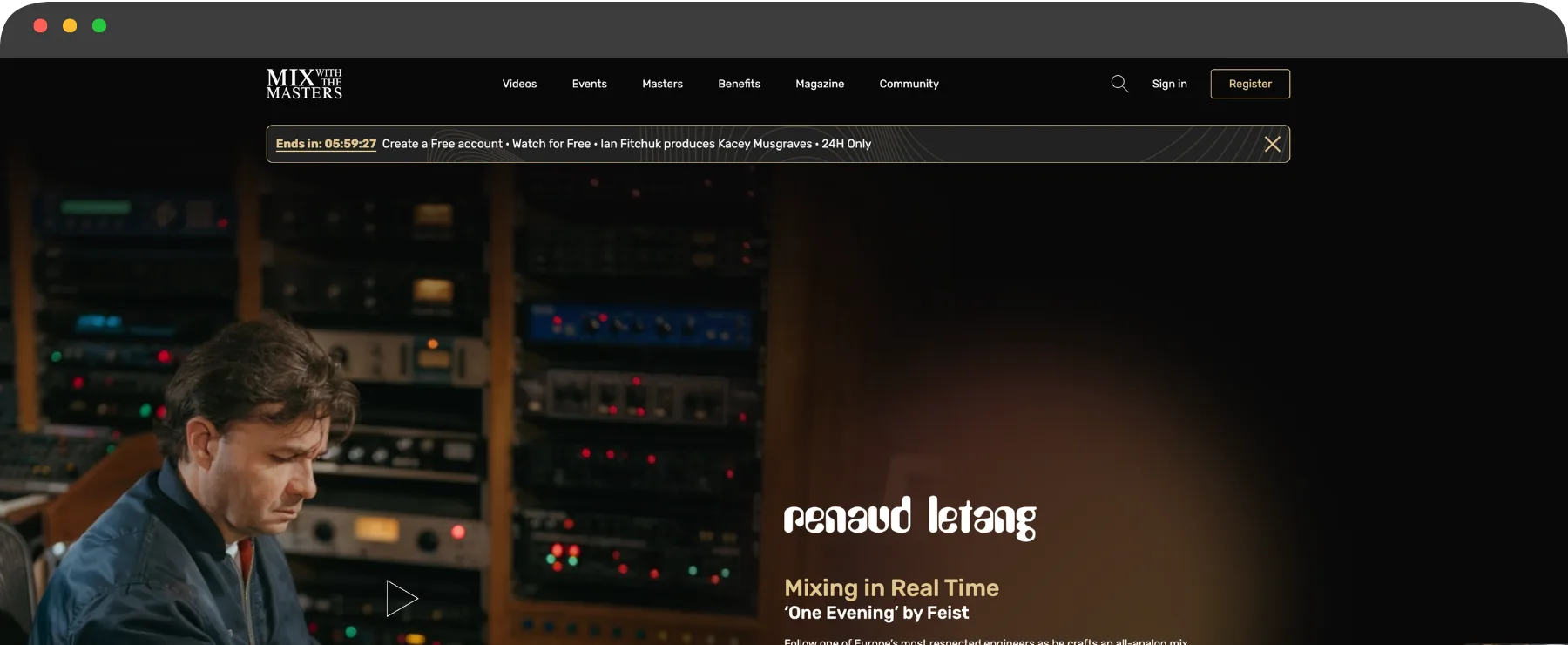
Mix With The Masters is the most respected name in high-end mixing and production education, and its absence from a list like this would be conspicuous.
There are two ways in. The in-person seminars start at around €4,000. The memberships run $99, $319 and $649 per year depending on the tier you pick.
The value here isn’t a curriculum in the traditional sense. It’s watching genuinely world-class engineers and producers work at length, on real material, without the edit points a YouTube video would have. That’s a different kind of learning, and for the right person it’s worth more than any structured course.
Best for: experienced engineers and producers who want to watch world-class people work at length.
Not for: beginners. You need enough of a foundation to understand what you’re watching.
6. The Blackbird Academy
6 months
Physical (Nashville)
Recording & Live Sound
Intensive
Price verified July 2026
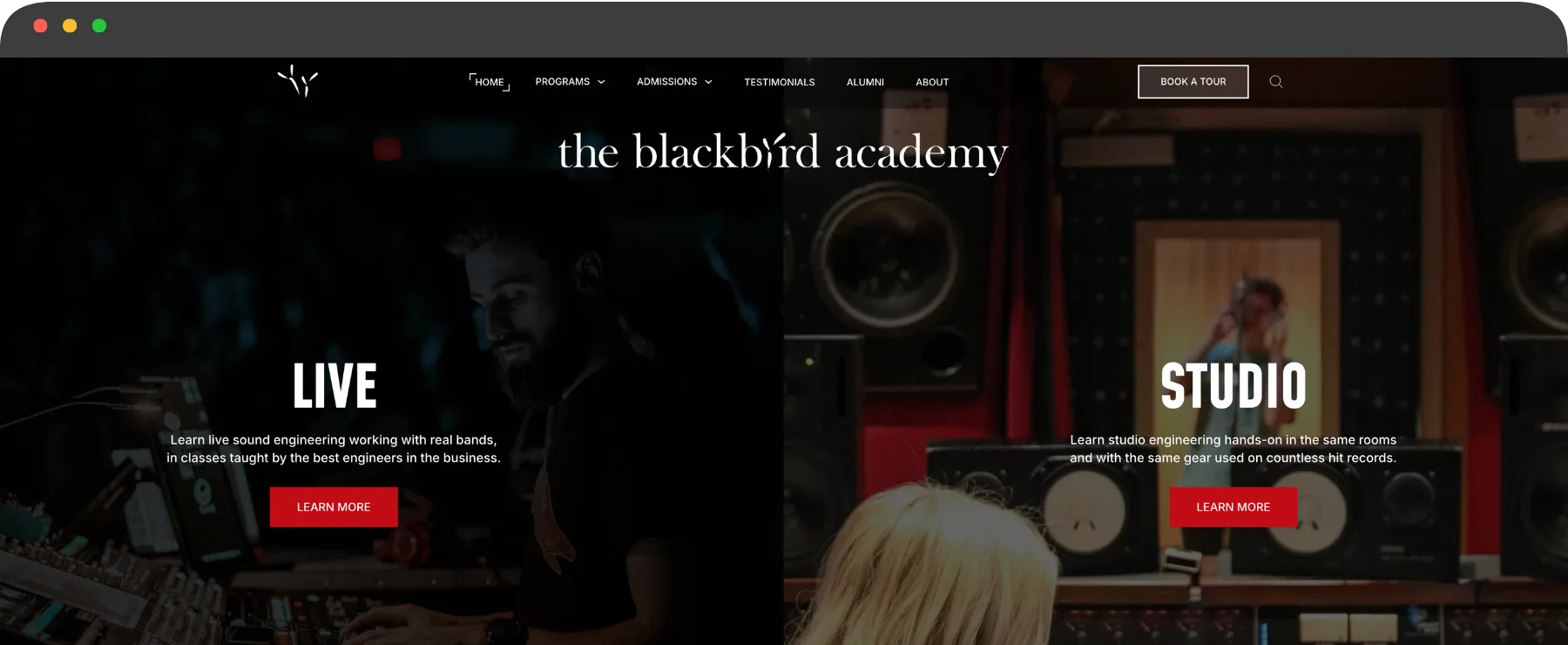
The Blackbird Academy sits in Nashville and has built a strong reputation in recording and live sound. The program runs six months at $24,900.
Nashville matters here more than it would somewhere else. You’re learning inside a working music city, which changes what’s realistically available to you in terms of sessions, connections and the kind of work you can walk into afterward.
This is a hands-on, gear-forward education built around real studio and console time. That’s the whole point of it, and it’s also the reason it won’t suit everyone.
Best for: people who want serious hands-on studio and console time in a working music city.
Not for: electronic producers working entirely in the box.
7. Liveschool
9 to 13 months
Physical (Sydney, Australia)
Ableton Live Masterclass
Intensive
Price verified July 2026
Liveschool is lesser-known globally. But it’s probably the most well-known option coming out of the southern hemisphere, based in Sydney, Australia.
Liveschool promises to help you produce music to the best of your ability. They do it by curating award-winning artists to teach you their proven, fresh techniques.
Two things to get straight before you budget. The programs run 9 to 13 months, so this is a real commitment and not a short course. And the pricing (A$6,055 to A$8,424) is in Australian dollars, which is an easy thing to misread if you’re shopping from overseas. Flume is credited as a Course Contributor rather than a trainer, so don’t sign up expecting him in the room.
Best for: producers in Australia who want 9 to 13 months of intensive, Ableton-guided training from a curated faculty.
Not for: anyone outside Australia, or anyone shopping for a short course rather than most of a year.
8. Mastering.com
Self-paced
Online
Complete Program
Intensive
Price verified July 2026
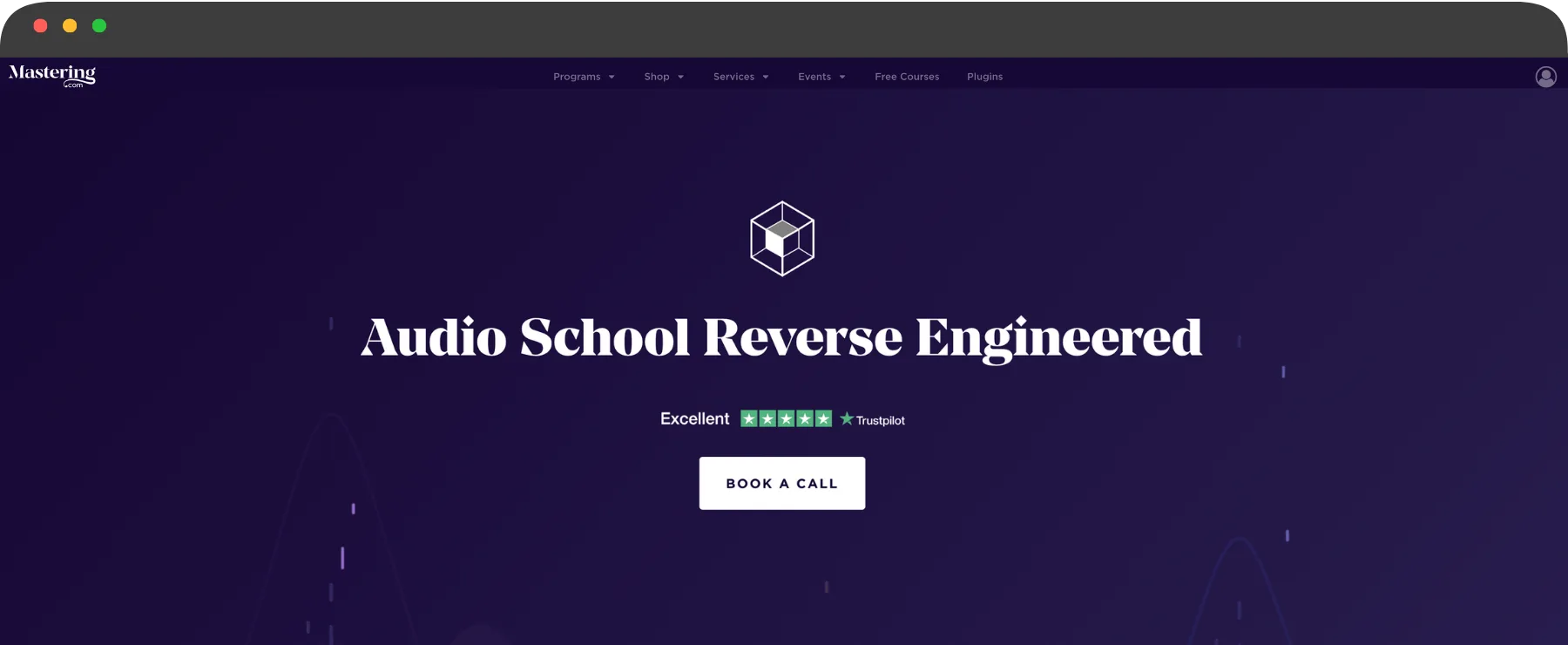
Mastering.com brands itself as “audio school reverse engineered,” and the approach backs it up. Instead of following a traditional curriculum, their programs are built around real-world production workflows. They reverse-engineer what actually makes records sound professional.
The Trustpilot reviews are strong, and the program is comprehensive, covering mixing, mastering, and production. Mastering.com has quickly become one of the more respected online options. It’s a good fit for producers who want structured, results-oriented education without relocating.
Best for: intermediate producers who want a complete, structured online program focused on mixing and mastering, without relocating.
Not for: beginners, or anyone who needs live instruction; at $6,800 it is self-paced, so the discipline has to come from you.
9. 343 Labs
12 sessions or 1 year
Physical (New York + Berlin)
Complete Program
Intensive
Price verified July 2026
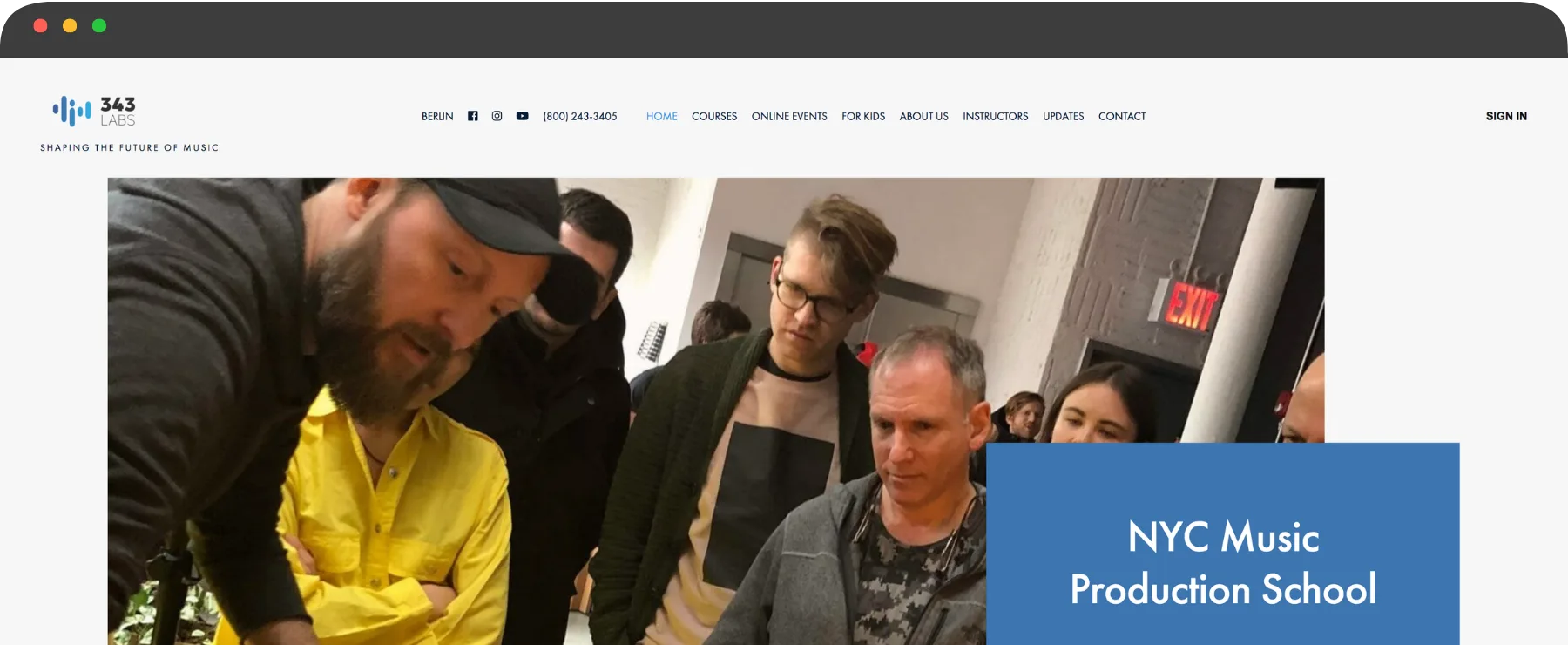
After Dubspot closed its doors, New York City got a new electronic music production school. It was founded by Ableton Certified Trainer Max Wild and Barcelona-born DJ Nacho Isa. They’ve since expanded with a second location in Berlin.
343 Labs runs free weekly events: masterclasses, artist showcases, feedback sessions, the Ableton User Group meetup, plus performance opportunities for students.
On top of that, 343 Labs promises small classes (3-5 students) and structured mentorship, even after your classes end. That helps students master production skills and even land gigs in local nightclubs.
343 Labs is a recognized Ableton Certified Training Center. When we first wrote this entry, the only knock was that they didn’t seem to offer an all-in-one complete solution, and we said we were sure they’d add one soon. They have: there’s now a One-Year Program at $21,950, which is exactly why this entry moved up into Complete Programs. Individual courses have gotten pricier too, now running $1,945 to $2,295.
Best for: producers in New York or Berlin who want classes of 3 to 5 students and mentorship that continues after the course ends.
Not for: anyone who can’t get to New York or Berlin, because the room is the product.
10. Futureproof Music School
Monthly
Online
Complete Program
Moderate
Price verified July 2026
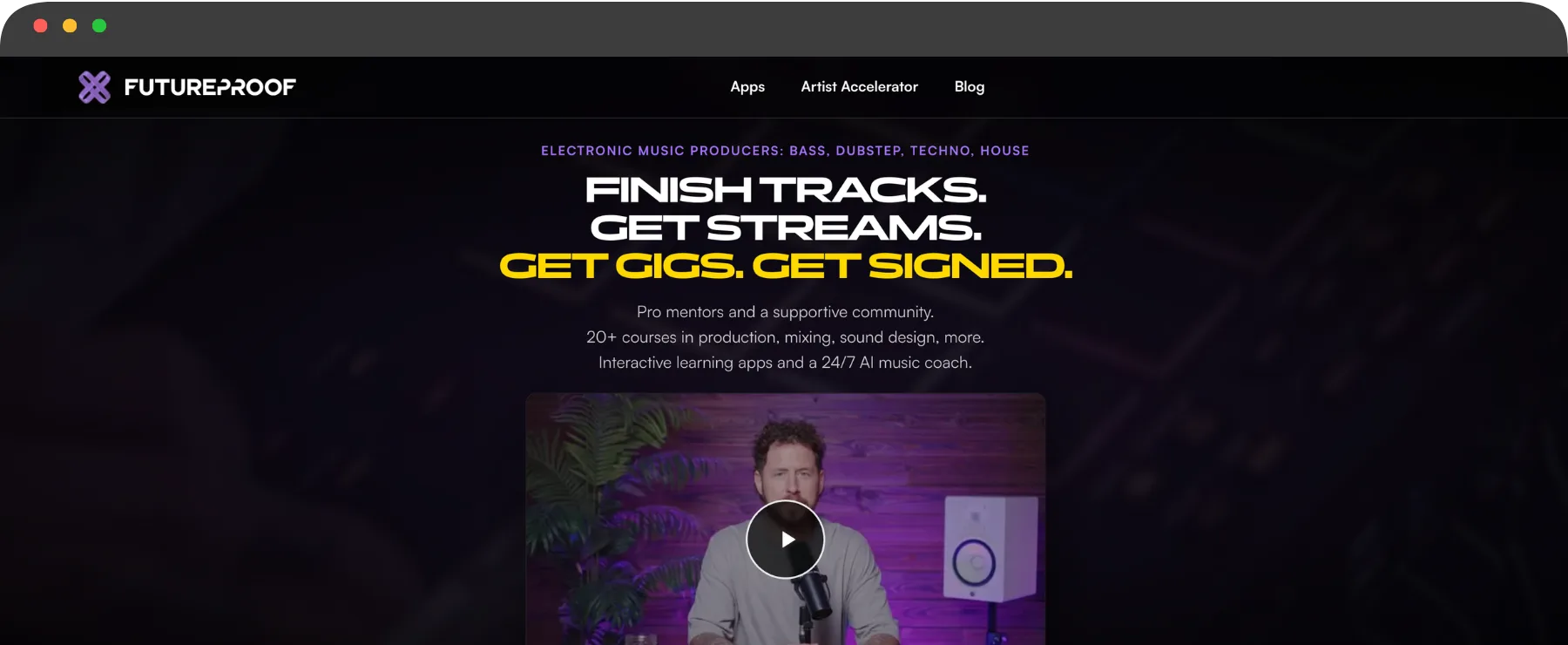
When ICON Collective closed, a lot of producers wanted to know where that teaching went. Futureproof is one answer. It was founded in 2025 by former ICON staff, including ICON’s former Director of Educational Technology, and it runs online at $99 per month.
The honest caveat is the obvious one. Founded in 2025 means a short track record. There isn’t yet the depth of alumni outcomes you can point to with the older schools on this list. That isn’t a knock on the teaching, which comes from people who did it at ICON for years; it’s just the reality of a school this new, and you should price that uncertainty in.
Best for: people who wanted an ICON-style program and are trying to find where that teaching ended up.
Not for: anyone who wants a long track record and a deep alumni list before they commit.
Beginner Courses:
These are cheap, foundational and designed to be outgrown. Start here if you are genuinely new, because paying $3,000 for a program that opens by explaining what a compressor does is the most common way people waste money on this list.
11. EDM Foundations
4 weeks
Online
Complete Program
Moderate
Price verified July 2026
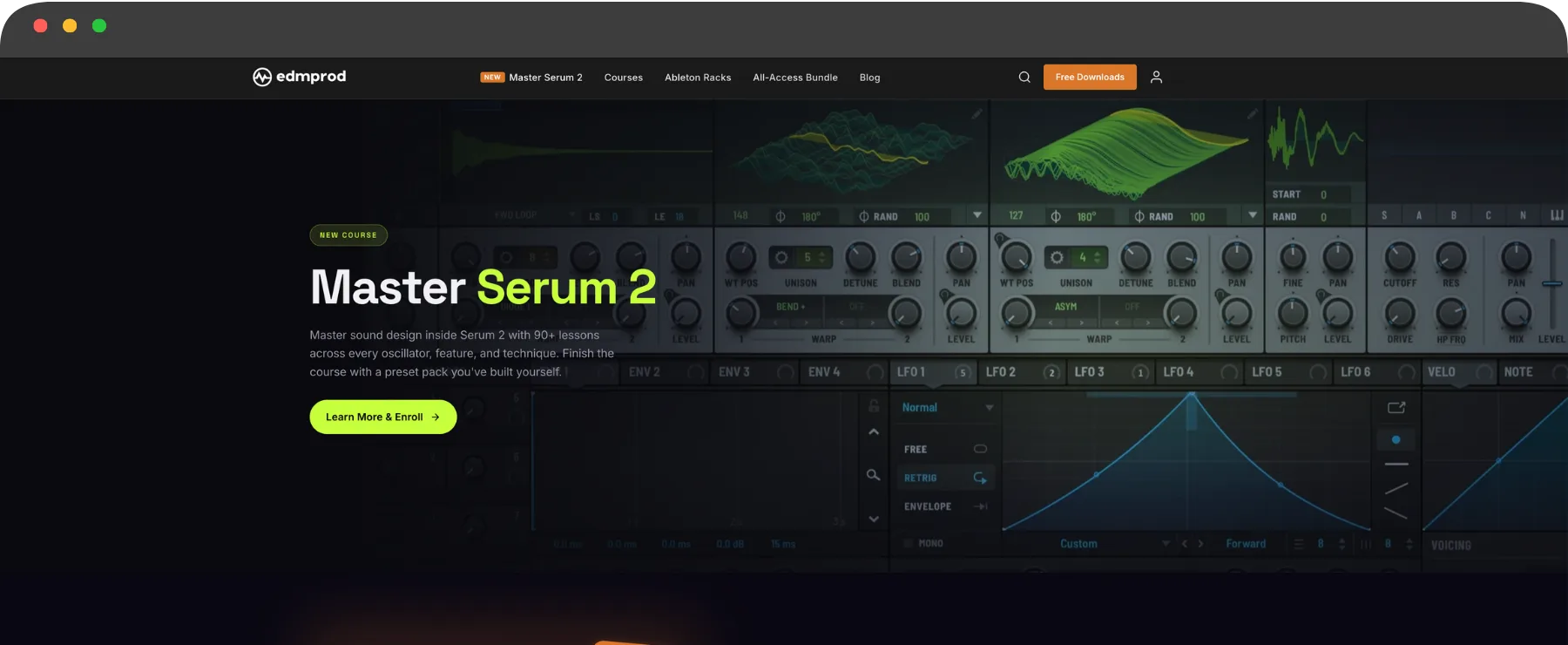
EDM Foundations is our clear-cut winner for beginner education. It gives you value you’d normally only get from an intensive or severe commitment style course. And since it’s self-paced, you can make it as intensive or lax as you’d like.
Whether you’re in Ableton, FL Studio or Logic, you’ll get specific training to help you finish your first 4 projects in less than 6 weeks. The Logic version was the last to land, so all three major DAWs are covered now.
Much like Hyperbits, EDMprod is a small team of passionate producers whose livelihood is tied to their students’ success. No bureaucracy, no corporate nonsense. EDM Foundations focuses on results, and we love them for that thorough, no-nonsense approach.
Best for: beginners in Ableton, FL Studio or Logic who want a cheap, structured first program and their first four finished projects.
Not for: intermediate producers; it is foundational by design and you will outgrow it quickly.
12. Finish More Music
Monthly
Online
Finishing Music
Moderate
Price verified July 2026
Information about Finish More Music is limited online, but we’ve heard excellent things about this program.
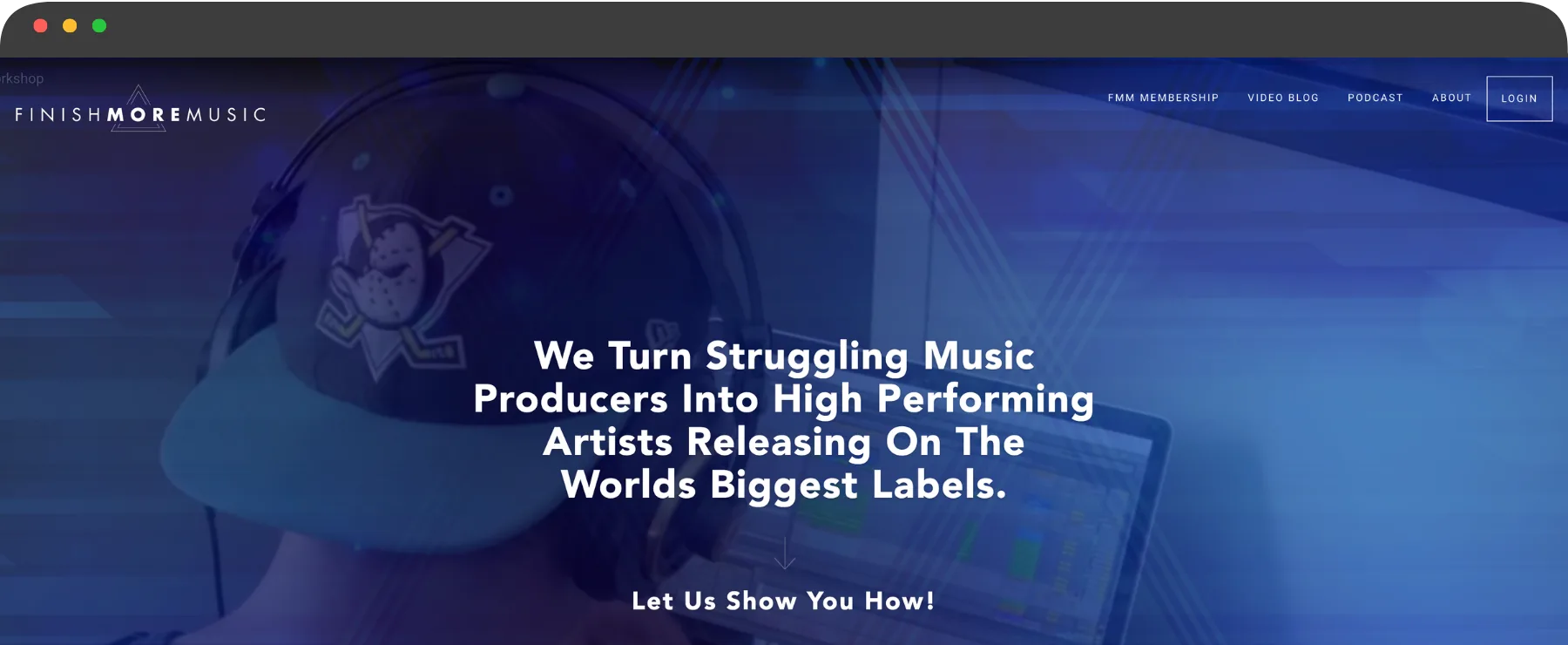
Created by Keith Mills (who also brings you Quantize courses), FMM is a training system and online community. It helps producers go from finishing little music to regularly releasing tracks.
Keith Mills runs a podcast and video blog too, so check if his style resonates with you. The membership is affordable. FMM puts workflow and finishing music above all else, which lines up with our priorities at Hyperbits. Because if you aren’t finishing any music, it’s extremely hard to make progress.
Best for: producers who start constantly and finish nothing, and know their bottleneck is workflow and mindset rather than technique.
Not for: anyone whose actual gap is technical, because this will not teach you to mix or sound design.
13. Recording Revolution
4 weeks
Online
Home Recording
Minimal
Price verified July 2026
Recording Revolution is run by one of the earliest YouTube adopters in music production (Graham Cochrane started uploading videos back in 2007). The courses are built for beginners who are brand new to production.
Recording Revolution pushes using your DAW’s stock plugins. That makes their system great for producers who don’t want to buy third-party plugins and just want a simple, bare-bones solution.
Here’s the honest picture, because you should know it before you buy. Graham has since moved on to business coaching at grahamcochrane.com, and the music production blog stopped publishing in August 2022. The site is no longer being maintained.
That doesn’t make the education worthless. The courses are still for sale, they still hold up, and the entry-level course is $197. Stock-plugin fundamentals don’t really go out of style. Just go in knowing you’re buying a finished library rather than an active, updating resource. One other caveat: if you specifically want to produce electronic music, Graham’s programs lean more toward acoustic and rock style productions.
Best for: beginners making acoustic or rock-influenced music who want a cheap, simple course built around stock plugins.
Not for: electronic producers, or anyone who wants current material; the site has not published since August 2022.
14. Beat Lab Academy
Self-paced
Online
Various Courses
Moderate
Price verified July 2026
Beat Lab Academy used to be a physical school in Los Angeles. That has changed. Today it sells on-demand online courses covering electronic music production in Ableton Live, priced at around $550.
Worth knowing before you commit: there is no campus address, no class schedule and no cohort dates on their current site. So treat this as a library of self-paced courses rather than a school you enroll in and show up to. That’s exactly why this entry sits down here with the beginner courses instead of up with the complete programs.
What you lose is the studio access and the in-person networking that used to define Beat Lab. What you gain is that you no longer have to move to Los Angeles, and the barrier to entry is a fraction of what it was.
Best for: producers who want self-paced Ableton courses at around $550 without needing a campus.
Not for: anyone who needs a schedule and other people to stay accountable, because there are no cohort dates and no class times.
Universities:
These are the most expensive options here by an order of magnitude, and the only ones that end in a credential. Whether that credential is worth $63,000 to $92,000 depends almost entirely on whether you want a job at a studio or a label, where it helps, or whether you want to make records, where nobody has ever asked.
15. Berklee College of Music
12-week courses, or a full degree
Physical & Online
Various Courses
Severe
Price verified July 2026
Located in Boston, Massachusetts and Valencia, Spain, Berklee is perhaps the most reputable and honored name in all of music education.
Historically, a Berklee student needed a principle focus instrument: a piano, violin, guitar, etc. But now one of the instruments you can pick is a DAW (like Ableton). That really speaks to the changing times in modern music.
Before you compare any prices, understand this: Berklee Online and Berklee on campus are two completely different products at two completely different price points. Almost every bit of confusion about “what Berklee costs” comes from mixing the two up.
Berklee Online is the accessible end. Individual courses run $1,575 plus a $75 fee, and that is per 3-credit course, not per credit, no matter how Berklee’s own tuition page labels it. There are 200+ courses and 50+ certificate programs to choose from. If you want the full credential, the online Bachelor of Arts is $63,000 in total, or $15,750 per year.
On campus is a different conversation entirely, at $54,020 per year. Same name on the diploma, a very different financial commitment.
On the surface, Berklee might look like any other university. But dig into their programs and alumni base and you’ll find there’s a lot more to the story. Berklee counts 345 Grammy wins among their students and alumni.
Best for: anyone who wants the name on the resume, or who wants theory and arranging taught properly.
Not for: producers who already know theory and just need the mix to translate.
16. Full Sail University
20 months campus, 25 months online
Physical & Online
Bachelor's Degree
Severe
Price verified July 2026
Full Sail University sits in Florida and hosts an array of programs in music and the greater arts. Their music production bachelor of science degree is built to give you a thorough, comprehensive understanding of music creation and production.
There are two versions of that degree and the difference is worth understanding before you apply. On campus it runs $92,000 across 20 months. Online it runs $65,000 across 25 months. So the online path costs less but takes longer, and you’re trading campus facilities for flexibility. And if the number rather than the format is what’s stopping you, the online options further down this list cover a lot of the same production skills for a fraction of it.
The program starts with concepts like music theory and composition. From there, you’ll explore the complex procedures and applications used in the industry. Coursework ranges from digital audio principles and DAW technology to advanced audio production and engineering techniques.
The campus is top-tier too, capped by an annual ‘Hall of Fame’ celebration that brings industry experts to speak on campus for a full week. Full Sail graduates regularly work on Oscar-nominated films. The alumni network is dense and could open up plenty of opportunities down the road.
Best for: people who want the degree, the campus and the alumni network, and who have access to federal aid.
Not for: anyone taking on $92,000 of debt to learn skills that do not require a credential to sell.
17. SAE Institute
32 months
Physical (5 US campuses)
Bachelor's (Nashville only)
Severe
Price verified July 2026
SAE Institute has been around for a long time. Globally they run roughly 50 campuses across about 20 countries, so there’s a decent chance one sits within reach of you.
The US footprint is smaller than it used to be. Five campuses remain: Atlanta, Chicago, North Miami Beach, Nashville and New York. Los Angeles, San Francisco and Emeryville have all closed. Worth knowing before you plan a move: the Bachelor’s degree is offered at Nashville only.
The offerings vary from country to country and school to school. SAE Institute runs programs in animation, audio, creative media, film and games. For this article, we’re focusing strictly on their audio path, which covers advanced subjects like studio production, mastering, sound design, game audio, projection mapping, and creative coding.
Now the pricing, because this is where people get caught out. The figure most often quoted, $38,659, covers only the 64-credit completer half of the program. The full path costs approximately $75,000. Budget against the second number, not the first. And check usa.sae.edu for current details, because there are older SAE pages still floating around that quote out-of-date tuition and campuses that no longer exist.
Best for: students who want an accredited path and a physical campus, with roughly 50 locations worldwide to choose from.
Not for: anyone budgeting from the $38,659 figure, which covers only the completer half; the full path is about $75,000.
Genre Specific Offerings:
These go deep on one sound instead of broad across production, which is exactly right if you already know what you are making. The risk is the obvious one: you learn one genre’s conventions very well, and you learn them from people with a house style.
18. Toolroom Academy
Self-paced
Online (HQ in Shoreditch, London)
House & Techno
Minimal
Price verified July 2026
Toolroom Academy is a genre-specific offering in the techno, house, tech house and deep house space. They run educational programs, services and events around the world, with the goal of breaking down the barrier that often sits between new talent and record labels.
What they actually sell is a catalogue of on-demand courses, running from £29.99 to £249.99. They also offer interactive, tutored courses, but that pricing isn’t published, so you’ll need to enquire directly. Their headquarters moved to Shoreditch in August 2025.
As one of the leading independent labels in dance music, Toolroom is in a strong position to push artistic development and boundaries. Just keep in mind it happens within the constraints of their specific vision and sound.
At on-demand prices, this is an easy one to test if you’re specifically making house or techno. You can buy a single course and see whether their approach clicks before committing to anything bigger.
Best for: house and techno producers who want label-adjacent teaching they can try for £29.99 before committing to anything.
Not for: producers working outside house and techno, since the teaching runs through Toolroom’s specific vision and sound.
19. School of Bass
Self-paced
Online
Bass Music
Minimal
Price verified July 2026
Taught by bass music aficionado Au5, this genre-specific sound design and synthesis course is perhaps the best available option if you’re into bass music.
The School of Bass walks you through creative processes like synthesis, resampling, filtering, and processing techniques. They promise to help you think like an engineer, no matter your current skill level.
At a fair price point, this is a no brainer if you plan on making any style of bass music, whether that’s trap, dubstep, or the heavier sides of future bass.
Best for: producers who want deep sound design and synthesis for bass music, taught by Au5, at $497 one time or $50 a month.
Not for: anyone outside bass music; this is a genre-specific course, not a general production education.
Membership Sites:
The cheapest way to learn and the easiest to not learn from. A library only works if you already know what you are looking for. If you do not yet, start with a structured program from the Complete Programs section and come back to a library afterward.
20. MasterClass
1 week per course
Online
Artist Courses
Annual billing only
Price verified July 2026
Worth understanding before you get excited: these are not four separate products. They are four courses sitting inside one MasterClass subscription, and since MasterClass moved to annual-only billing there is no way to buy any of them on their own. The tiers are Standard at $120 per year, Plus at $180 per year and Premium at $240 per year. No monthly plan, no single-course option.
Our honest read: these are outstanding for understanding how world-class people think about music, and they are not step-by-step technical training. If you want to be told exactly what to do on Monday morning, you’ll be better served elsewhere.
Armin van Buuren Teaches Dance Music
Armin van Buuren Teaches Dance Music
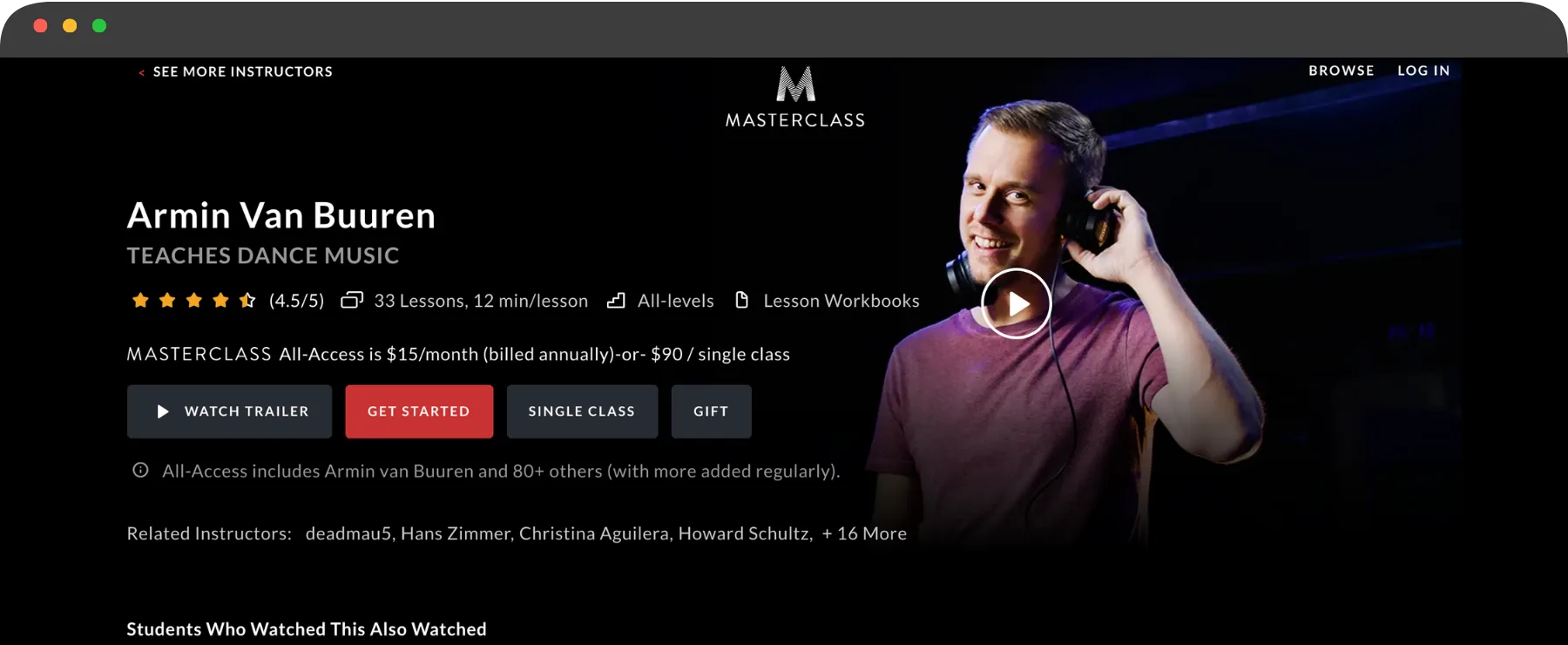
Armin’s course is a deep dive into the world of trance, progressive house and electronic dance music. Across 33 lessons, he actually builds a complete track, including vocal production and various forms of collaboration. Out of all the MasterClass music production courses, it’s by far our favorite. The depth of knowledge and the actionable strategies are what set it apart.
deadmau5 Teaches Electronic Music Production
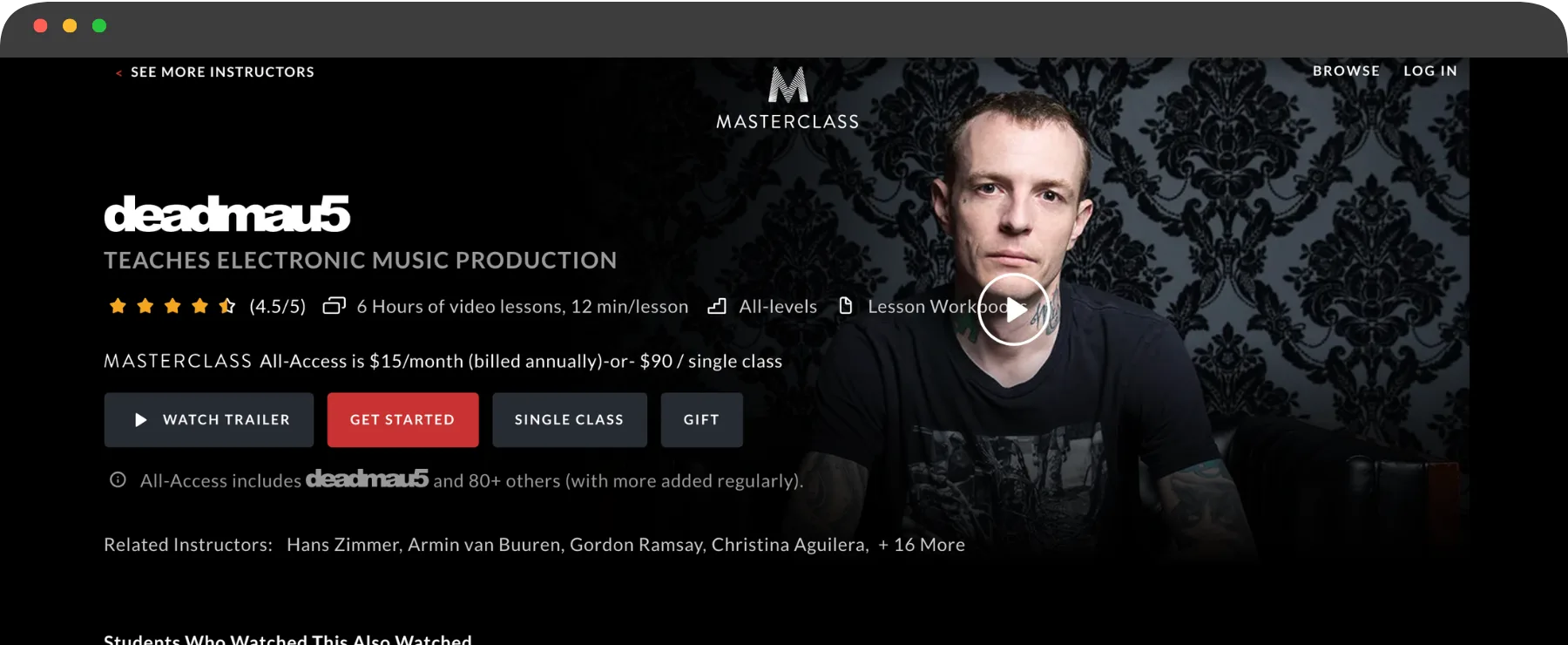
deadmau5 Teaches Electronic Music Production
Deadmau5 is notorious for his sound. His progressive, melodic style defines the music he makes, so learning straight from the source has obvious appeal. Across 23 lessons, it shows you the struggles and nuances Joel fights through when building his music. Treat it as a confidence booster rather than an all-encompassing solution.
Hans Zimmer Teaches Film Scoring
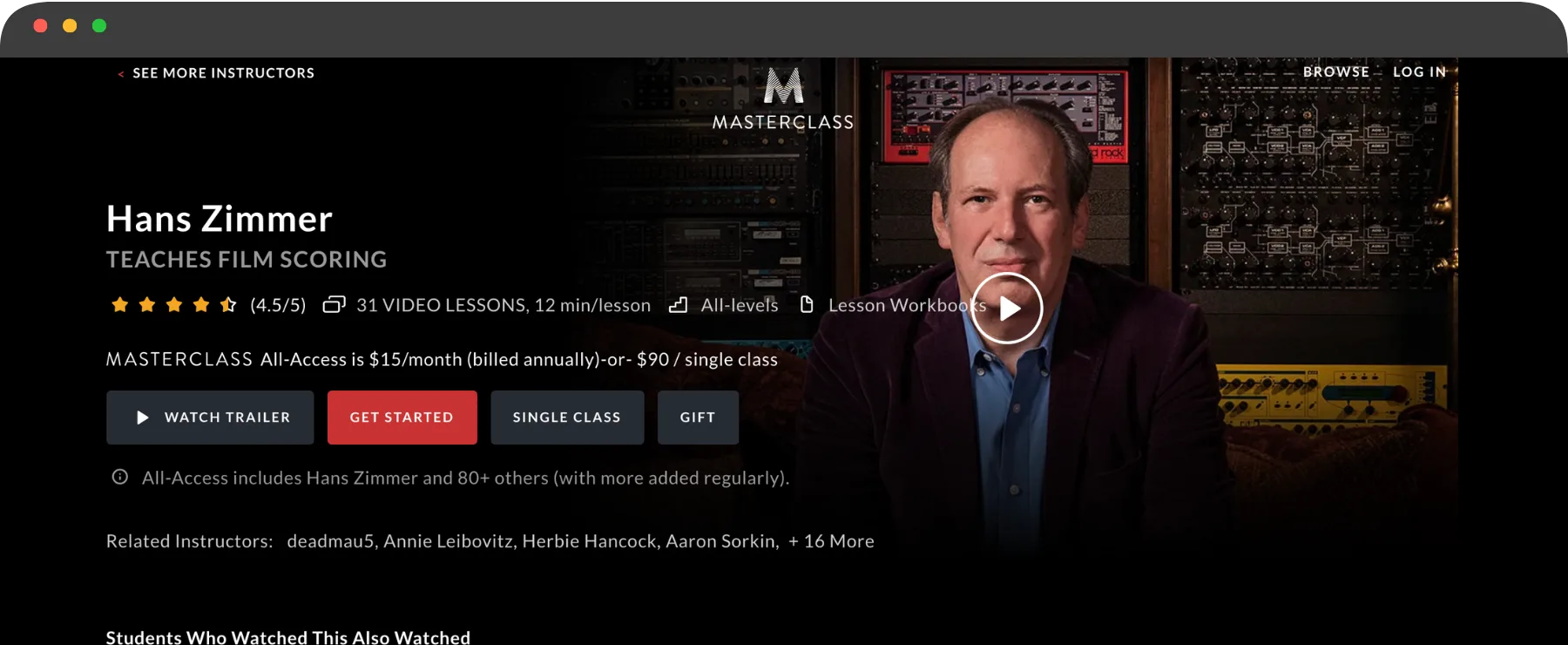
Hans Zimmer Teaches Film Scoring
From Pirates of Caribbean to The Dark Knight to Interstellar, Hans Zimmer is one of the most prolific film scorers of all time. His 31 lessons break down his creative process, with movie breakdowns plus writing tips you can apply to your next song, track or movie. It’s by no means an exhaustive solution to your educational needs, but it’s certainly worth a skim through.
Timbaland Teaches Producing and Beatmaking
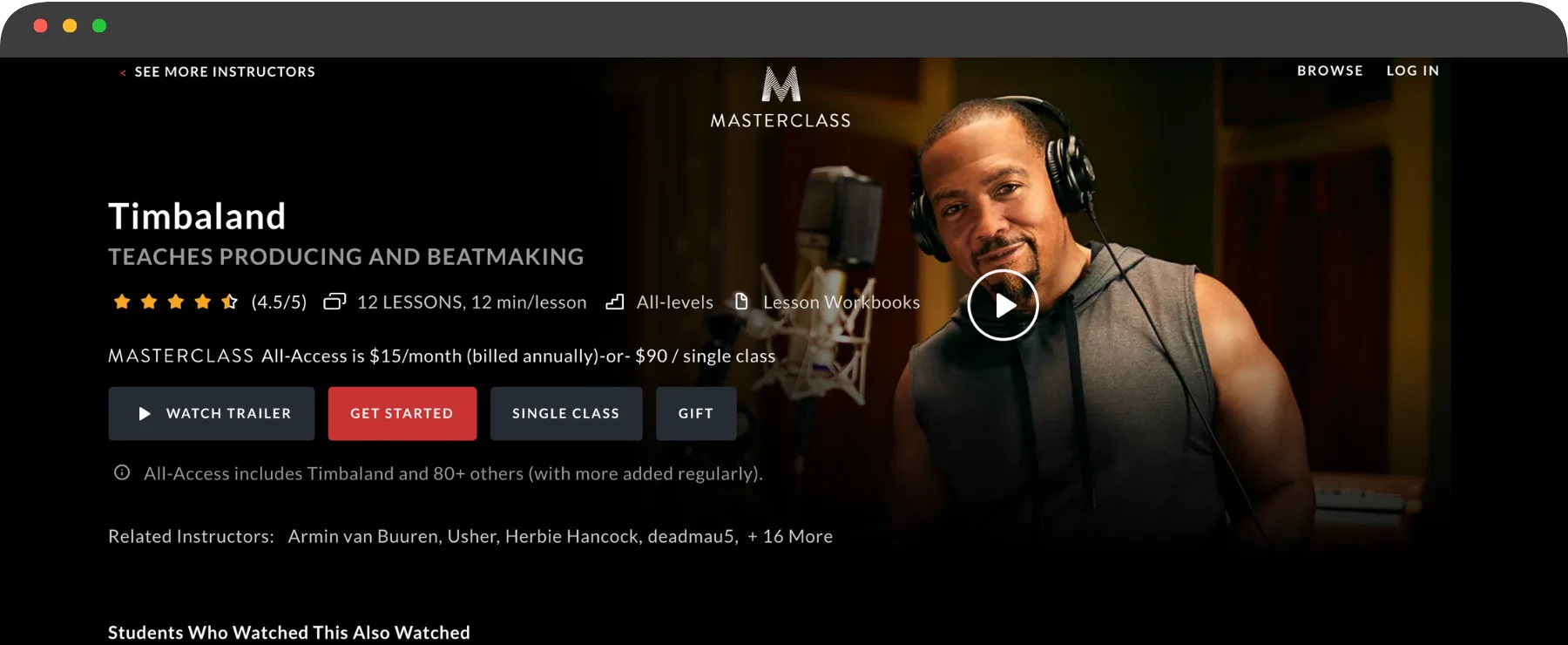
Timbaland Teaches Producing and Beatmaking
Timbaland is one of the most successful producers of all time. Across 12 lessons he lets you into his creative space by building a beat from scratch. He shows you how he tweaks and layers drums, and even breaks down the origins of several of his past hits. Along with a downloadable workbook, the class includes two exclusive new songs, as well as stems you can use to create remixes or original tracks of your own.
Best for: producers who want to understand how world-class artists think, for $120 a year.
Not for: anyone who needs step-by-step technical training; these are perspective, not curriculum.
If what you want is structured, step-by-step training, the Complete Programs section is where to look.
21. Sonic Academy
Monthly
Online
Various Courses
Minimal
Price verified July 2026
Sonic Academy is the best membership site we’ve come across in music production. Matt Lange is on the instructor roster, and there’s a litany of high-level education happening here.
Sonic Academy is also known for its plugins (KICK 3, Ana 2, etc.). That has nothing to do with the educational platform, but it does tell me they’re in touch with the needs of the modern electronic music producer.
At the end of the day, at this price point Sonic Academy is certainly worth checking out.
Best for: producers who want a large, artist-led course library at £9.99 a month.
Not for: anyone who needs a curriculum and accountability, because a subscription only works if you already know what to search for.
22. Soundfly
6 weeks
Online
Various Courses
Moderate
Price verified July 2026
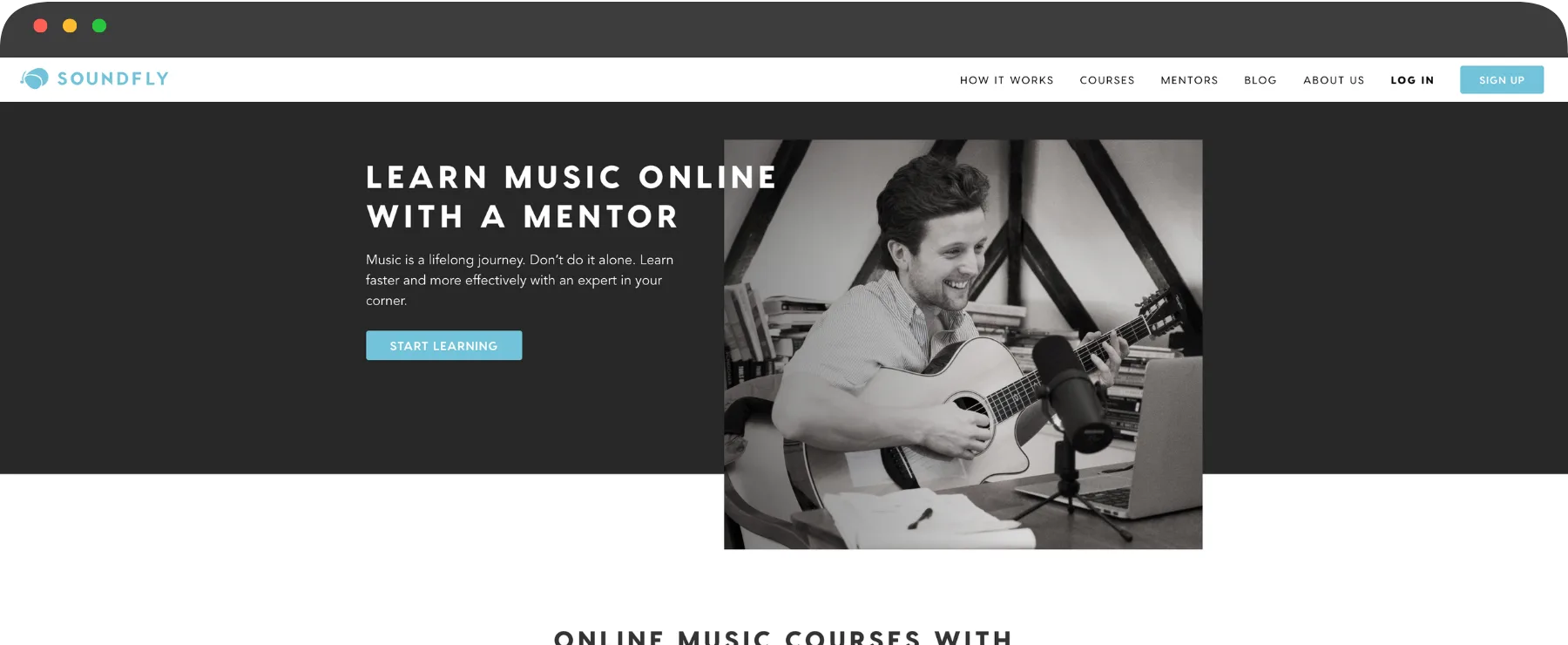
Soundfly is an interesting concept because it pairs you, the student, with a mentor throughout their educational process.
Soundfly built their model on active learning, the idea that humans learn best by doing. Their courses build in practice every week, with feedback, accountability, and help from a personal expert mentor along the way.
The course library runs $12 per month or $96 per year, which is genuinely cheap for the volume on offer. Mentorship is the catch: it’s priced on enquiry rather than published, so you’ll have to contact them to find out what your specific pairing costs.
The other concern is the large instructor base. Your experience will likely differ depending on which instructor or mentor you get paired with. It could still be worth trying if you struggle in one specific area and like the idea of being paired with a mentor.
Best for: producers who want a big library for $12 a month, with the option to add a mentor on top.
Not for: anyone who needs someone to actually listen to their track and tell them what is wrong, because the mentor part is a separate, unpublished cost.
23. ADSR
Monthly
Online
Various Courses
Minimal
Price verified July 2026
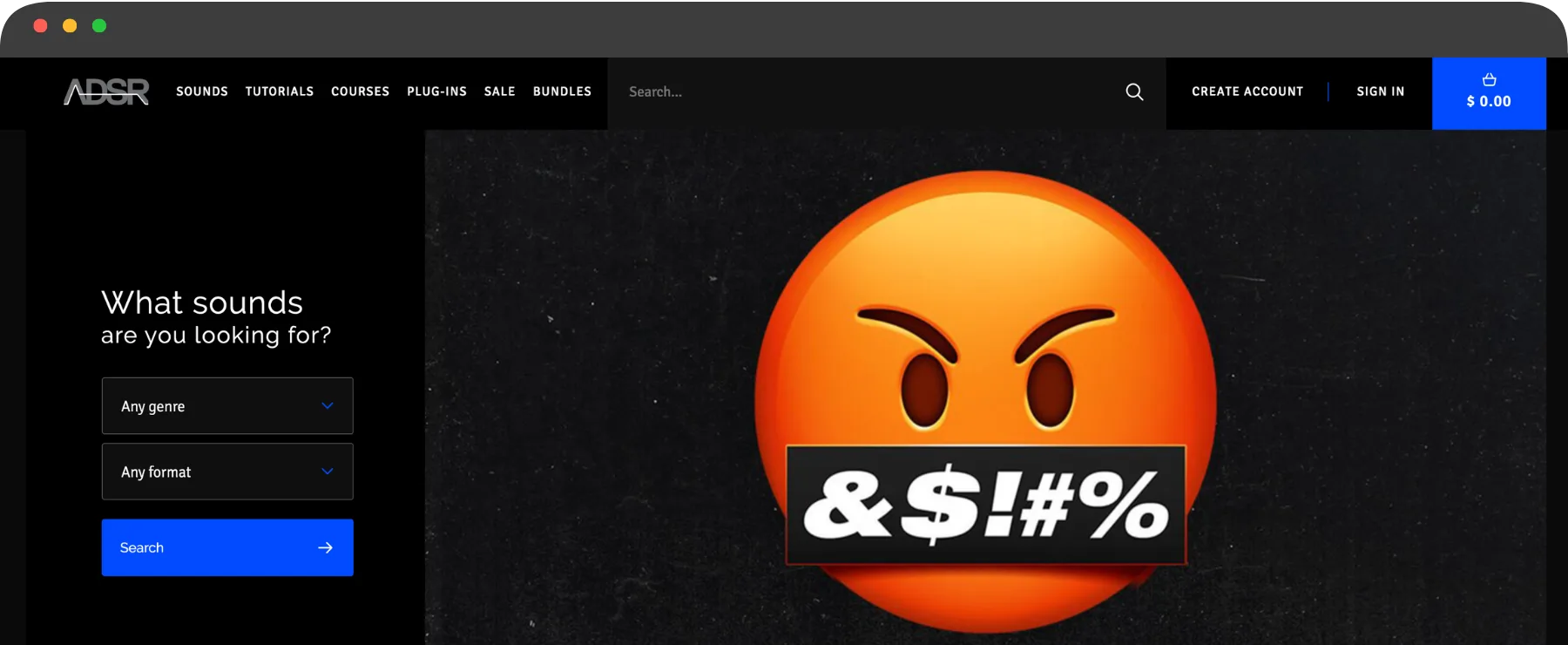
ADSR offers 190 courses and 2,732 videos across a litany of music production topics. The sheer amount of knowledge is overwhelming. Pricing varies by plan, so it might be worth checking out the various instructors to see if any style of education resonates with you.
The roster includes Echo Sound Works, BassGorilla, Ryan Enzed and SeamlessR, so ADSR boasts some very prominent educators. It’s worth hopping in to pick up a few tips here and there.
Will you become a prolific music producer after joining this membership site? Likely not, but it can provide a simple and straightforward starting point.
Best for: producers who want breadth, with 190 courses and 2,732 videos across a lot of topics.
Not for: anyone who wants depth or a clear path through it; the volume is the point and also the problem.
24. Noiselab
Monthly
Online
Various Courses
Minimal
Price verified July 2026
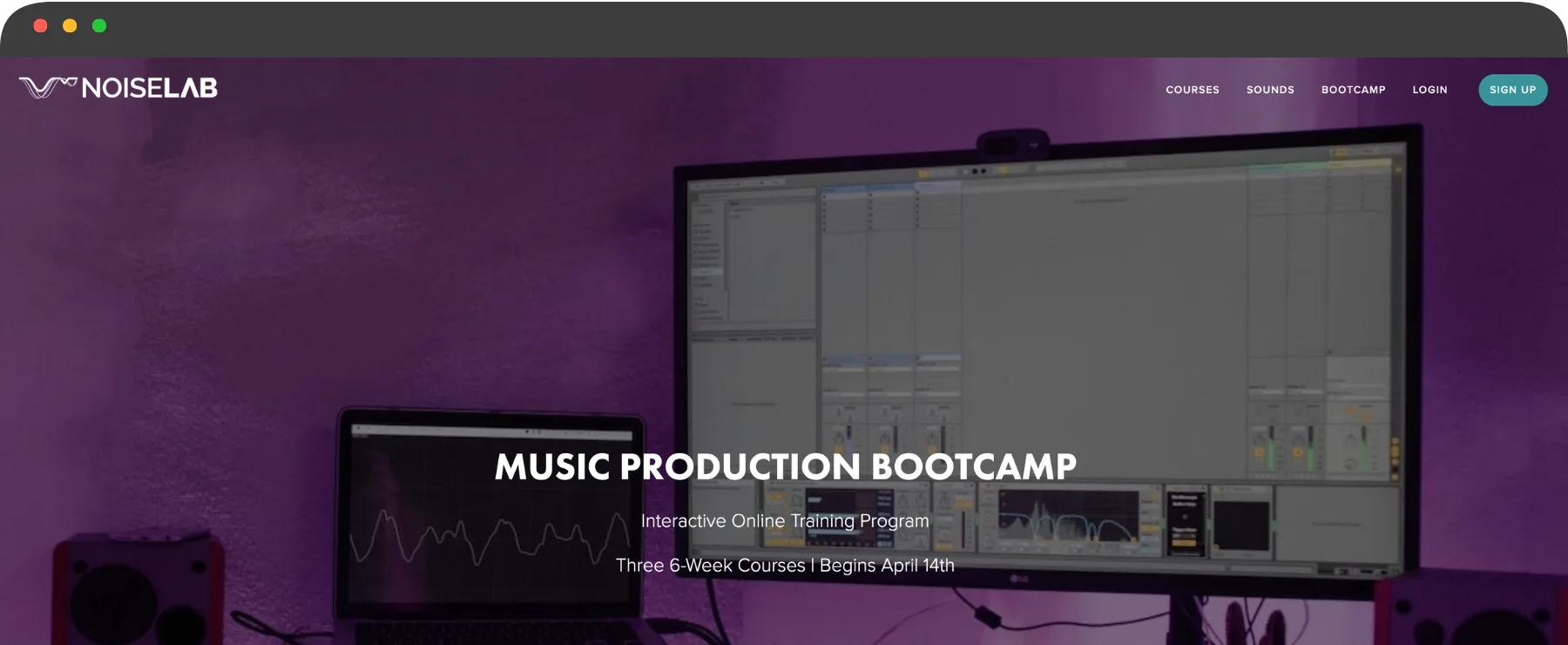
Noiselab is a community of Ableton producers and electronic musicians teaching music production online. First, get the address right: the live site is noiselab.io. The noiselab.com domain is a dead placeholder, so don’t judge them by whatever you find there.
We used to recommend their Music Production Bootcamp in this guide. That page now looks abandoned: every date on it falls between 2020 and 2022, and it still references Ableton Live 10. Treat it as something nobody got around to taking down rather than a program you can actually join.
What is live is the membership, and at $19 per month it’s priced like a membership site rather than a course. That’s exactly why this entry moved down here out of beginner courses.
Best for: Ableton producers who want a cheap membership and a community at $19 a month.
Not for: anyone hoping for the structured bootcamp this entry used to describe, because that program is no longer running.
25. URM Academy / Nail The Mix
Monthly
Online
Rock & Metal Mixing
Moderate
Price verified July 2026
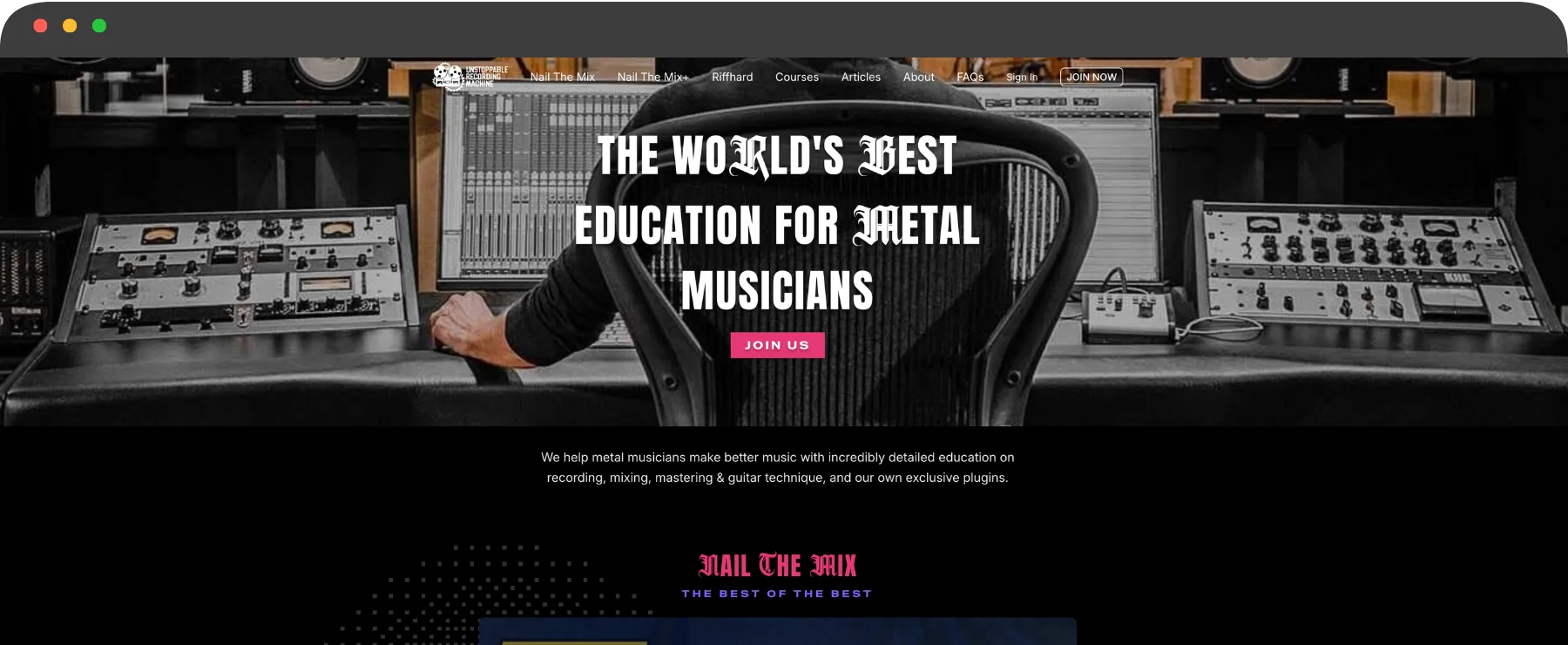
URM Academy, and its Nail The Mix product, built its reputation on one very good idea: give members the actual multitracks from commercially released records, then have the original mix engineer walk through how that mix was built.
That’s a genuinely different proposition from most education. You’re not watching someone demonstrate a technique on a made-up project, you’re pulling apart a record you’ve already heard and understanding the decisions behind it.
The catch is focus. It leans heavily toward rock, metal and heavy music production. If that’s your world, it’s outstanding. If it isn’t, a lot of the material won’t transfer as cleanly as you’d hope.
Best for: people who learn by reverse-engineering finished records.
Not for: producers working in genres outside its rock and metal focus.
Frequently Asked Questions
Is a music production degree worth it?
It’s hard to justify a degree these days. Institutions do open doors and help you create a network, but nobody has ever asked a producer where they went to school. On this list, a degree from an accredited college or university runs $63,000 to $92,000 and takes two to four years. That’s a tough pill to swallow.
Can you actually learn music production online?
Yes, and most working producers did. The format isn’t the problem. What does NOT work is learning alone with no feedback. That’s the main difference between a $12-a-month library and a $3,000 structured program: someone competent listening to your work and telling you what is wrong with it.
How much should I expect to pay?
I’d say there are four rough tiers. $12 to $30 a month gets you a library. $200 to $600 gets you a single focused course. $2,000 to $8,000 gets you a full structured program with feedback built in. $20,000 to $92,000 gets you a campus program or a degree.
What is the fastest way to go from bedroom demos to commercial-sounding tracks?
Structured training on mixing and arrangement, applied to your own tracks, with someone competent listening. That last part is what almost everyone skips, and it is why they plateau. A tutorial can teach you what a compressor does, but it cannot tell you that your kick and your bass are still fighting in this specific track if your ears aren’t developed.
Which school is best for electronic music specifically?
Depends what you are missing. Point Blank and Toolroom Academy sit at the club-focused end, strongest if you want the genre’s conventions and industry proximity. The Hyperbits Masterclass suits producers who are struggling to get their productions to sonically compete with the best of the best. 343 Labs is the pick if you are in New York or Berlin and want to be in a room with other people.
Schools That Have Closed
These schools are still recommended in older articles and forum threads, and in several cases their websites are still live. This section exists so nobody applies to a school that no longer exists.
ICON Collective
Founded in 2005 in Burbank, California, ICON Collective closed permanently on 29 May 2025, after 20 years. It had filed Chapter 11 in August 2024 to restructure. The founder cited financial difficulty and, specifically, the US State Department’s May 2025 halt on student visa interviews, which he said made projected enrollment impossible to sustain. Students were given an online portal for records and tuition recovery, with refunds claimable for up to four years. California College of Music agreed to accept comparable credits, and international students had 15 days to transfer or leave the country. Note: iconcollective.edu is still fully live today, with no closure notice anywhere on it.
Dubspot
Founded in New York in 2006, Dubspot closed both its New York and Los Angeles campuses by mid-May 2017, after roughly 11 years. No formal closure announcement was ever made. More than 55 student complaints followed, instructors declined to teach over unpaid wages, and several international students who had prepaid for courses that never ran were left without refunds. Note: dubspot.com is live today under new, unaffiliated ownership selling a different product; it is not connected to the original school. 343 Labs, which appears on this list, was founded by a former Dubspot instructor and offered free classes to students stranded by the closure.
Pyramind
Founded in San Francisco in 1999, Pyramind did not collapse: it stopped being a school. In May 2025 it merged into an entity called Music City Accelerator. Note: pyramind.com now redirects to pyramindsound.com, which offers masterclasses, community, production services and a record label, but no campus and no accredited programs. It has not filed a California state annual report since 2021. No closure was ever announced.
Ex’pression College / SAE
Ex’pression College, later SAE Expression College, closed on 15 December 2022, after roughly 24 years. Founded in 1998 in Emeryville, California, it granted Bachelor of Applied Science degrees in Sound Arts from a purpose-built 65,000 square foot facility, and was acquired by SAE Institute in 2014. It stopped accepting new students in 2021 and taught out its remaining cohorts. No public closure statement was ever issued, and no teach-out or transfer program was ever publicly reported for its final 253 students.
The Art Institutes
The Art Institutes closed all remaining campuses on 30 September 2023, ending their audio and recording arts programs. The closure was announced on 22 September, giving roughly 1,700 students at eight campuses about one week’s notice, delivered by email. In May 2024, the US Department of Education approved a $6.1 billion group borrower defense discharge covering approximately 317,000 former students, finding substantial misrepresentations about post-graduation employment rates and salaries.
This list is checked whenever we update the article.
What Course is Right for You?
With all these options, it can be tough to make a decision. But like we mentioned earlier, start by crossing out all the schools that simply aren’t feasible given your current situation. Your finances, where you live, your time, and your lifestyle will dictate which school is actually a viable option for you.
Pro Tip: Once you’ve narrowed it down to 2-3 schools, try some free classes to see if their educational style fits. If a school doesn’t offer any free choices, I’d highly recommend keeping your distance.
When building an online music production school, I made a list of all my personal criteria. Then I made sure we checked every box. Feel free to take the list below and tweak it to fit your own needs.
- A school that is actually taught by artists in the music industry
- A school that is affordable and wouldn’t put me in real debt
- A school where you don’t have to relocate to a specific city or country
- A school that moves at the right speed (moving slowly drives me nuts!)
- A school that has some level of accountability to keep me in check
- A school where someone qualified actually listens to my music and tells me what’s wrong with it (this is the one nobody screenshots, and it’s the one that moves the needle)
- A school that shows exactly what the students have accomplished
- A school that facilitates networking (for collabs, opportunities, and friendships)
- A school that focuses on intermediate to advanced education
- A school that gives lifetime access AND updates to all the material
- A school that will still exist next year (scroll up, plenty of them didn’t, and some gave students a week’s notice)
- A school whose website is actually maintained, so the price and the start date I’m reading are real
Again, this was simply my initial criteria for what the ideal music production school would look like. From there, I went ahead and built it alongside a small collective of artists.
If you want to give us a try (for free), you can get started with our free video training by signing up below.