


You can type a sentence into a text box right now and get back a finished song. It takes about a minute, start to finish.
That’s the world we make music in now.
Which is why I can’t stop thinking about the strangest thing that happened at this year’s Grammys.
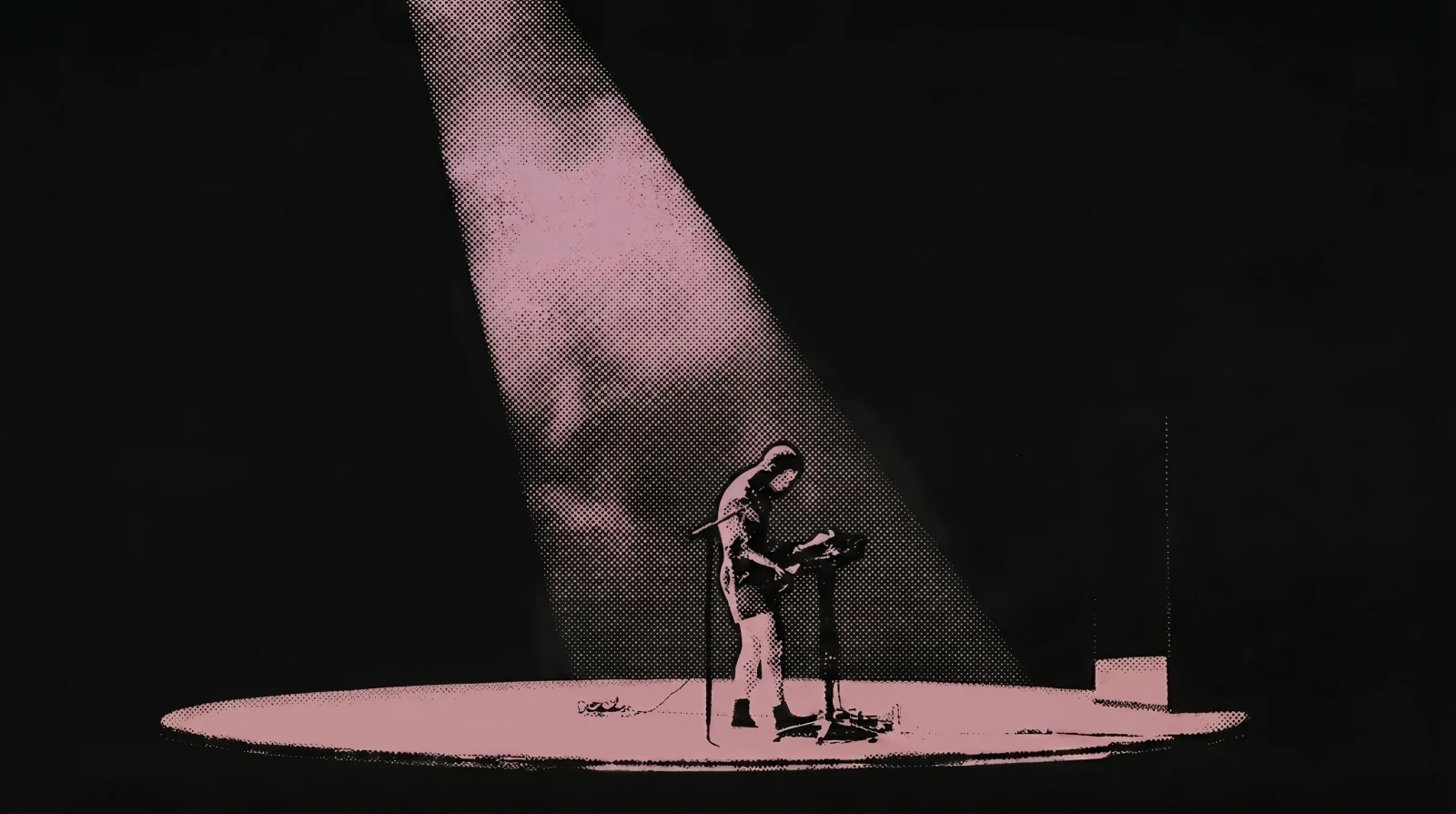
There’s one performance that stood out to me: a man standing alone on a carpet in lilac boxers and black socks.
And I mean alone.
He had no dancers.
No LED wall or pyrotechnics.
He didn’t even use a backing track.
Just a purple Yamaha electric guitar from the 1980s covering his chest.
A loop pedal, a drum machine, and Justin Bieber singing “Yukon.”
By the end of it, I was questioning everything I thought I understood about art.
Here’s the performance, if you’re curious.
The Detail That Should Bother You
This was the 68th Grammys. Bieber’s first time on that stage in four years.
Every performer gets 90 minutes of rehearsal time. Bieber used 15. Yea, 15 total minutes.
One run-through. Then he turned to the production team and asked, “How’d it look to you? You happy with it?”
They were. His response, as the show’s producer tells it: “Okay, fantastic. See you Sunday!”
He only did a second pass because the camera operators asked for one.
Executive producer Ben Winston summed up the whole thing in one sentence:
“Everything that was heard on everyone’s television was created on that carpet.”
Live looping with no safety net, broadcast to millions. Fifteen minutes of prep.
And the room felt it. Every single person in that arena, one of the most jaded crowds in music, stood up.
A friend put me onto the clip a few days later. I’ll be honest, I don’t get chills from music very often anymore. I guess if you spend enough days inside a mixdown, maybe the magic gets quieter.
But this? This gave me chills.
The World This Happened In
Every A&R I’ve ever met takes real pride in their taste. Part of that taste means that surely, they could sniff out any AI submission to their label, right?
That pride is about to get destroyed.
Some of them are already admitting, quietly, that, yeah. They can’t always tell.
Ghost producers I know are getting messages with a Suno track attached: “It’s 90% done. Can you finish the last 10%? For 10% of the price.”
Touring headliners now spend more on their visual packages in a single year than most producers will earn from music in their entire lives.
Zedd has talked about this too. A good track on SoundCloud used to start a career. Now a good track, on its own, is worth almost nothing.
And it all points at the same uncomfortable thing.
Anyone can make anything sound like anything.
The production ceiling is gone. And the second it disappeared, production stopped being the thing that separates you from anyone else.
When everyone has access to infinite polish, polish becomes the base layer. The default.
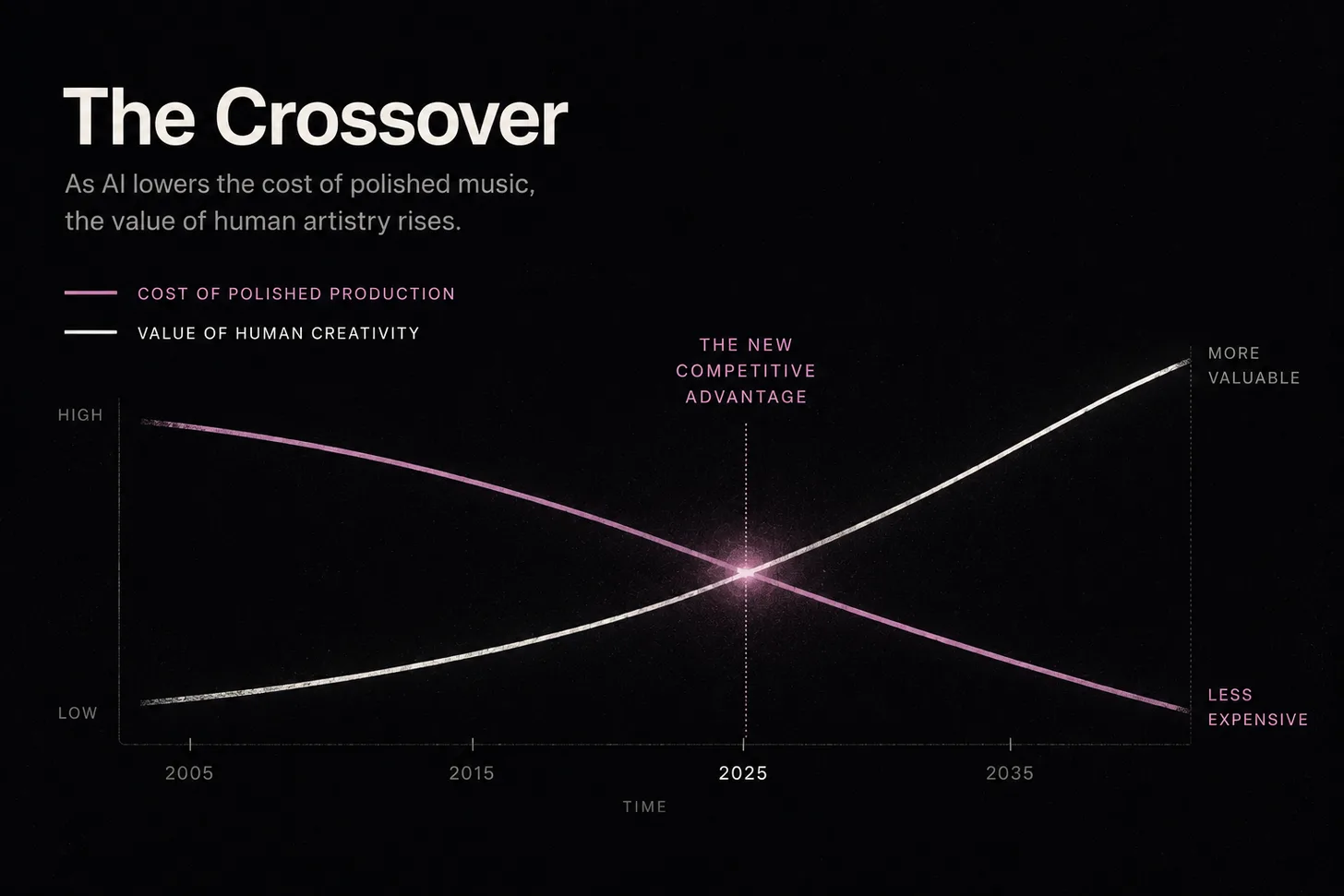
As AI drives the cost of incredible production toward zero, what advantage is the average musician, or human, left with? Maybe it’s creativity.
And then a guy in boxers walks out with a forty-year-old guitar and a loop pedal.
Was It Even on Purpose?
Honestly? I have no idea.
Maybe it was a protest against infinite production standards. Maybe it was a former child star who spent his whole life performing the machine’s version of himself, deciding he was done.
Maybe he just didn’t want to wear pants.
Winston said he doesn’t think Bieber decided on the outfit until he walked onstage. Which tells me this probably wasn’t some calculated manifesto.
But the more I think about it, it sure landed as one.
Because the message every producer watching received was impossible to miss: this is just me, and listen to how good I sound.
So What Does This All Mean?
Here’s the part I keep coming back to.
You don’t get to be effortless in your underwear at the Grammys without almost two decades of reps behind it.
For something that stripped down, it might have taken more real skill than anything else on that stage all night.
Live looping leaves nowhere to hide. Every layer is exposed and every take is the final take. And he chose that format, on that stage, in front of the entire industry.
And that’s the real takeaway for anyone making music right now.
Every advantage you can buy eventually gets cheap. Compressors used to live in million-dollar studios. Then they became plugins, then presets, then a setting AI picks for you.
Of course, this is a much bigger conversation than just music. But what happens when the cost of everything gets closer and closer to zero?
My take? Only two things get more valuable: your taste and your identity.
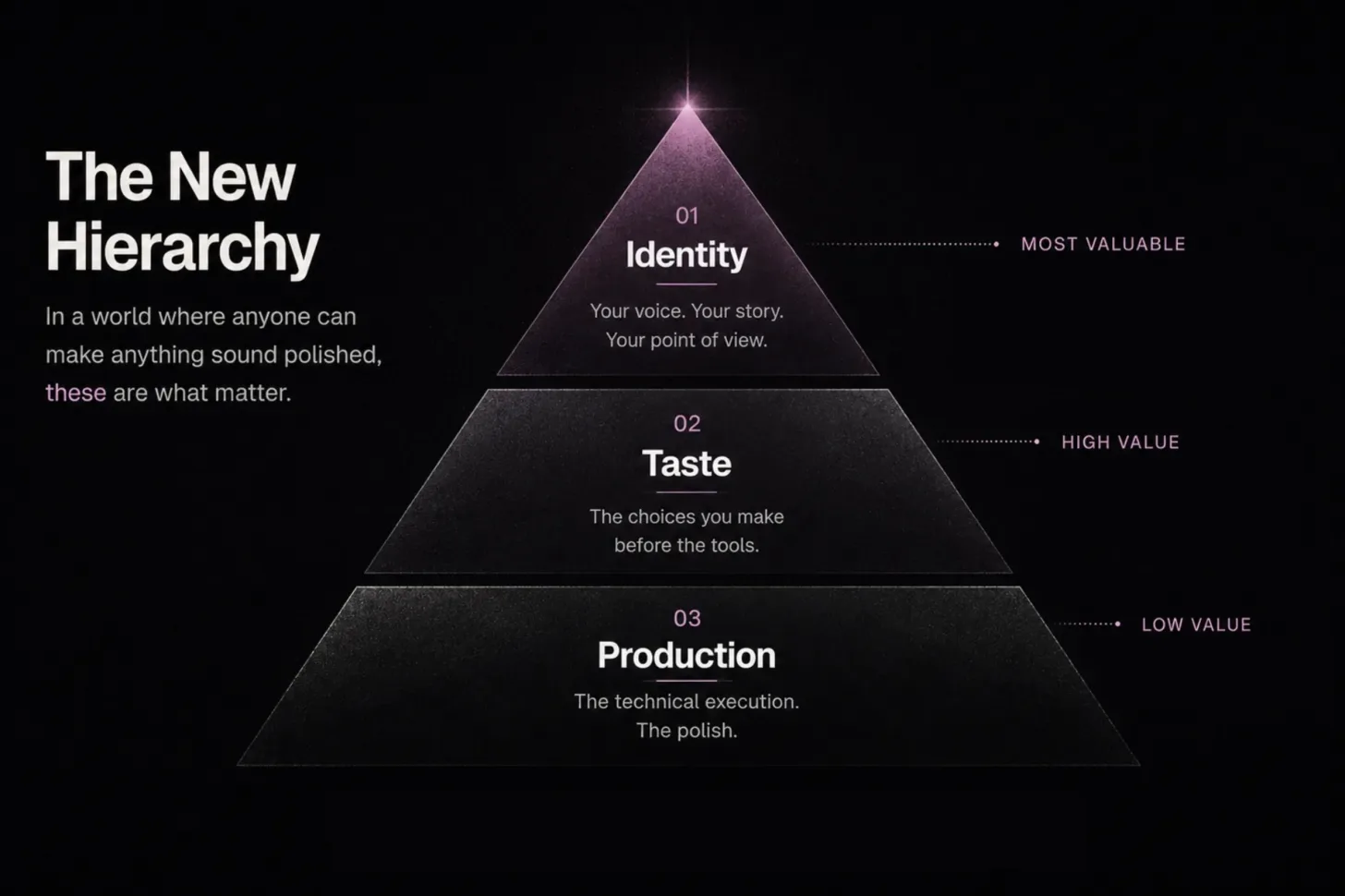
We have a phrase for this at Hyperbits: closing the gap between your music and the music you love. For years I thought about that gap mostly in sonic terms. Cleaner low end, wider mixes, louder masters.
But think about why your favorite records actually hit. You can hear Flume in a Flume record within three seconds. Nobody else would have made those choices, and that’s exactly why you love them.
AI will eventually be able to hand over the low end you always dreamed of. The competitive loudness of any commercial track.
But it can’t hand you a set of choices only you would make.
Here’s where I think this all goes.
AI floods everything. The lines keep blurring until nobody can reliably tell what was generated and what is real.
And then, somewhere in that flood, a hunger kicks in. The need to know that a human actually made the thing you’re listening to.
Being able to prove you actually made your music will matter more than it ever has. One-take videos. Live builds. A guy on a carpet with a loop pedal, showing you every layer as he stacks it.
The tools will keep getting better at making you sound like anything.
But sounding like you is a different problem, and it’s the one the Hyperbits Masterclass was built around.
Real instructors listening to your actual tracks, giving you feedback that sharpens your taste and sharpens your sonic identity.
It’s real reps, real deadlines, and a community that actually cares about your progress.
If you want to build that kind of craft, come see how it works.
