


Came across a study recently that I can’t stop thinking about.
It put words to something I’ve felt during production sessions for years, but never knew how to explain.
The Study
A team at the National Institutes of Health put twelve professional freestyle rappers into an MRI machine.
The design was simple and clever. Each rapper performed twice over the same 8-bar beat.
Once freestyling, completely improvised. Once rapping a verse they’d already memorized and rehearsed.
Same person, same beat, two completely different mental modes.
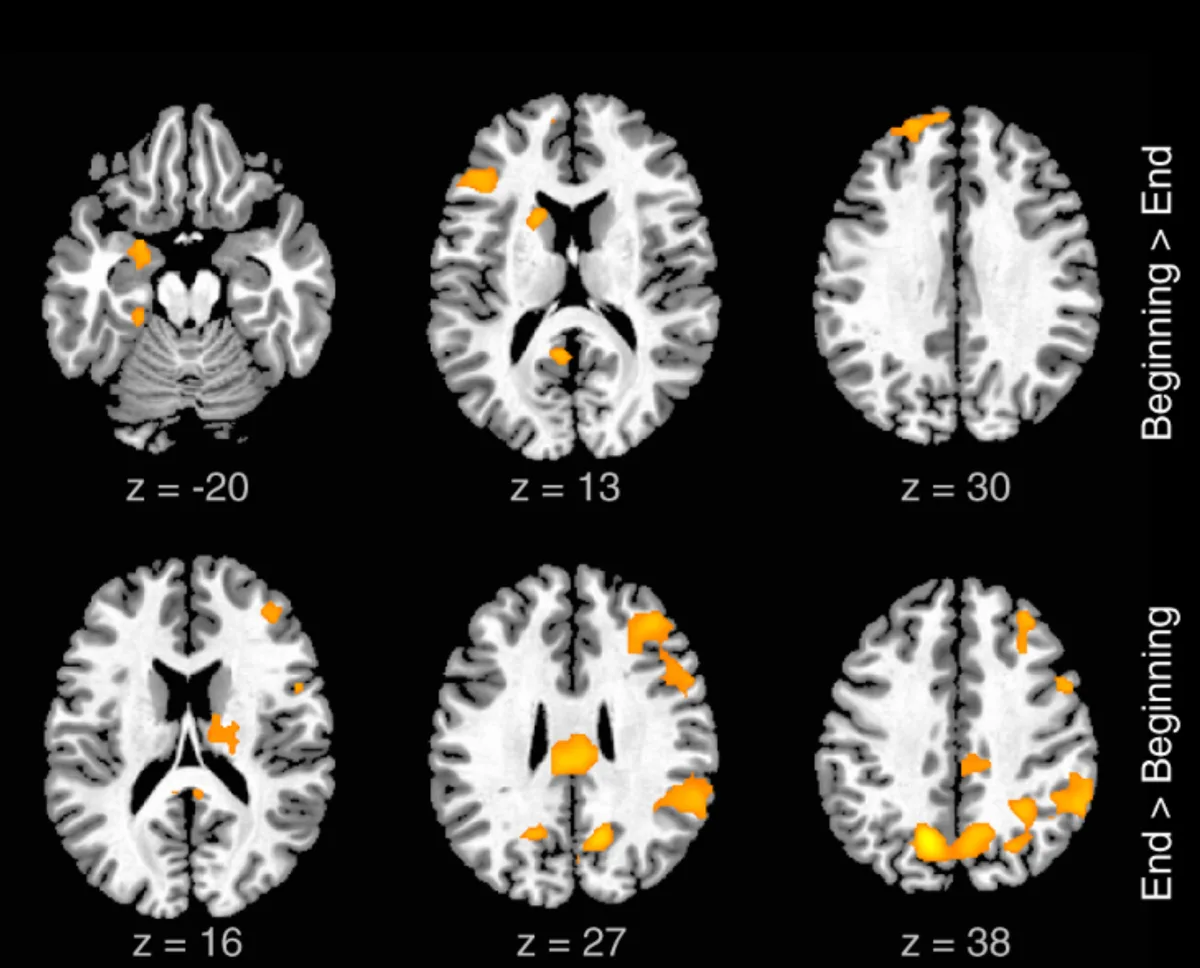
Here’s what they found: when the rappers were freestyling, their brains showed less cognitive control, not more.
The brain’s self-monitoring center went quiet. That’s the part that consciously supervises and second-guesses what you’re doing.
Quieter, even, than when they rapped the verse they’d rehearsed.
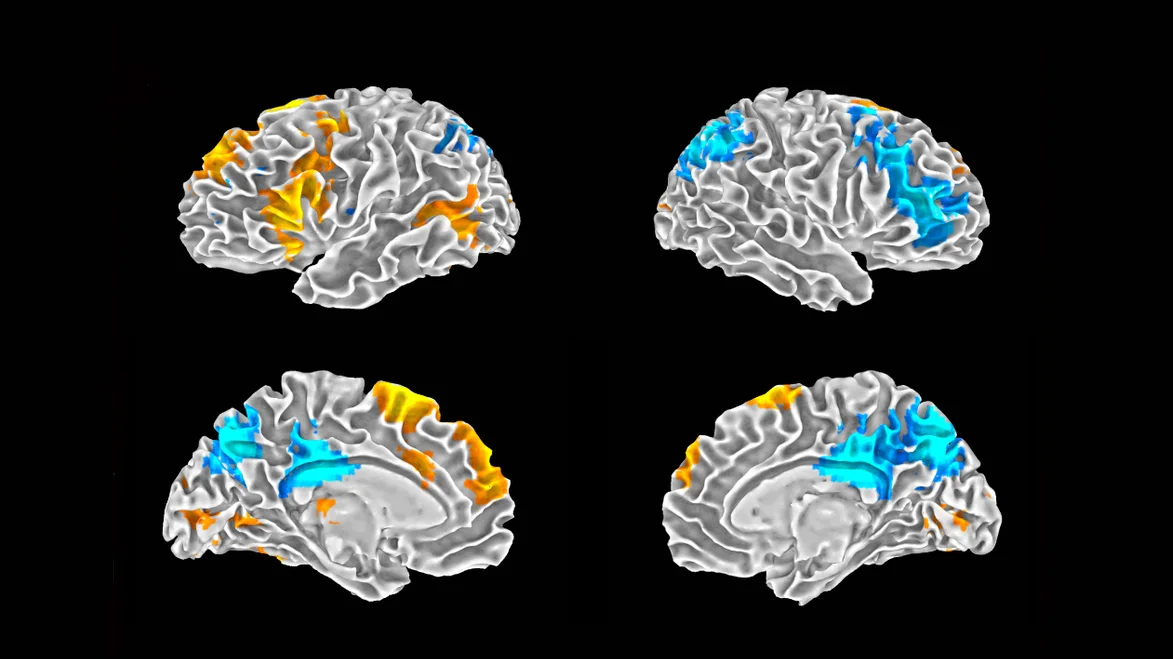
They even tracked how the pattern moved within a single 8-bar loop.
What Mastery Actually Looks Like
I sat with that for a while, because it kind of reframes everything.
We assume mastery means more processing power. More awareness, more information firing at once. But it’s the opposite.
Mastery looks like a brain that’s barely trying.
The technique had moved from conscious to subconscious. It wasn’t effort anymore. It was just… there.
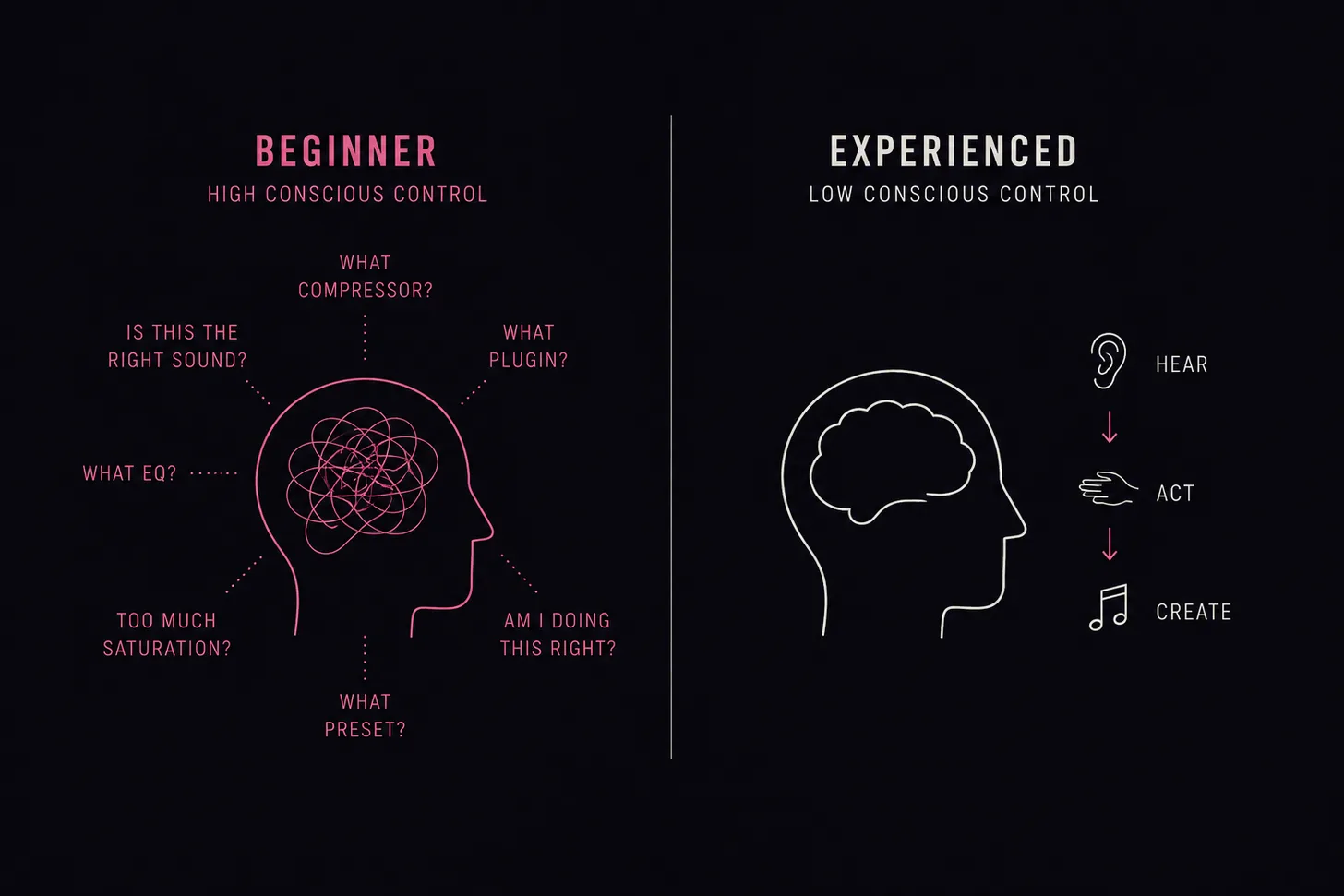
The researchers noticed something else, too. With the supervising part of the brain dialed down, the rappers’ decisions seemed to happen before they consciously experienced making them.
The study tied this to something a lot of artists describe. That in their best moments, the work feels less like it’s being done and more like it’s coming through them.
Guided, in the study’s own words, by “an outside agency.”
Yeah, I know that sounds like woo.
The Flow State Connection
This ties into something I think about constantly. Flow states. Most of us have experienced one but probably never stopped to think about what actually triggers it.
The researchers reached for that word themselves. They described the brain pattern they saw as a doorway into flow: total immersion, and a loss of self-consciousness.
A flow state is basically relaxed high performance. Full involvement, full enjoyment, zero overthinking.
It’s that feeling when you sit down to produce, three hours disappear, and you look up to find you’ve actually made something you’re proud of.
But here’s the catch. You only enter flow when the work is challenging enough to keep your mind occupied, but easy enough to avoid frustration.
Too hard, you freeze up. Too easy, you get bored. There’s this narrow window where everything clicks.
And what the MRI study tells us is that experts live in that window more often. The fundamentals have gone automatic, so technique stops eating up bandwidth and the creative brain gets to run free.
What Most Producers Get Backwards
They think the goal of learning production is to know more stuff. To collect more tips, more tricks, more techniques.
And yeah, those things matter. But collecting them is just the cost of entry.
The real goal is to know your craft so well that you stop thinking about it entirely.
When It Clicked for Me
I remember the exact point where this shifted. I was working on a remix, and I realized I’d been EQing for 20 minutes without a single conscious decision.
My hands were just doing it. I wasn’t thinking about frequency ranges or which band to cut.
I was hearing a problem and solving it before my brain caught up with what my ears already knew.
That was the first time I felt, from the inside, what those rappers in the MRI were doing.
You’ve Probably Felt This Too
When your EQ decisions are automatic. When your arrangement instincts just fire without you having to rationalize them.
When you hear a problem in a mix and your hands move before your brain catches up.
Those moments are what happen when you’ve put in enough reps that the technique becomes invisible. And when the technique is invisible, the creativity has room to breathe.
That’s the real finish line. Less thinking.
That’s exactly what the Masterclass is built to do. Get the fundamentals so deep they go quiet, so the music can finally come through you.
Structured reps, real feedback on your own tracks, and a path that gets the technique to automatic way faster than grinding solo ever will.
If you want to reach the point where you stop thinking and just let the track happen, come scope out how it works.
