


Back in 2013, I got my first opportunity to do an official remix for a major label.
I was beyond amped. I’d been working for years to have this chance.
Only catch? I had less than 24 hours to submit the remix.
After a minor panic attack, I sat down and got to work. I stayed up half the night. I questioned everything. Things were looking bleak for a while.
But I eventually finished the track early the next day, submitted it, and had it approved.
Here’s what stuck with me after: I finished an entire track in a day because I had no choice.
Then I thought about some of the other songs I was working on. Songs I had been tweaking for months. Why weren’t those done? I had no deadline, no accountability, and no reason to finish.
That experience changed how I think about finishing music.
And after working with hundreds of producers over the past few years, I’ve realized finishing is by far the hardest part of the creative process.
It’s a lot easier to endlessly tweak your music than it is to put the finishing touches on a song and release it into the world.
I get that. I’ve been there. You probably know the loop:
Spark of inspiration. Self-doubt creeps in. Frustration hits. You open Netflix. You come back, tinker endlessly. Abandon the project. Start something new. Hate yourself a little.
Spark, doubt, boredom, death. Repeat.
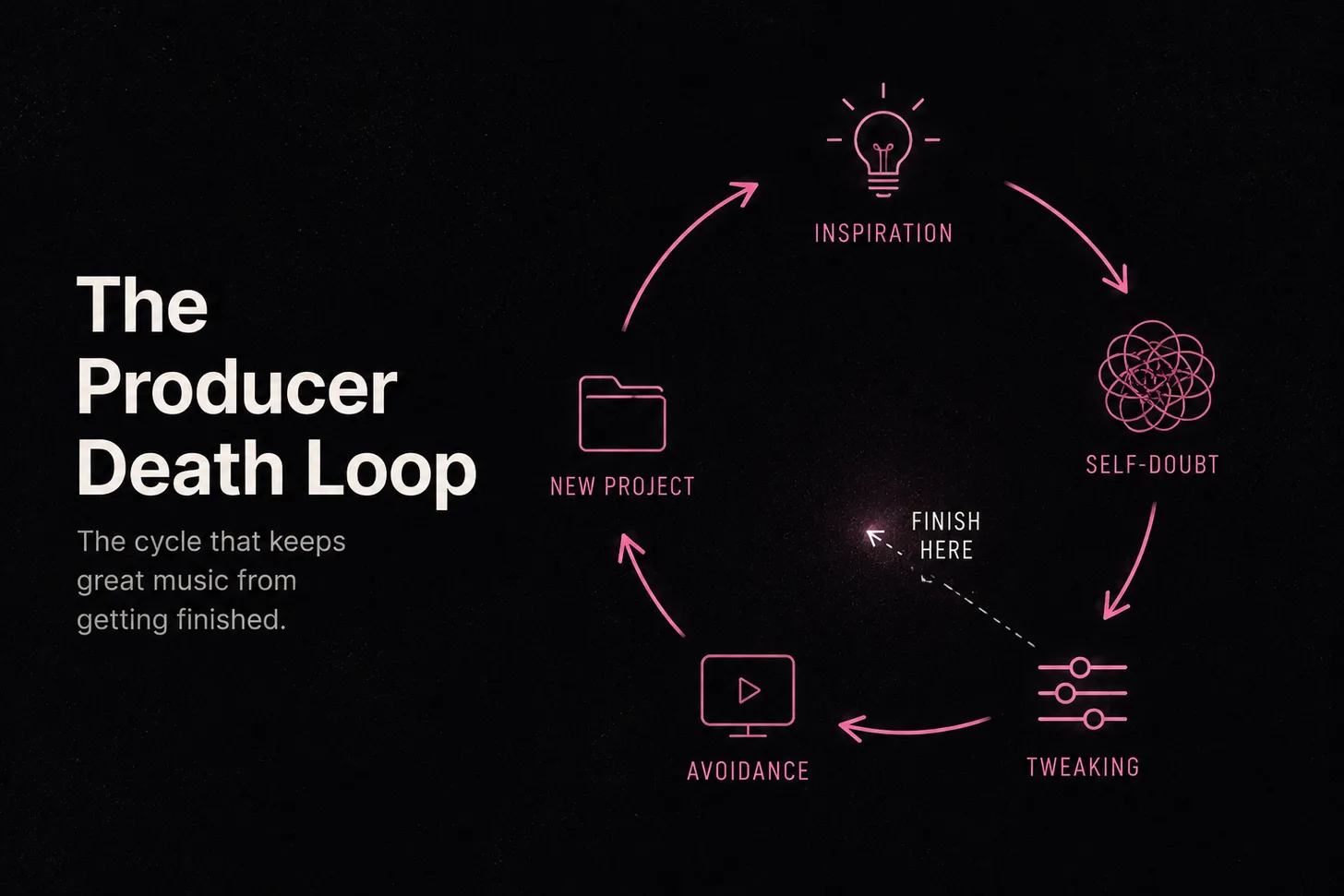
I lived in that loop for years. I’d finish three, maybe four tracks a year. And it’s not like I wasn’t trying.
I was in my room every night, tweaking the same project for weeks, watching tutorials, convincing myself that if I just kept refining, it would eventually sound right.
It never did.
But I’ve also noticed that 9 times out of 10, the producers who actually break out of that loop are doing the same three things. And the producers who stay stuck are making the same three mistakes.
So let me break those down.
1. Quantity Over Quality
I know this sounds wrong. Aren’t all your songs supposed to be special? Isn’t it more important to make one great song than ten bad ones?
No. And here’s why.
There’s a study from the book Art & Fear that I think about all the time. A photography professor split his class into two groups.
One group was graded on quantity, the number of photos they submitted. The other was graded on quality, they just had to submit one perfect photo.
At the end of the semester, the group that focused on quantity produced the best photos. Not the group that spent all semester chasing perfection.
It was the group that was just shooting, experimenting, failing, and learning from the process.
Music works the same way.
You don’t decide which songs become hits. You may think you do. You may pretend to know. But at the end of the day, you have very little control over what resonates with the public and what completely flops.
John Mayer said it best in a Berklee commencement speech:
“You don’t get to choose what your best song is. People choose that.”
You don’t control which track connects, which melody someone plays at their wedding, which song lands on an editorial playlist. Your only job is to make the work and put it out there. The rest isn’t up to you.
Every song you make should be your best effort, and then it becomes a numbers game. Some songs will stick. Some won’t. But you can increase your chances by creating more music.
And honestly? Don’t be so tough on yourself. You know what sounds stressful?
Putting insane amounts of pressure on yourself, telling yourself the next song HAS to get signed, or HAS to get 100,000 plays.
It’s great that you’re ambitious, but who needs that pressure? Your music will connect when it’s ready to.
All you can do is make music to the best of your ability. And make a lot of it.
I got this wrong for years, by the way. I spent months on individual tracks, convinced that if I just tweaked the low end one more time, or swapped one more snare, the track would finally be “there.”
It never was. The tracks I finished fast taught me more than the ones I polished to death.
2. Perfectionism Is Not a Flex
I used to brag about being a perfectionist. I even mentioned it at job interviews.
But perfectionism sucks.
Perfectionism stalls progress. It means you’re afraid to show your work to the world until some impossible internal standard has been met. And that standard moves every time you get close to it.
It holds you back. It slows you down. It keeps you from growing. Not a lot of music gets finished when you’re a perfectionist.
Learning to let go of your art is one of the most important skills you’ll ever have to develop as a producer.
And I want to be clear about what I’m saying here. I’m not talking about removing your ambition, or your drive, or your motivation.
You should still make dope music. You should do everything in your power to make the best song you possibly can.
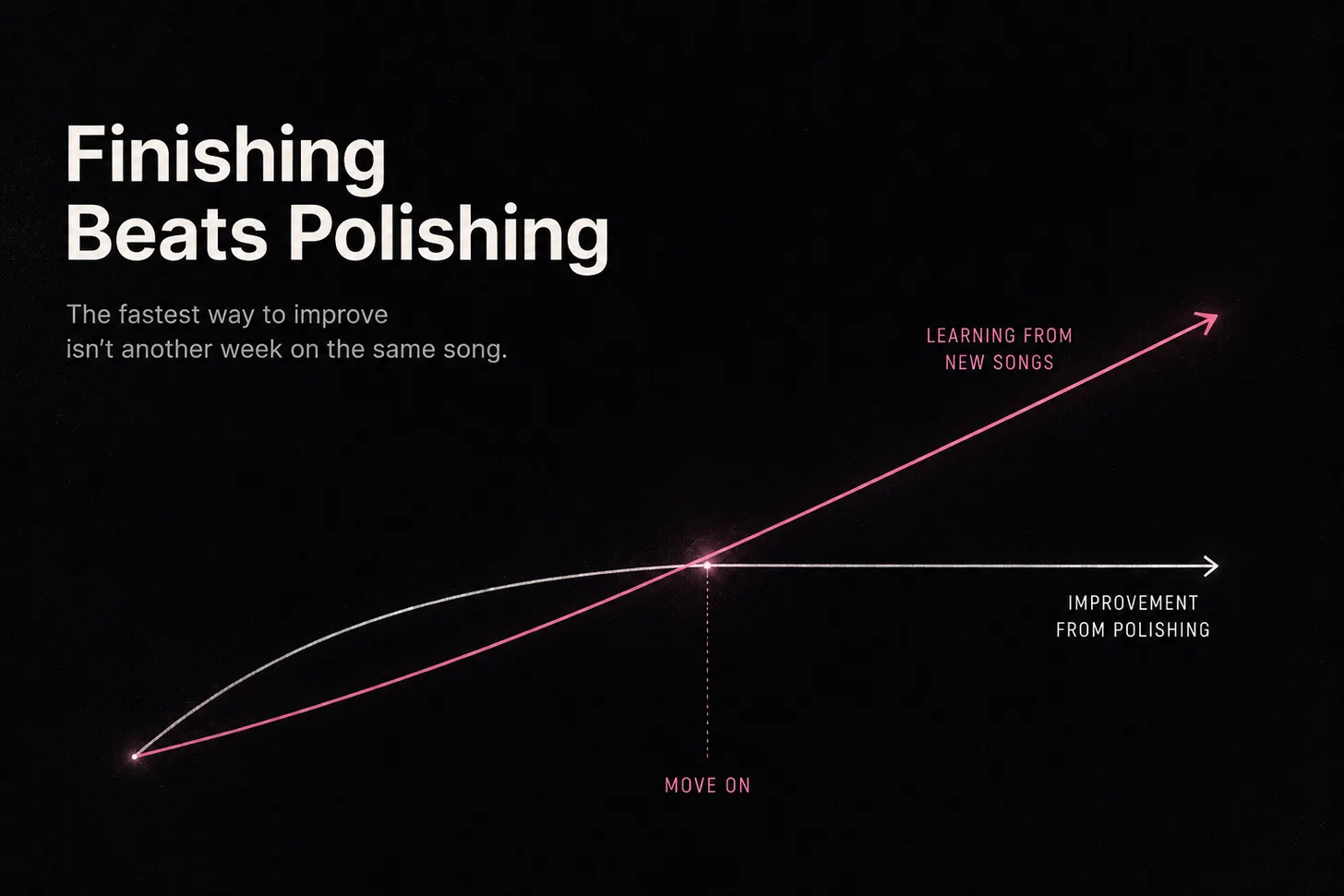
But when you’ve spent a week, or two, or four on a track, and you’ve done everything you can to make it sound great, but it STILL falls a bit flat when comparing to your idols…
Don’t mix it again. Don’t tweak the drop. Don’t master it again.
Acknowledge from a realistic perspective that your song kind of kicks ass, but there are some skills you’ll learn in future songs that you won’t learn here.
And then move on.
Diplo once said something that stuck with me: if you make a bad record, don’t stress about it. This scene moves so fast that nobody will remember it in a few months.
That’s freedom. It means you’re allowed to swing, miss, and swing again without the world keeping score.
3. Set Deadlines, and Be Ruthless About It
This brings me back to that remix story.
I finished an entire track in a day because I had a deadline I couldn’t move. No flexibility, no “I’ll get to it next week,” no second chances.
And it forced me to make decisions I’d been avoiding for months on other projects.
Here’s the thing about deadlines that most people don’t realize. If you give yourself three months to finish a track, it will take three months. If you give yourself two weeks, it takes two weeks.
The work expands to fill whatever time you give it. Every single time.
Most producers don’t finish because they have no accountability. No reason to finish by a certain date. No one checking in. No consequences for dragging it out another week.
So set deadlines. Make your friends hold you accountable. Build a team that holds you accountable. Hell, make your parents hold you accountable.
Do whatever it takes to put your head down and not only get to work, but FINISH the work by a certain time.
I’ve seen this single habit change more producers’ careers than almost any mixing technique or production trick. It isn’t glamorous, and it definitely isn’t a new plugin, but it works.
Keep Sending the Bottles
Making music is a lot like sending bottles out to sea. You keep sending them and sending them, and one day, a bottle comes back to you.
That bottle comes back as a record deal, or a dream set at a festival, or a track that finally sounds the way you’ve always heard it in your head.
But you have to keep sending the bottles.
Most producers stop sending too early. They send three, maybe four bottles, and when nothing comes back, they assume the ocean doesn’t want them.
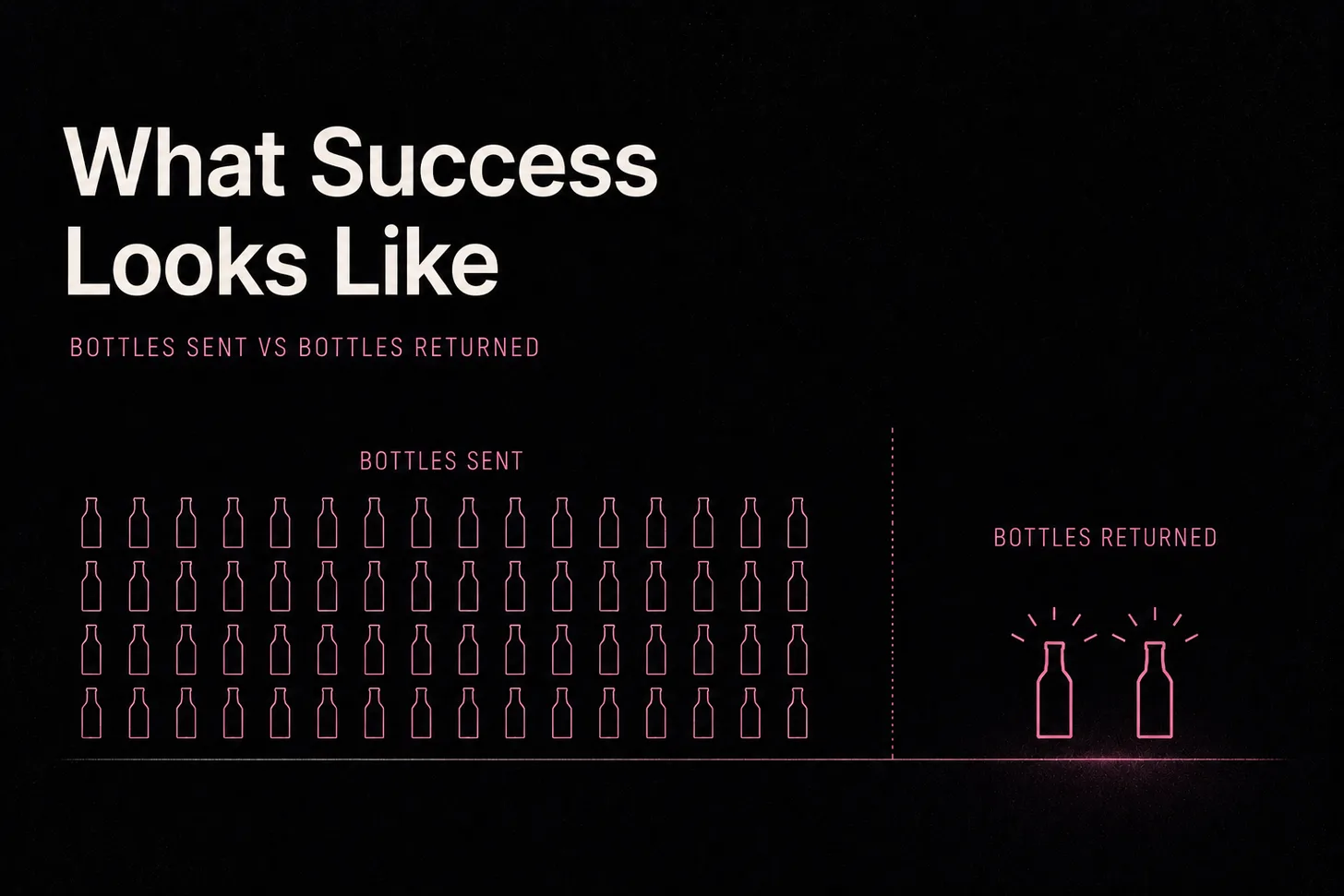
The ocean doesn’t work that way. It rewards the ones who keep going.
So finish the track. Let go of the perfectionism. Set the deadline. And send the bottle.
I put together a free framework called Is It Done? with the exact 8 steps I run before I put that final stamp of approval on a track, plus 8 videos walking through each one.
