


Last year, James Blake launched a $5/month fan subscription on a platform called Vault. Pay him directly, get unreleased tracks, demos, and a private group chat.
He had the fanbase and the credibility to make it work. New music almost every week. Active in the chat. Early access to private shows.
Honestly? I was rooting for it.
Nine months later, the platform quietly killed subscriptions entirely.
Their founder said something that stuck with me:
“Subscriptions force artists into a schedule that doesn’t match how they create music. It adds pressure instead of creating space.”
And from what I can tell, this is happening elsewhere as well.
The subscription model keeps failing musicians
The musician Tom Vek put it bluntly:
“James Blake’s music subscription model is a fantasy that disadvantages fans and musicians.”
He’s not wrong. Patreon’s music subscriptions exploded during COVID, then flatlined. The top music earners on Patreon today are almost all educators, not performing artists.
Spotify has been teasing a “superfan tier” for two years and still can’t figure out what to put in it.
The pattern is always the same. Someone takes the subscription model, with its weekly uploads and promised perks.
And tries to map it onto music careers that have never worked that way.
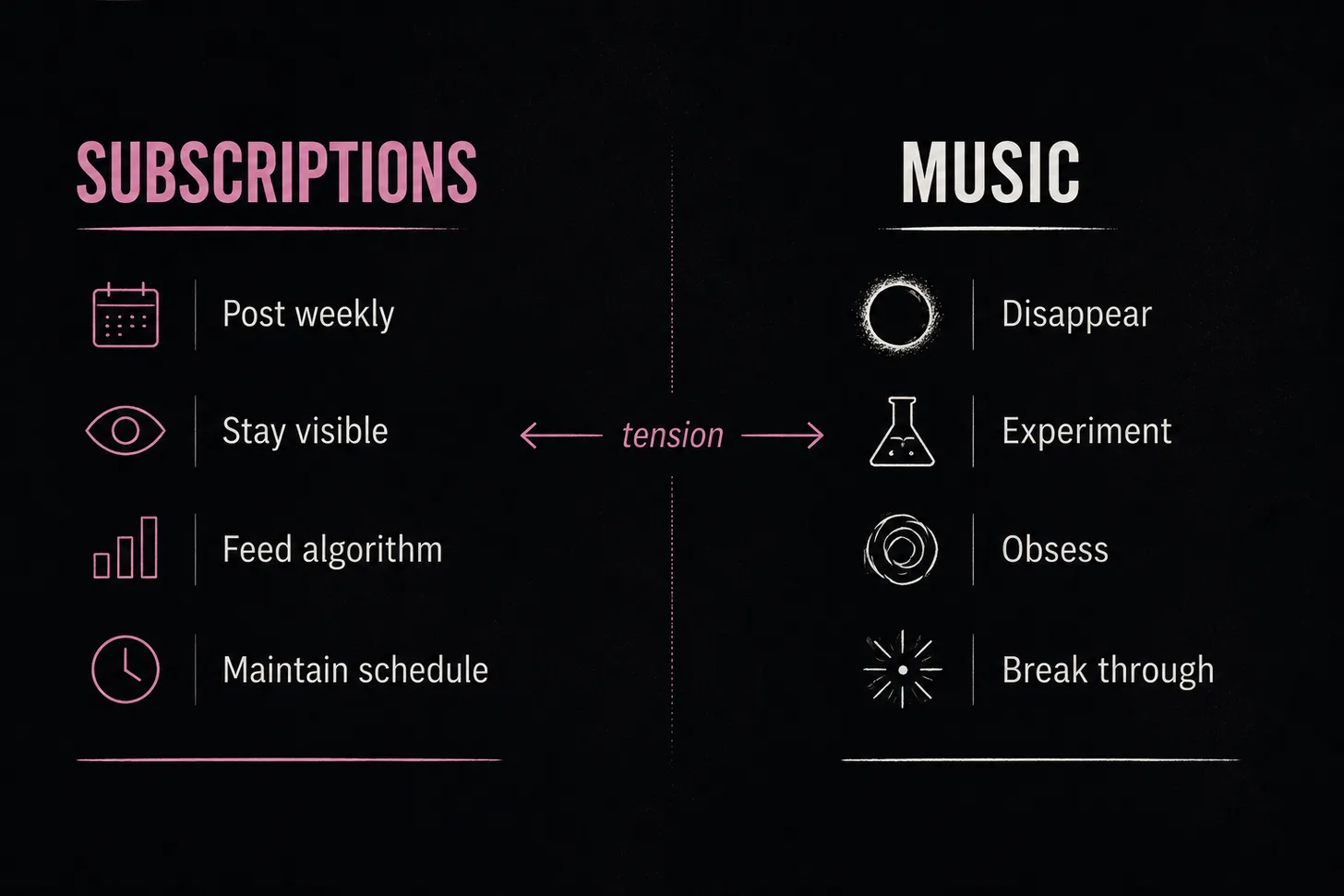
Now, I’m not saying don’t use social media. Posting your process, showing your personality, letting people into your world. That stuff works.
I’ve seen producers build real audiences doing exactly that. Some of our own Masterclass alumni have done it really well.
The difference that actually matters
But there’s a difference between using social media as a tool to share your music and becoming a content creator who happens to make music on the side.
The first one is sustainable. The second one eats you alive.
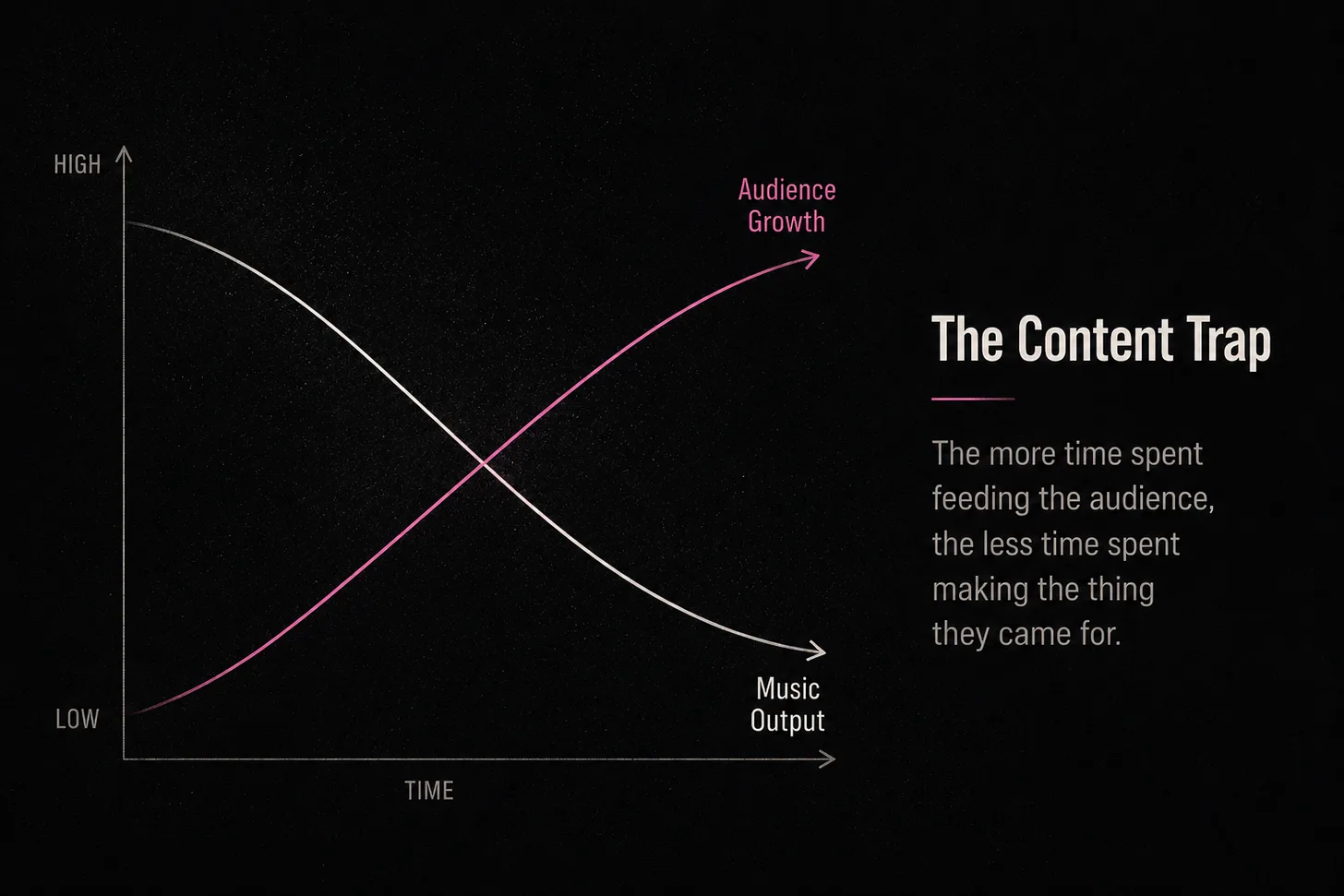
The producers I see burning out the fastest are the ones who got the audience first and the music second.
The algorithm rewards consistency, so they post every day.
Then one day they realize they haven’t finished a track in three months, because they’ve been too busy making content about making tracks.
I’ve watched it happen in real time.
The music is still the thing
The artists whose music people actually remember aren’t grinding out a posting schedule.
They’re disappearing into their DAW for weeks and coming back with something that makes you go “what the hell, how did they make that?”
Make something worth posting about. Then post about it.
Social media is how people find out about it. The music is still the thing.
